
Diesel Air Compressors for Construction Sites
Reliable Portable Screw Air Compressor Solutions for Road Construction, Mining and Outdoor Projects
- High-pressure compressed air for construction applications
- Diesel-powered mobility for remote job sites
- Reliable operation in harsh environments
- Customized solutions for different construction needs

Challenges of Compressed Air
in Construction Projects
1. Unstable Air Supply
Heavy construction equipment:
- Rock drills
- Jackhammers
- Concrete breakers
- Shotcrete machines
Require continuous, stable pressure.
Standard air compressors:
- Pressure fluctuations
- Reduced efficiency
- Risk of downtime
2. Harsh Operating Conditions
Construction site:
- Dust
- High temperatures
- Outdoor operation
- Long working hours
Equipment requirements:
- Heavy-duty design
- Dust protection
- Reliable cooling system
3. Requirements for Mobile Construction
Many construction projects involve:
- Constantly shifting work sites
- Limited power supply
Requirements:
- Portable design
- Diesel-powered compressor
- Easy transportation
Application
Construction Applications of
Our Air Compressors
Sollant air compressors are precisely tailored to the demanding requirements of various construction scenarios, offering targeted configuration solutions.
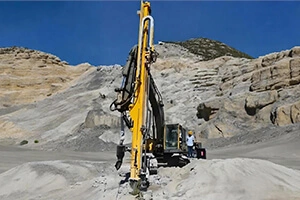
1. Rock Drilling
Construction Drilling Compressor
- Foundation drilling
- Quarry drilling
- Tunnel construction
High pressure air supply for drilling equipment.
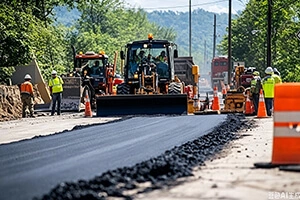
2. Road Construction
Road Construction Air Compressor
- Asphalt preparation
- Road maintenance
- Pavement breaking
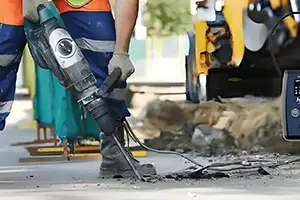
3. Concrete Breaking
Air Compressor for Jack Hammer
Pneumatic breakers
Demolition tools

4. Sand Blasting
Sand Blasting Air Compressor
- Surface cleaning
- Steel structure preparation
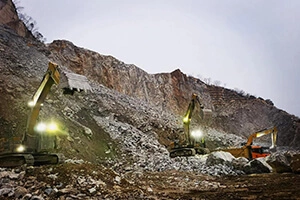
5. Mining Construction
Mining Air Compressor
- Underground construction
- Ventilation
- Drilling
Construction Air Compressor Solutions
Solution 1
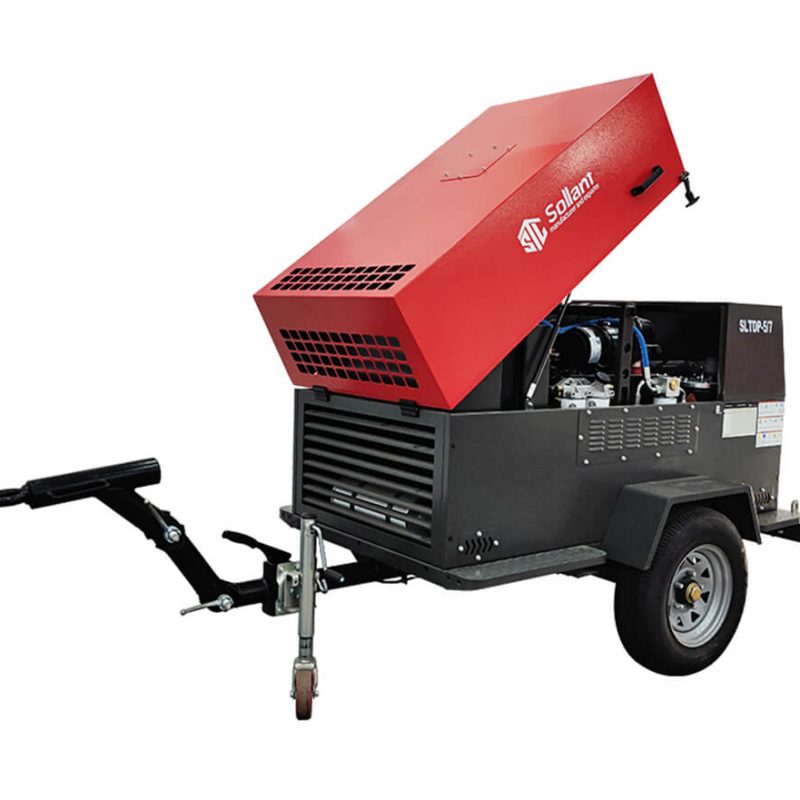
Diesel Portable Screw Air Compressor
Applications:
- Remote construction sites
- Road projects
- Mining
Features:
✔ Diesel-powered
✔ Mobile design
✔ High reliability
✔ Continuous operation
Specifications:
Air Flow:5–35 m³/min
Pressure:7–30 bar
Solution 2
Electric Screw Air Compressor for Construction Workshops
Suitable for:
Fixed construction sites:
- Prefabrication factories
- Construction material plants
Advantages:
✔ Energy saving
✔ Lower noise
✔ Easy maintenance
Solution 3
High Pressure Air Compressor for Drilling Applications
Suitable for:
Deep-hole drilling:
- Mining drilling
- Foundation engineering
Features:
✔ High-pressure output
✔ Stable performance
✔ Heavy-duty structure
Specifications:
Air Flow:3.5–23 m³/min
Pressure:35-40 bar
Why Choose Sollant?
22+ Years of Manufacturing Experience
With over 20 years in air compressor manufacturing, Sollant delivers solutions for demanding construction environments, including drilling, demolition, shotcrete and mining applications.
Factory Direct Supply
As a direct manufacturer, we provide:
- Direct technical communication
- Custom compressor configurations
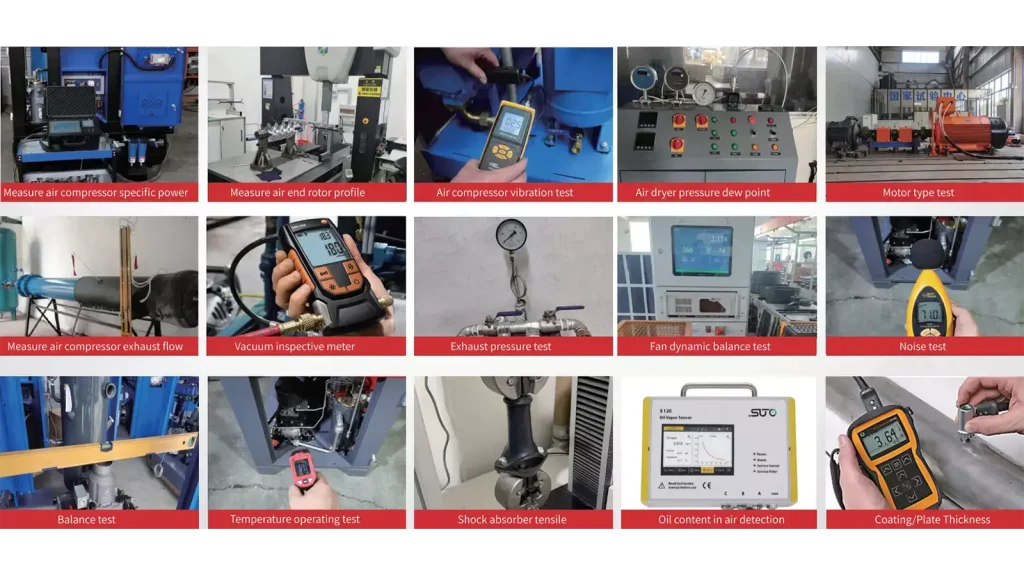
- Factory testing before shipment
- Competitive factory pricing
- OEM and project-based solutions
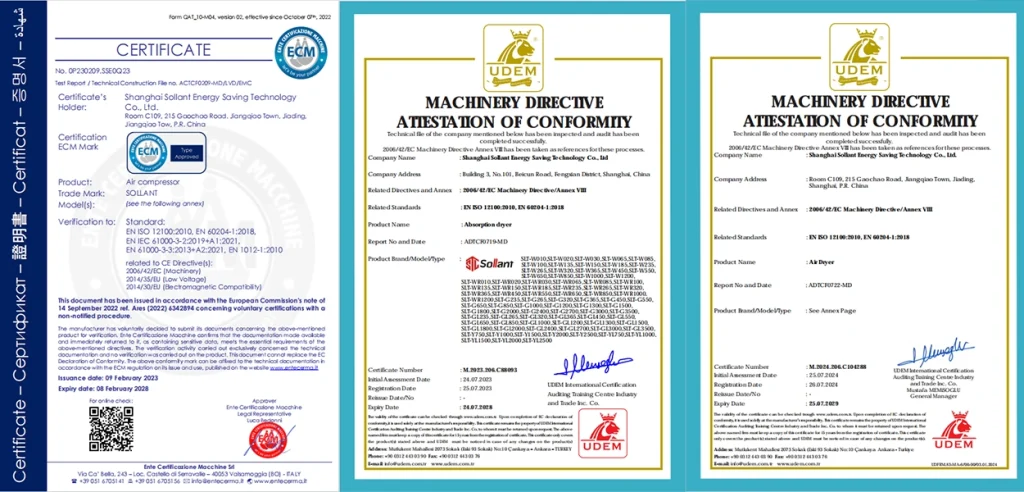
Quality Control & Certifications
All air compressors are produced under strict quality control to ensure stable performance and durability in construction environments.
Certification documents (such as ISO or CE) can be provided upon request when applicable.
Global Export Experience
Sollant supplies air compressors to global markets for construction, infrastructure and industrial projects.
We support customers with product selection, technical documents, packaging and export coordination.
Technical Support Before & After Purchase
We help customers choose the right construction air compressor based on:
- Application (drilling, jackhammer, shotcrete, etc.)
- Required airflow (CFM / m³/min)
- Working pressure (bar / PSI)
- Diesel or electric power
- Portable or stationary use
Spare Parts & After-Sales Support
We provide spare parts support to reduce downtime and keep your compressor running efficiently.
Please provide model and part details for faster identification and support.
Trusted Construction Air Compressor Manufacturer
1. Manufacturing Capabilities
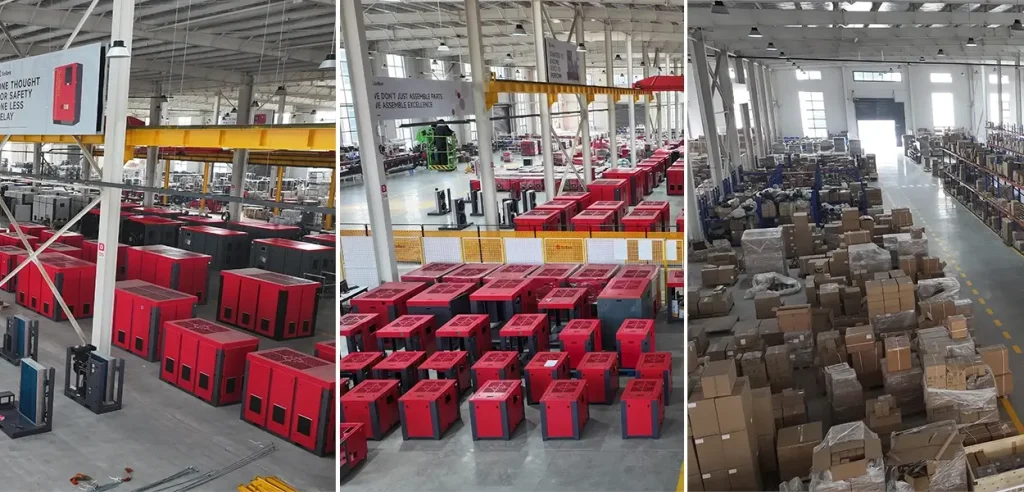
- Manufacturing Facilities: Equipped with modern factory premises and automated production lines.
- Production Capacity: Ample annual capacity to handle large-volume orders.
- Quality Control: Strict oversight across all stages of production.
2. Quality Control
- Inspection Process: Each unit undergoes individual inspection by a professional quality control team.
- Pressure Testing: Pressure resistance and sealing tests are conducted in strict accordance with national standards.
- Performance Testing: Key metrics—such as emissions, pressure, energy consumption, and noise levels—are rigorously tested.
3. Export Experience
- Products are exported to Europe, Asia, South America, Africa, North America, and Oceania. We possess extensive international trade experience and can supply compliant products that meet the market access standards of various regions (such as CE, UL, or ASME certifications).

Construction Air Compressor Projects
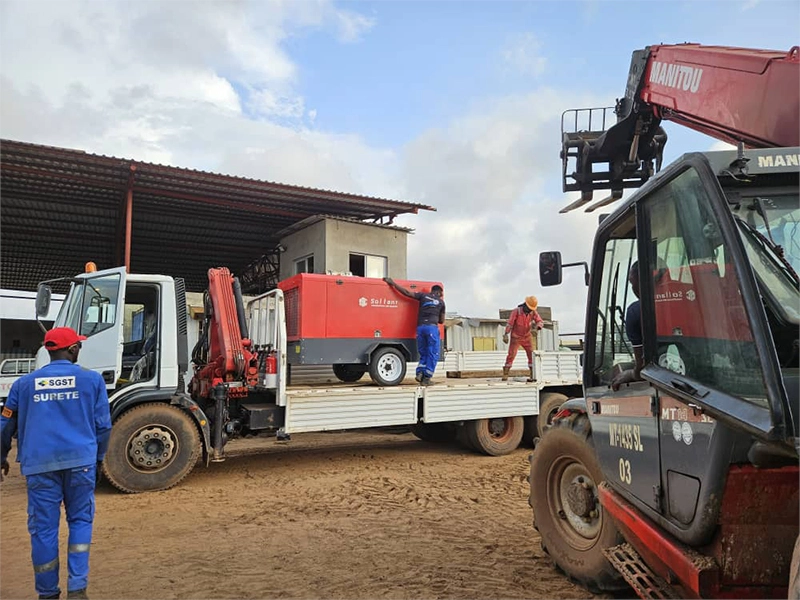
Case Study:
Portable Compressor Solution for Highway Construction Project
Industry:
Road Construction
Challenge:
Need continuous compressed air supply for drilling equipment.
Solution:
Provided diesel portable screw compressors.
Result:
- Improved productivity
- Reduced downtime

-800x800.jpg "Oil Injected Screw AirCompressor11kw(2)")
Trusted by Global Construction Companies
Frequently Asked Questions
What type of air compressor is used for construction?
Diesel-powered portable rotary screw compressors are the most widely used and preferred choice for construction sites. Their status as the workhorse of the job site is primarily due to three key advantages:
① Excellent Mobility
Construction sites often feature expansive areas and complex operating conditions, with work locations shifting frequently as the project progresses. Equipped with wheeled or tracked undercarriages, these compressors can be towed by vehicles or moved easily around the site. They can be rapidly deployed wherever a compressed air source is needed, eliminating the cumbersome installation and dismantling processes required for stationary compressors.
② Reliable Compressed Air Supply
Utilizing a rotary screw air end, these compressors deliver a continuous, stable, and pulsation-free airflow—a significant improvement over traditional piston compressors. This performance is crucial for powering high-air-consumption tools common on construction sites, such as rock drills, pneumatic breakers, and shotcrete machines. Furthermore, their diesel power eliminates reliance on the local electrical grid, allowing for independent and reliable operation even at remote project sites or newly established locations lacking adequate power infrastructure.
③ Adaptability to Harsh Outdoor Environments
Designed specifically for construction applications, these diesel portable screw compressors typically feature reinforced protective enclosures, high-efficiency multi-stage air filtration systems, and robust cooling systems. They are built to withstand the rigorous conditions typical of construction work—such as high dust levels, extreme temperature fluctuations, and heavy workloads—ensuring equipment stability and longevity during prolonged, continuous operation.
What size air compressor do I need for construction?
There is no fixed standard for the power of compressors used on construction sites; the requirement depends primarily on three factors:
① Required Pressure
First, determine the maximum operating pressure required by the pneumatic tools on site (e.g., 0.6–0.8 MPa for a pneumatic pick). The compressor’s rated pressure should exceed this maximum requirement by 15%–20% to compensate for pressure losses during air transmission through piping.
② Tool Air Consumption
Calculate the total air consumption of all tools likely to be used simultaneously, multiply the sum by a simultaneity factor (typically 0.5–0.8), and add a 10%–15% margin for air leakage to determine the required compressor air delivery rate (m³/min).
③ Operating Environment
High-altitude locations (where thin air reduces output) and high-temperature environments (which lower cooling efficiency) require selecting a larger-capacity unit. Additionally, for sites with insufficient electrical power, diesel-driven compressors should be prioritized.
Can your compressor work in outdoor construction sites?
Yes, standard stationary air compressors are generally unsuitable for outdoor use. Outdoor construction sites present complex environments that pose unique challenges for equipment. Our mobile air compressors designed for outdoor use are engineered to handle the following conditions:
- Extreme temperatures: Whether facing freezing cold (-20°C) or scorching heat (50°C), the equipment features cold-start capabilities, efficient cooling, and thermal management systems to ensure stable performance.
- Dusty environments: Equipped with high-efficiency filtration systems and rugged enclosures to prevent dust from clogging or damaging internal components.
- High humidity and saline air: Constructed with corrosion-resistant materials and sealed electrical systems to prevent rust and short circuits.
- Rugged terrain: Features a reinforced structural frame for easy transport and deployment in hard-to-reach locations.
- High altitude: Equipped with an optimized air intake system to maintain performance in areas with thin air.
Do you provide customized construction compressors?
We offer comprehensive OEM/ODM customization services to meet the specific requirements of diverse construction projects:
- Power Source Customization: Options include diesel engine drive, electric motor drive, or dual-power models, selected based on site conditions.
- Pressure and Flow Customization: Discharge pressure (e.g., increasing from the standard 8 bar to 13 bar or higher) and airflow rates can be adjusted for high-altitude operations, specialized sandblasting, or deep foundation drilling.
- Configuration Customization: Options include multi-stage precision filters (for spraying applications requiring strict moisture control), specialized chassis, sound-attenuating enclosures, or high-altitude adaptation kits.
What is the difference between portable and stationary compressors?
Their main differences lie in design objectives, application scenarios, and control systems:
| Features | Portable (mobile) compressor | Stationary compressor |
| Design Objectives | Flexible mobility; adaptable to various job sites and individual pieces of equipment. | Permanent installation in factories or equipment rooms to supply air to fixed piping networks. |
| Application Scenarios | Directly supplies air to a single project or a single pneumatic tool (such as a rock drill). | Provides a stable air supply to multiple tool stations across an entire workshop or factory; connects to large air storage tanks and piping networks. |
| Control System | Significant fluctuations in air demand require Variable Speed Drive (VSD) technology to match air output with demand in real time, ensuring high efficiency and energy savings. | Relatively stable air demand allows for simple “on-off” or “load-unload” regulation methods. |
How often should construction compressors be maintained?
Maintenance schedules should be established based on equipment operating hours and the manufacturer’s manual; the following serves as a general reference guide:
Daily / Before each operation: Check oil levels and drain condensate from the oil-air separator tank and air receiver tank.
Break-in period for new units (approx. 500 hours): Perform initial maintenance; replace the oil and oil filter.
Routine maintenance (every 2,000–3,000 hours or 6 months): Replace air filter elements and oil filters; inspect pipe connections and valves.
Major airend maintenance (every 2 years or longer): Conduct a comprehensive inspection of the airend, adjust clearances, and replace seals.
Important Note: Maintenance intervals should be shortened if the equipment operates in harsh environments (e.g., dusty, high-temperature, or high-humidity conditions). Replacement intervals for lubricants and filters vary significantly depending on the brand and technology (e.g., high-performance oils may extend intervals to 1,000 or even 4,000 hours); always refer to your specific equipment manual.

