
Semiconductor Compressed Air Systems for Clean, Dry & Oil-Free Air
- ISO 8573-1 Class 0
- Oil-Free Compressed Air
- Dew Point Down to -70°C
- Customized Air Treatment Solutions
- ISO / CE Certified
Clean Dry Air for Semiconductor Manufacturing
Clean Air. Dry Air. Reliable Production.
Semiconductor manufacturing requires compressed air with strict control of oil, moisture and particulate contamination. A properly designed Clean Dry Air (CDA) system helps protect sensitive processes and production equipment while maintaining a stable air supply.
01 — Oil Contamination Control
Reduce the risk of oil aerosols, vapors and hydrocarbons entering sensitive air systems. Oil-free compression provides a clean foundation for semiconductor CDA systems, while final air quality should be specified and verified at the point of use.
02 — Ultra-Dry Air
Adsorption drying helps maintain the required pressure dew point and prevent moisture condensation across the distribution network. Dew point targets can be engineered around your process requirements, site conditions and critical point-of-use applications.
03 — Particle Protection
Multi-stage filtration helps control airborne particles, pipe-scale and other contaminants before air reaches cleanroom tools, pneumatic controls and sensitive process equipment. Point-of-use filtration adds protection where air purity is most critical.
Complete CDA System
Oil-Free Compressor → Pre-Filter → Adsorption Dryer → Post-Filter → PTFE Membrane Filter → Process
By combining oil-free compression, moisture removal and multi-stage filtration, Sollant provides customized CDA solutions designed around the required air quality, pressure, flow rate and application conditions of semiconductor and electronics manufacturing facilities.
Need a CDA system for your semiconductor application?
Talk to our engineers for a customized compressed air solution.
Semiconductor Air Compressor & CDA Solutions
Oil-Free Compression. Clean Air Treatment. Complete CDA Systems.
Sollant provides complete compressed air solutions for semiconductor and electronics manufacturing, from oil-free screw and scroll compressors to centrifugal compressors, adsorption dryers, precision filters and nitrogen generators.
Our systems can be configured according to your required air flow, working pressure, air quality, pressure dew point and nitrogen purity.
Oil-Free Solution
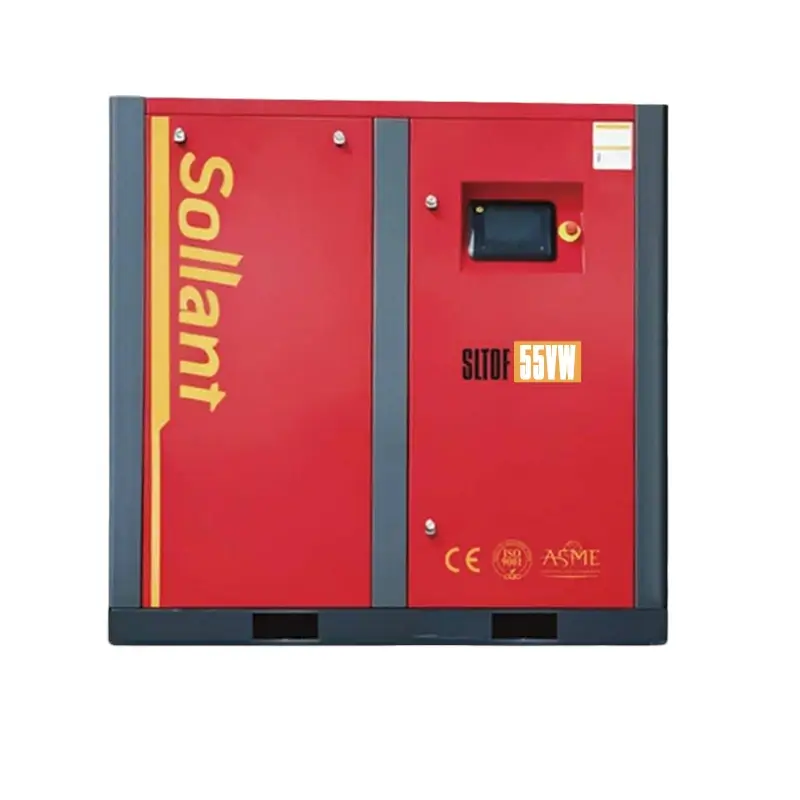
01 — Water-Lubricated Oil-Free Screw Compressor
SLTOF-75VW
Designed for applications requiring clean, oil-free compressed air.
- ISO 8573-1 Class 0
- 8 / 10 / 12.5 bar
- Clean compressed air for critical processes
- Suitable for continuous semiconductor applications
Best for: Main CDA supply and process air

02 — Oil-Free Scroll Air Compressor
SLTOF-11S
A compact oil-free solution for cleanroom and point-of-use applications.
- 0.8 / 1.0 MPa
- 1.2 m³/min air capacity
- ≤65 dB(A)
- Compact and low-noise design
Best for: Cleanroom point-of-use air
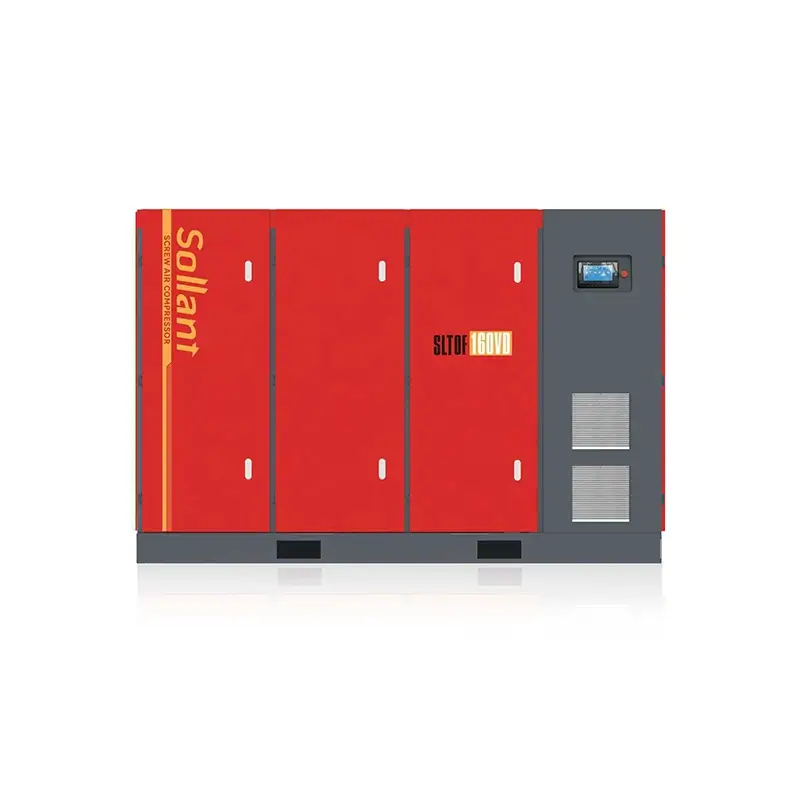
03 — Dry Oil-Free Screw Compressor
SLTOF-90FD
Designed for reliable oil-free air, variable-speed operation.
- ISO 8573-1 Class 0
- 7 / 8 / 10 bar
- Energy-efficient operation
- Suitable for main and cleanroom air supply
Best for: Semiconductor plants with variable air demand
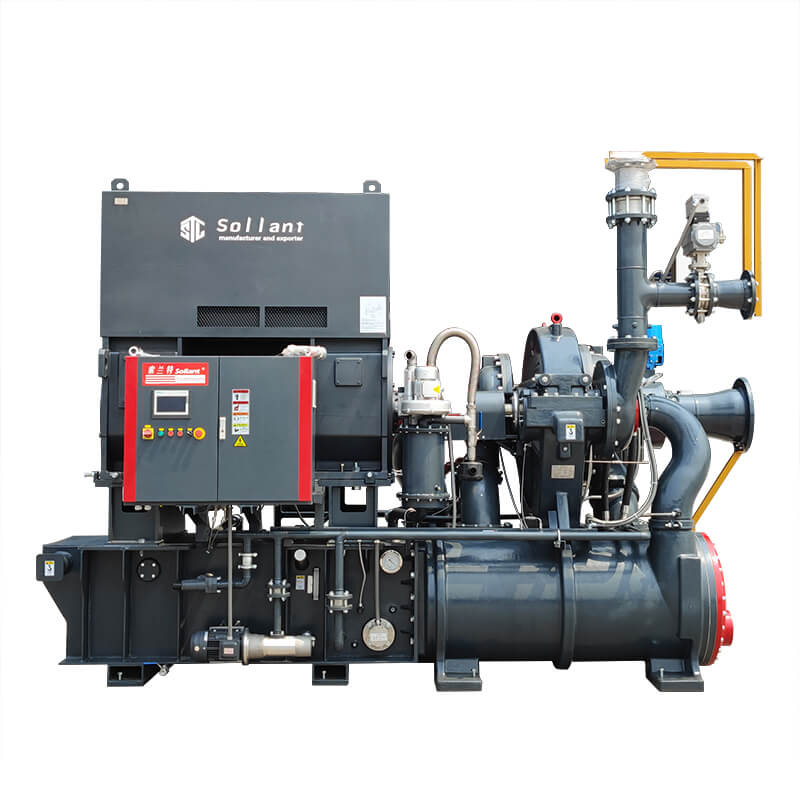
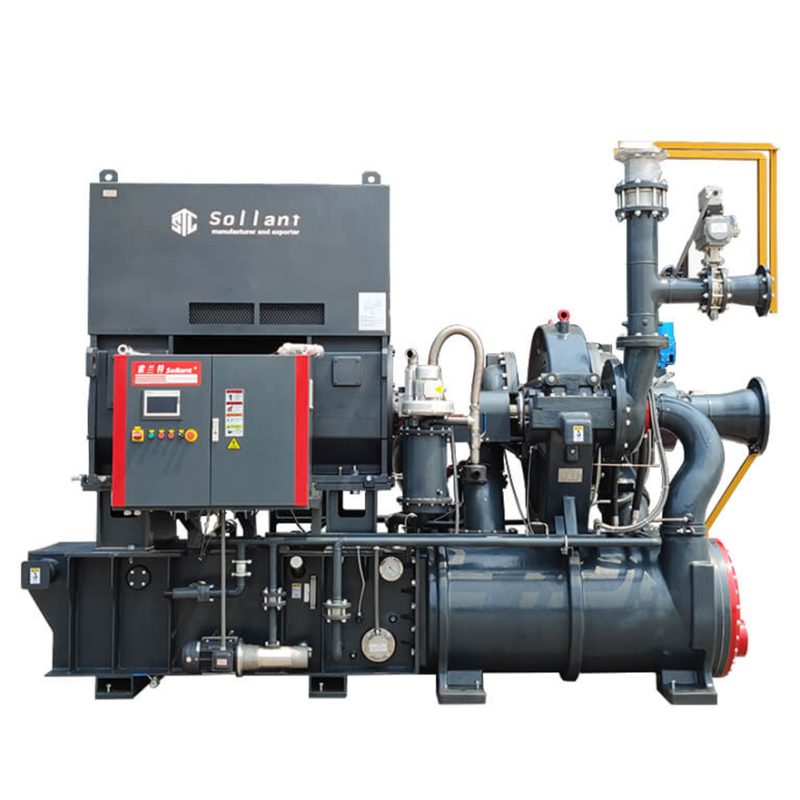
04 — Oil-Free Centrifugal Air Compressor
SLT Series
For semiconductor fabs and electronics plants requiring high-volume compressed air.
- Multiple capacity configurations
- High-efficiency centrifugal compression
- Suitable for large-scale continuous operation
Best for: Large semiconductor fabs and high-demand CDA systems
Air Treatment and Nitrogen Generation Solutions
Compressed air quality depends on more than the compressor. Sollant provides integrated air treatment and nitrogen generation equipment for complete system configuration.
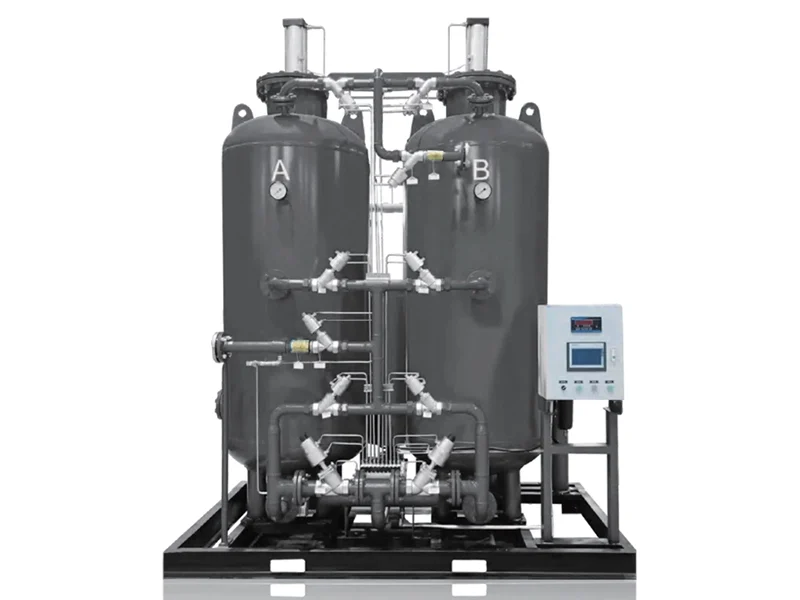
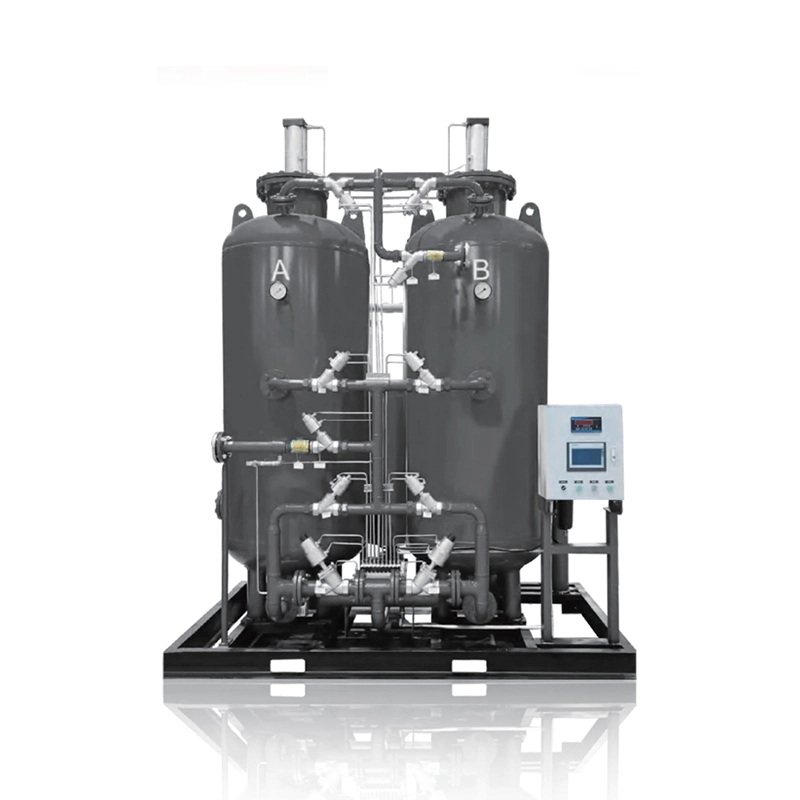
05 — Twin Tower Nitrogen Generator
High-Purity Nitrogen Generation On Site
Generate nitrogen on demand with stable purity, pressure and flow — without relying on delivered nitrogen cylinders.
Key Specifications
- Nitrogen Purity: Up to 99.999%
- Flow Rate: 10–1000 Nm³/h*
- Adsorption Pressure: Up to 0.7 MPa*
- Control: PLC + HMI
Applications: Semiconductor | Electronics | Cleanroom | Laboratory
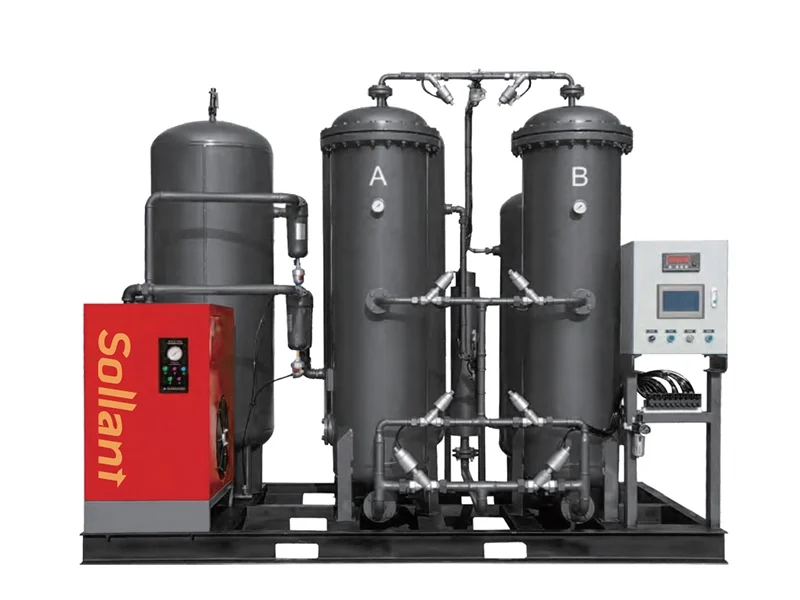
06 — Combined Nitrogen Generator
Integrated Nitrogen Generation. Less Space. Easier Installation.
The combined nitrogen generator integrates air purification and nitrogen generation in one compact system, saving space for high-purity nitrogen applications.
Key Specifications
- Nitrogen Purity: Up to 99.999%*
- Flow Rate: 10–800 Nm³/h*
- Adsorption Pressure: Up to 0.7 MPa*
- Control: PLC + HMI
Applications: Semiconductor | Electronics | Cleanroom | Precision Manufacturing
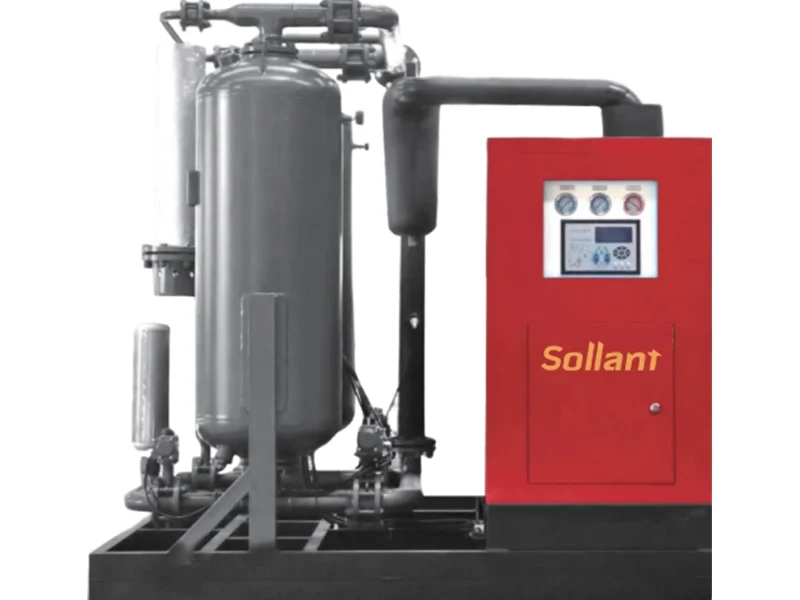
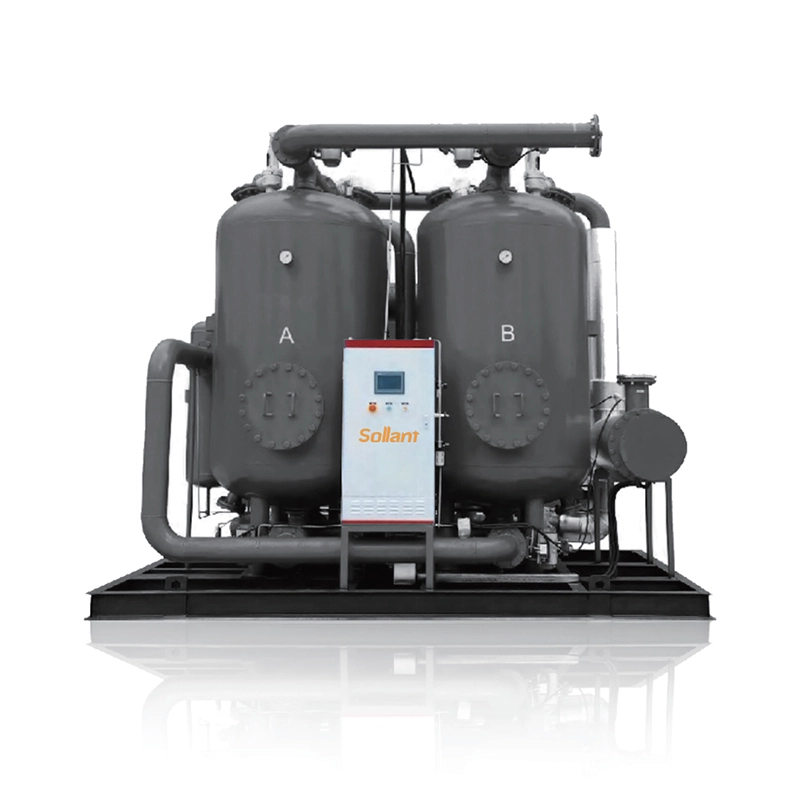
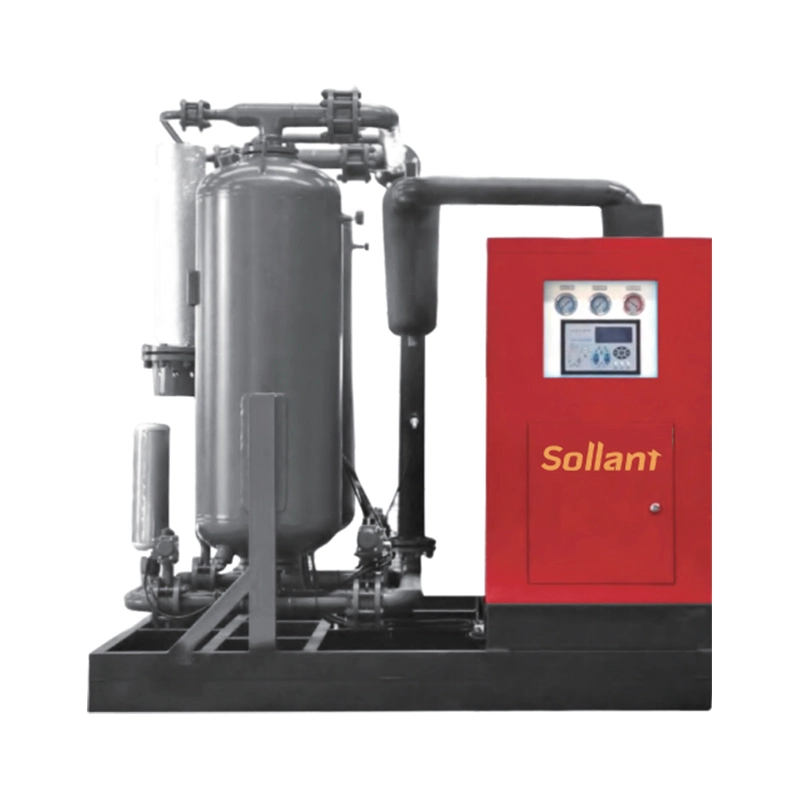
07 — Modular Adsorption Dryer
Ultra-Dry Compressed Air for Critical Processes
Sollant modular adsorption dryers provide reliable moisture removal for applications requiring a low pressure dew point and stable dry compressed air.
Key Specifications
- Pressure Dew Point: -40°C to -60°C*
- Working Pressure: 0.6–1.0 MPa*
- Inlet Temperature: 10–60°C*
- Regeneration: Heatless / customized
Applications: Semiconductor | Cleanroom | Electronics | Instrument Air
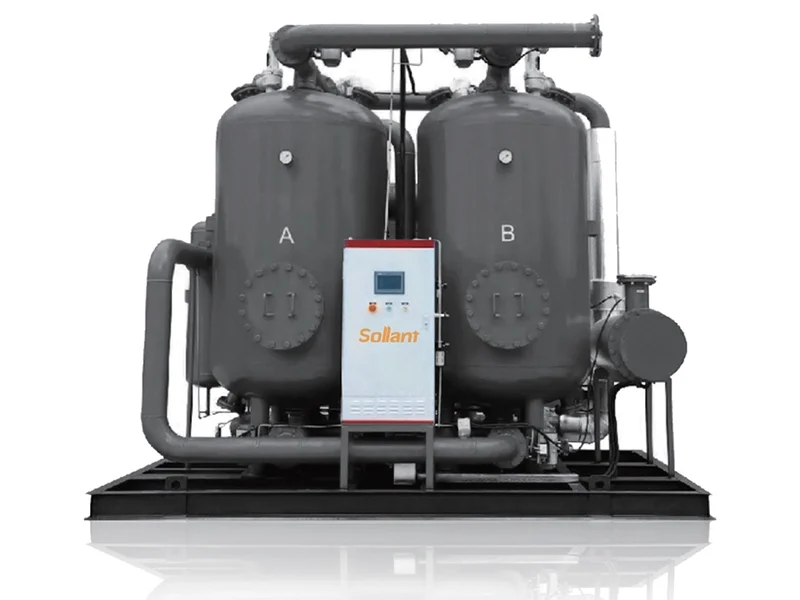
08 — Zero Loss Compression Heat Desiccant Air Dryer
Reduce Purge-Air Loss with Compression Heat Regeneration
Sollant adsorption dryers use compressor heat for desiccant regeneration, cutting regeneration air use in ultra-dry applications.
Key Specifications
- Pressure Dew Point: Down to -40°C*
- Working Pressure: 0.6–1.0 MPa*
- Inlet Temperature: 110–180°C*
- Regeneration: Compression Heat
Applications: Semiconductor | Electronics | Precision Manufacturing | Instrument Air
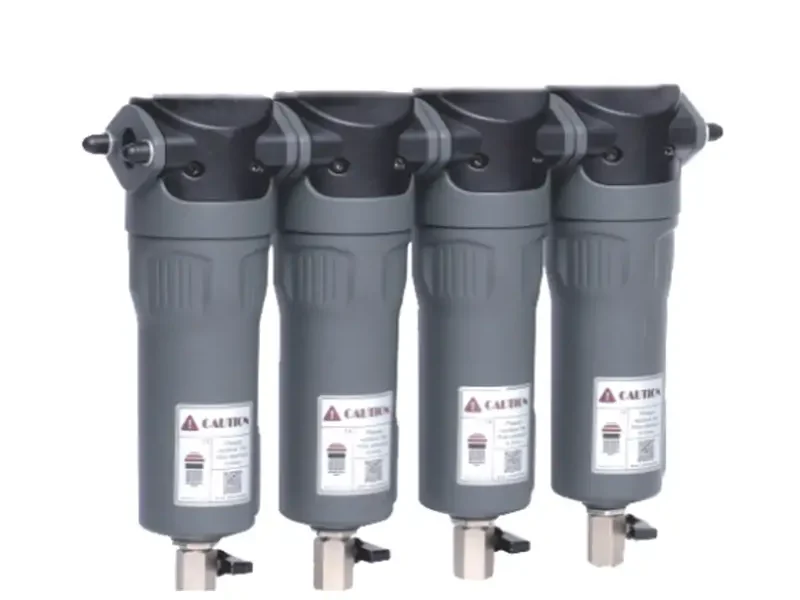
09 — A/H Grade Precision Filters
High-Efficiency Filtration for Clean Compressed Air
Sollant A/H grade precision filters control oil, particles and other contaminants in compressed air before it reaches critical processes or equipment.
Key Features
- A / H Grade Filtration
- High-efficiency contaminant removal
- Multiple connection sizes
- Customized filtration configuration
Applications: Semiconductor | Cleanroom | Electronics | Instrument Air
Get Your Semiconductor Air Solution
Tell us your required air flow, pressure, air quality, dew point or nitrogen purity. Our engineers will recommend a suitable compressor, dryer, filtration and nitrogen generation configuration.
Compressed Air Solutions for
Different Semiconductor Applications
Different semiconductor processes have different requirements for air quality, pressure, airflow and dew point. Sollant provides customized semiconductor compressed air solutions for cleanrooms, production equipment and central utility systems.
Choose the right combination of oil-free compression, air treatment, filtration and nitrogen generation based on your application.
Instrumentation & Pneumatic Tools
Oil-free air for pneumatic equipment and process control.
Compressed air is widely used for pneumatic equipment, valves, actuators and instrumentation. A reliable oil-free supply helps reduce downstream contamination risk.
Recommended Solution: Oil-Free Scroll Compressor / Oil-Free Screw Compressor
Lithography
High-purity CDA for sensitive wafer processing.
Lithography processes require a carefully controlled production environment. An oil-free compressed air system with appropriate air treatment can provide clean and stable CDA for sensitive equipment.
Recommended Solution: Oil-Free Compressor + Desiccant Dryer + Precision Filters
Etching
Clean compressed air for precision semiconductor processes.
Etching equipment requires reliable utility air and a stable operating environment. Oil-free compression combined with appropriate filtration and drying helps provide clean compressed air for process equipment.
Recommended Solution: Oil-Free Screw Compressor + Air Treatment System
Cleanrooms
Class 0 oil-free air for controlled manufacturing environments.
Clean, oil-free compressed air helps maintain controlled cleanroom environments, where contamination must be strictly managed and kept to a minimum.
Recommended Solution: Oil-Free Screw Compressor / Oil-Free Scroll Compressor
Cooling
Clean, dry compressed air for precision equipment and cooling applications.
Some semiconductor equipment and support systems need clean, dry compressed air. Proper compressor and air treatment selection helps maintain the required air quality.
Recommended Solution: Oil-Free Compressor + Desiccant Dryer + Precision Filters
Nitrogen & Soldering
High-purity nitrogen for electronics manufacturing and soldering.
Nitrogen is used in electronics manufacturing and soldering applications where an inert atmosphere can help protect sensitive components and improve process control.
Recommended Solution: PSA Nitrogen Generator
Find the Right Solution for Your Application
Every semiconductor facility has different equipment, process conditions and utility requirements.
Tell us your application and air requirements. Our engineers can recommend the right combination of compressor, dryer, filtration and nitrogen generation equipment.
Custom Class 0 Oil-Free Compressed Air Solutions Tailored for Your Semiconductor Production Line
Typical Customer Applications
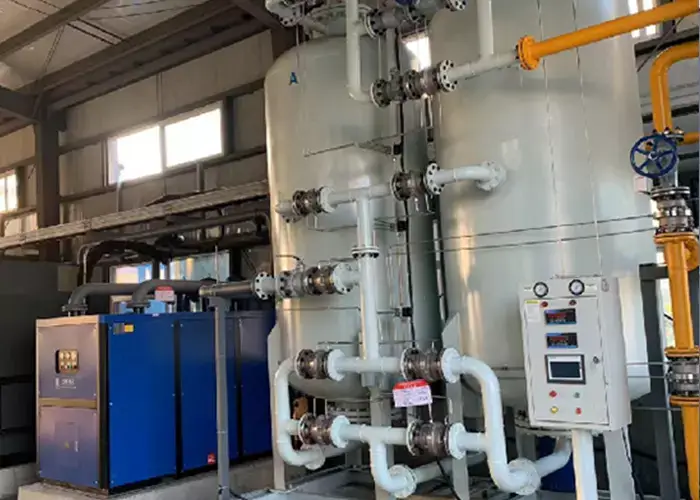
Case Study: On-site Ultra-pure Nitrogen Generation for Semiconductor Wafer Manufacturing
A semiconductor wafer manufacturing plant in Singapore required nitrogen for critical processes such as reaction chamber purging, wafer transfer, and lithography environment displacement. The specifications demanded a pressure dew point of -40°C to -70°C and an oil content of ≤0.01 ppm, meeting standards for ultra-pure gas and ISO 8573-1 Class 0. The facility previously relied on purchased liquid nitrogen, resulting in high costs and supply vulnerability due to logistics.
Solution:
- Adsorption dryer: Controls the pressure dew point within the -40°C to -70°C range.
- Precision filters (Grade A/H): Grade A captures particulates, while Grade H (activated carbon) removes oil vapor, ensuring oil content remains ≤0.01 ppm.
- PSA nitrogen generator: Produces high-purity nitrogen (≥99.999%).
Results: The point-of-use pressure dew point stabilized between -55°C and -65°C, and oil content consistently remained below 0.01 ppm, meeting ultra-pure gas requirements. Switching from purchased liquid nitrogen reduced gas costs and improved supply stability; no wafer defects caused by gas quality issues were observed.


.png-800x800.jpg "air-compressor-inline-filter(3).png")
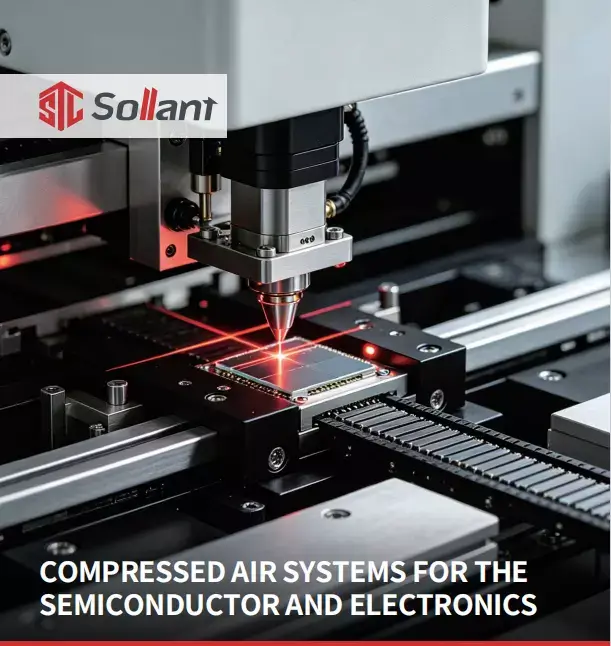
Download the Semiconductor Compressed Air Application Guide
A Practical Guide to Clean, Reliable & Contamination-Free Compressed Air
Get practical, engineering-level guidance for selecting the right compressed air solution for semiconductor manufacturing — from Class 0 oil-free compressor selection and ultra-low dew point control to complete CDA system design and application-specific requirements.
✓ Compressed air applications across semiconductor processes (lithography, etching, cleaning, packaging & cleanroom control)
✓ ISO 8573-1 Class 0 oil-free compressed air requirements
✓ Oil-free screw, scroll and centrifugal compressor selection by process
✓ Adsorption dryers, precision filtration (A/H grade) and nitrogen generation solutions
✓ Pressure, flow, dew point (-40 °C to -70 °C) and system integration considerations
Semiconductor Compressed Air FAQ
Semiconductor manufacturing primarily uses oil-free air compressors, including oil-free screw (dry or water-lubricated), oil-free scroll, and oil-free centrifugal compressors. These machines deliver ISO 8573-1 Class 0 pure air with zero risk of oil contamination. Oil-injected compressors are not acceptable for process or cleanroom applications because even microscopic oil aerosols can damage wafers and reduce yield. Sollant offers dedicated models such as the SLTOF-75VW water-lubricated screw, SLTOF-11S oil-free scroll, SLTOF-90FD dry variable-speed screw, and oil-free centrifugal compressors specifically engineered for semiconductor environments.
Any trace of oil (vapor, aerosol, or liquid) can contaminate photoresist, dielectric films, or metal interconnects, causing irreversible defects, lower yield, and costly scrap. Semiconductor processes operate under the strictest cleanliness standards. Oil-free compressors eliminate contamination at the source rather than relying on downstream filters that can fail. This is why fabs mandate true oil-free technology certified to ISO 8573-1 Class 0.
CDA stands for Clean Dry Air. It refers to ultra-pure compressed air that meets the highest standards for particles, moisture, and oil content. CDA is used for wafer handling, cooling, pneumatic actuation, cleanroom positive pressure control, instrumentation, and as feed air for on-site nitrogen generation. A complete CDA system typically includes an oil-free compressor, adsorption dryer, precision filters, and stainless-steel piping to deliver consistent Class 0 quality air 24/7.
ISO 8573-1 Class 0 is the highest air purity classification. It means the compressed air contains no detectable oil in any form (liquid, aerosol, or vapor) beyond the strict limits set by the manufacturer and verified by independent testing (typically ≤ 0.01 mg/m³ or lower). Class 0 is stricter than Class 1 and is the mandatory baseline for semiconductor process air, cleanrooms, and critical instrumentation. True Class 0 performance is achieved only with certified oil-free compressors, not by filtering oil-injected machines.
Most semiconductor applications require a pressure dew point of -40 °C or lower. Critical processes such as advanced lithography or ultra-sensitive areas often demand -70 °C. Moisture can cause corrosion, particle adhesion, or process defects. Sollant pairs its oil-free compressors with modular or zero-air-consumption heat-of-compression adsorption dryers and A/H-grade precision filters to reliably achieve these ultra-low dew points while meeting oil content ≤ 0.01 ppm.
It depends on your flow and pressure requirements:
Oil-free screw compressors (water-lubricated or dry VFD) are ideal for medium flow rates, flexible load profiles, and energy-efficient part-load operation. They are widely used for process air and cleanroom supply.
Oil-free centrifugal compressors are preferred for large, stable base-load demand where continuous high-volume air is needed with excellent efficiency at full load.
Sollant supplies both technologies and can recommend the optimal combination based on your fab’s air demand curve, pressure levels, and redundancy needs.
Yes. Sollant delivers fully integrated Clean Dry Air (CDA) solutions that include:
- Oil-free compressors (screw, scroll, or centrifugal)
- Adsorption dryers (modular or zero-air-consumption heat-of-compression types)
- A/H-grade precision filters
- Nitrogen generators (dual-tower or combined systems)
- System design, controls, and stainless-steel piping recommendations
All components are engineered to work together to meet ISO 8573-1 Class 0, target dew points of -40 °C to -70 °C, and ultra-low oil and particle levels required by semiconductor fabs.
Yes. With 22 years of export experience and an annual production capacity of 20,000 units, Sollant routinely customizes systems for semiconductor clients. Customization options include pressure (7–12.5 bar or higher), flow capacity, variable-speed drive configuration, skid-mounted or containerized packages, special materials for cleanroom compatibility, noise levels (down to ≤ 65 dB(A)), control integration, and complete CDA + nitrogen packages. Our engineering team works directly with your process and facility requirements to deliver a tailored, reliable solution.
Request a Quick Quote Now
Order or No Order? We're here for you 24/7

