
Compressed Air Treatment Equipment for Industrial Applications
Find the right combination of air dryers, compressed air filters, and air receiver tanks for your compressed air system.
We provide equipment options for moisture removal, condensate management, air filtration, and compressed air storage. Our team can help you select suitable models based on your airflow, operating pressure, required air quality, and application.
- Air dryers for different capacity and dew point requirements
- Air receiver tanks in available sizes and pressure ratings
- Compressed air filters for different filtration requirements
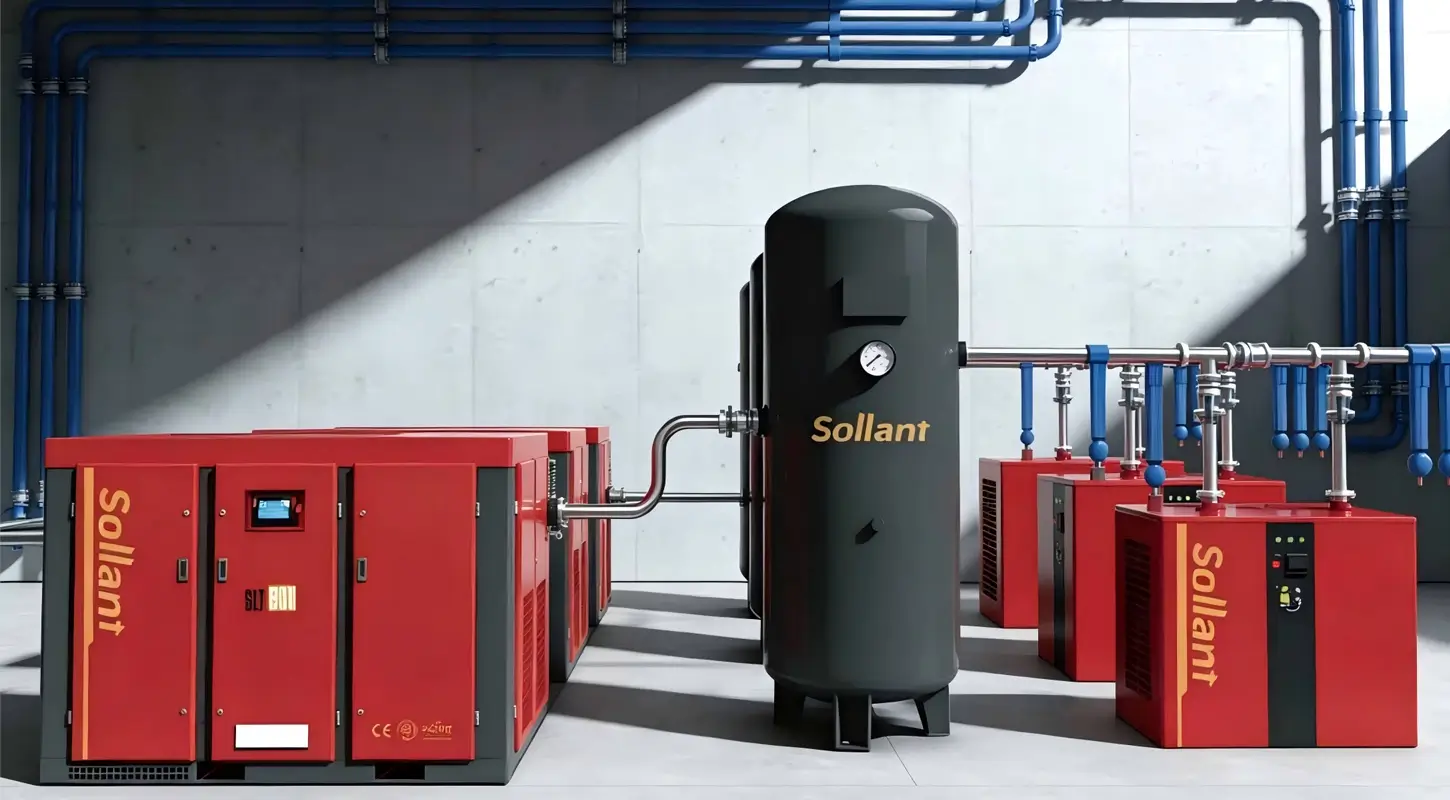
Compressed Air Treatment Equipment
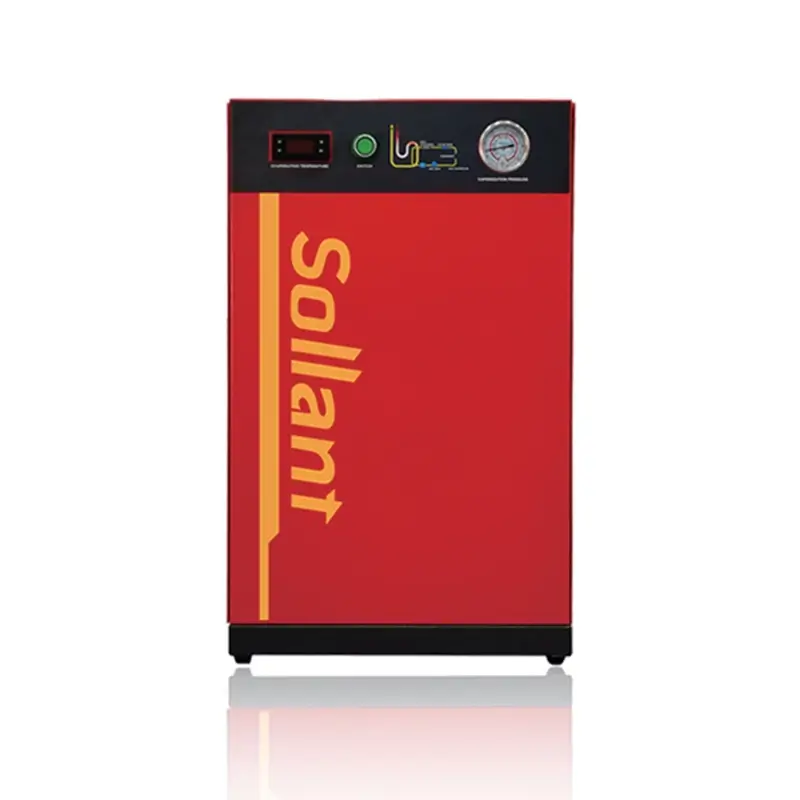
- Refrigerated air dryer、Desiccant air dryer
- Inlet Temperature:10~60℃
- Pressure dew point:-20~-70 ℃
- Operating pressure:0.6~1.0Mpa

- Tank volume:0.3~5.0m³
- Working pressure:0.8~1.3MPa
- Vertical or horizontal design
- Applicable vessel standards:ASME、CE
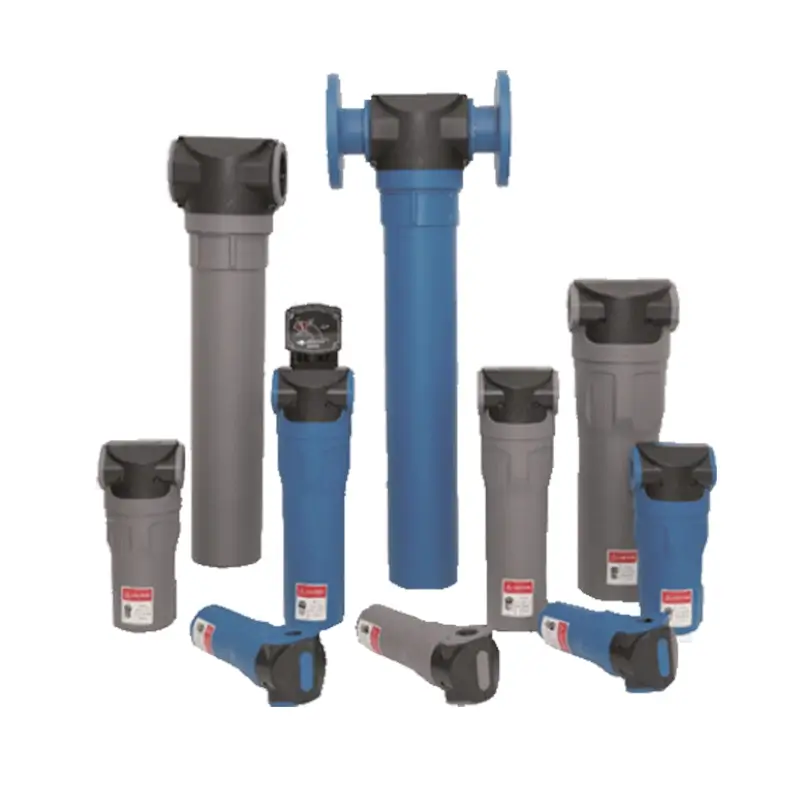
- Filter grade: A/H/C/T
- Filtration precision: ≤0.01 μm
- Oil content: ≤0.01 ppm
- Flow rate: 0.7–40.5 Nm³/min
Common Issues
Sollant Compressed Air Treatment Systems
Can Help You Solve
Compressed air quality and system performance can directly affect production efficiency, equipment reliability, and maintenance costs. Sollant compressed air treatment systems combine air dryers, compressed air filters, and air receiver tanks to help address common challenges in industrial compressed air applications.
✓ Excess Moisture in Compressed Air
Moisture in compressed air can lead to corrosion in pipelines, damage to pneumatic components, and quality issues in moisture-sensitive applications.Sollant air dryers help reduce moisture in compressed air to meet application-specific pressure dew point requirements.
✓ Oil and Particle Contamination
Oil aerosols, solid particles, and other contaminants can adversely affect pneumatic equipment, production processes, and the quality of the final product. Sollant compressed air filters are available in different filtration configurations to effectively address specified contaminants.
✓ Unstable Supply, Fluctuating Demand
Compressed air demand in industrial equipment may fluctuate during the production cycle. Sudden demand changes often cause pressure fluctuations, affecting equipment performance stability. A properly sized air receiver can store compressed air and help buffer short-term demand fluctuations.
✓ Excessive Pressure Drop and Energy Consumption
Undersized equipment, restrictive filters, clogged filter elements, and poorly configured piping can increase pressure losses. Selecting appropriately sized air dryers and filters, monitoring pressure drop, and replacing filter elements according to operating conditions can help control system pressure losses.
✓ Frequent Equipment Maintenance and Downtime
Moisture, contamination, inadequate drainage, and unsuitable equipment selection can contribute to maintenance issues and unplanned production interruptions.A properly configured compressed air treatment system helps manage moisture and contaminants before they affect downstream equipment.
✓ Difficulty Selecting Compatible Equipment
Choosing an air dryer, receiver tank, and filters separately without considering the complete system can result in mismatched capacities, unnecessary pressure losses, or air quality that does not meet application requirements. Sollant offers air treatment equipment options for different industrial requirements.
How Compressed Air Treatment Equipment
Works Together
A compressed air treatment system combines storage, moisture control, and filtration to help meet the requirements of industrial applications.
Air receiver tanks provide compressed air storage and help manage fluctuations in demand. Air dryers reduce the moisture content of compressed air to achieve the required pressure dew point. Compressed air filters remove specified contaminants according to their filtration grades and operating conditions.
The correct equipment combination depends on airflow demand, operating pressure, inlet conditions, required air quality, and the needs of the application.
Our team can help evaluate these requirements and identify suitable equipment configurations for your system.
Industries and Applications
Sollant compressed air treatment systems are designed to support a wide range of industrial applications where reliable compressed air supply and appropriate air quality are essential. By combining air dryers, compressed air filters, and air receiver tanks, businesses can select equipment configurations that meet their specific production requirements.
Textile
In textile production, compressed air treatment systems are used to stabilize air pressure and prevent oil contamination.
Food & Beverage
Manage moisture and specified contaminants in compressed air systems for production and packaging.
Packaging
Support pneumatic controls and automated equipment with appropriately selected compressed air treatment components.
Machinery
Help manage moisture and particle contamination in compressed air supplied to machinery and pneumatic tools.
Related articles

Choosing the Most Suitable Compressed Air Dryer for Your Industry
How to Effectively Remove Moisture from Air Compressor Exhaust?
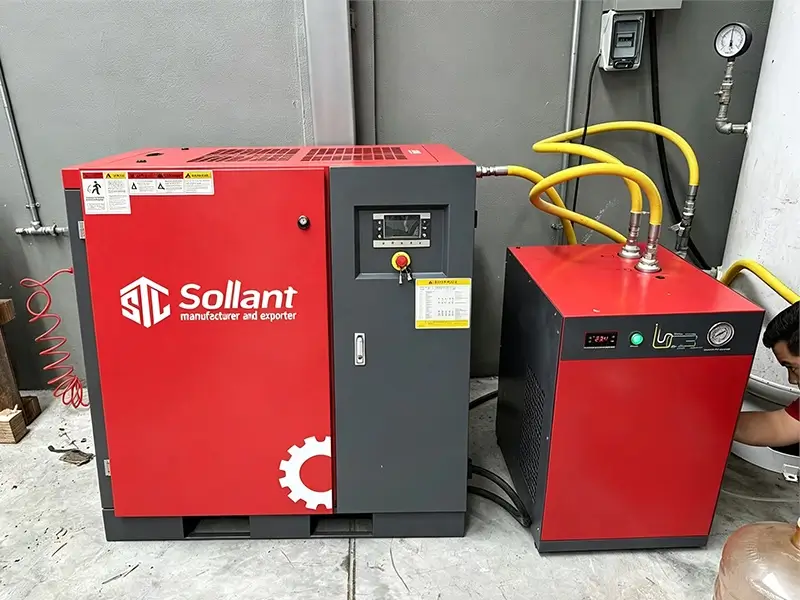
Air Compressor Dryer Installation Diagram
Request a Quick Quote Now
Order or No Order? We're here for you 24/7
You May Have More Questions
We Are Here To Answer Them All!
A compressed air treatment system may include air receiver tanks, air dryers, compressed air filters, condensate drains, and other components depending on the compressor configuration and required air quality.
Refrigerated dryers cool compressed air to condense moisture and are commonly used for general industrial applications. Desiccant dryers use adsorption to achieve lower pressure dew points when the application requires drier air. The appropriate choice depends on the required dew point, operating conditions, and energy considerations.
Consider the required airflow, operating pressure, inlet air temperature, ambient conditions, and required pressure dew point. Compare models using the manufacturer’s rated conditions and correction factors where applicable.
Tank sizing depends on compressor output, demand fluctuations, control strategy, acceptable pressure variation, and the required buffer duration. Verify the selection against the system design and applicable vessel requirements.
Filters remove specified contaminants such as particles and oil aerosols, depending on the filter grade. Filter selection should be based on the required air quality, rated flow, pressure drop, and operating conditions.
The replacement interval depends on the operating environment, the quality of the air compressor’s discharge, and the number of operating hours. For precision filter elements, replacement is generally recommended every 4,000 to 8,000 hours (or once a year). If the differential pressure indicator shows a reading exceeding 0.07–0.1 MPa, the element should be replaced immediately—regardless of whether the scheduled interval has been reached—to prevent excessive pressure drop and unnecessary energy waste. For desiccant in adsorption dryers, the typical service life is 2 to 3 years. However, if a noticeable rise in the dew point is observed or if the desiccant begins to pulverize, it should be replaced sooner.
Yes. Many systems combine dryers and filters, but the number, type, and location of filters depend on the dryer technology, inlet contamination, and required air quality.
Correct equipment sizing, suitable filter grades, timely filter replacement, proper condensate drainage, and regular maintenance can help control pressure drop and operating costs. Actual savings depend on the system and operating conditions.

