
Oil-Free Air Compressors for Food & Beverage Industry
Class 0 compressed air solutions for food processing, beverage production, packaging, conveying and PET bottle blowing.
- Class 0 Oil-Free Compressed Air
- Air Drying & Filtration Solutions
- Customized Air Compressor Systems
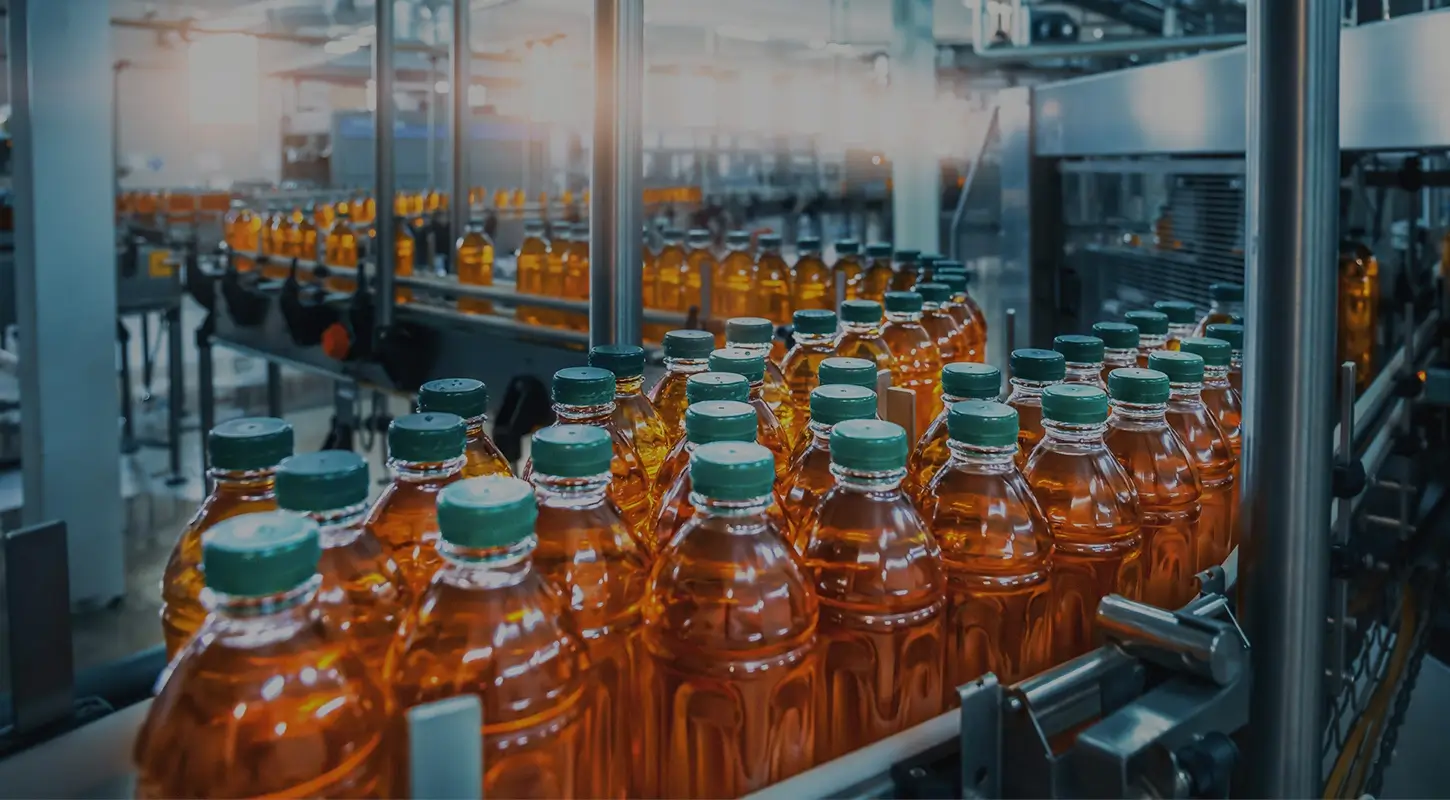
Why Food & Beverage Plants Need
Clean Compressed Air
Compressed air is often an essential part of food and beverage production—from filling and packaging to conveying and PET bottle blowing. When compressed air comes into direct or indirect contact with products, packaging, or production equipment, oil, moisture, particles and other contaminants can affect product quality and production reliability.
Clean Air for Critical Production Processes
Product Contact
Help protect food and beverage products from oil and other compressed-air contaminants.
Filling & Packaging
Provide clean, dry compressed air for pneumatic equipment, filling machines and packaging lines.
Conveying & Blowing
Support reliable conveying, bottle blowing and other processes requiring clean compressed air.
Stable Production
Combine oil-free compressors, air dryers and precision filtration to deliver the air quality your production process requires.
Sollant Food & Beverage Air Solutions
Class 0 Oil-Free Compressors
Designed for applications requiring oil-free compressed air, including direct-contact production processes.
Efficient Air Treatment
Refrigerated and desiccant dryers help control moisture, while precision filters remove oil and particulate contaminants.
Engineered for Your Production Line
We select compressor capacity, pressure, drying and filtration based on your application, air flow and operating requirements.
Need Clean Compressed Air for Your Production Line?
Tell us your required pressure, air flow and application. Our engineers can recommend a suitable oil-free compressor and air treatment system.
Food & Beverage Compressed Air Solutions
From food processing and beverage filling to packaging, conveying and PET bottle blowing, Sollant provides oil-free compressed air solutions designed around your production requirements.
Choose the right compressor, drying and filtration system based on your application, required pressure, air flow and air quality requirements.
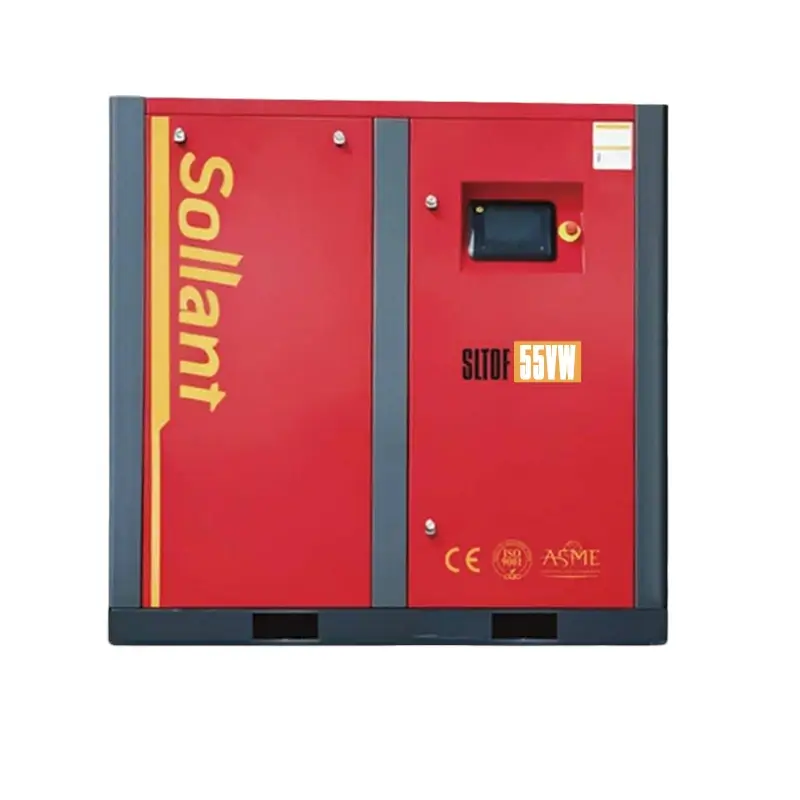
01. SLTOF-55VW Oil-Free Water-Lubricated Screw Air Compressor
Designed for food and beverage applications where compressed air may come into direct contact with the product or production process.
- Class 0 oil-free compressed air
- 8 / 10 / 12.5 bar pressure options
- Water-lubricated screw technology
- Suitable for direct-contact applications
- Customized capacity and system configuration available
Recommended for: Food processing | Beverage production | Direct-contact applications
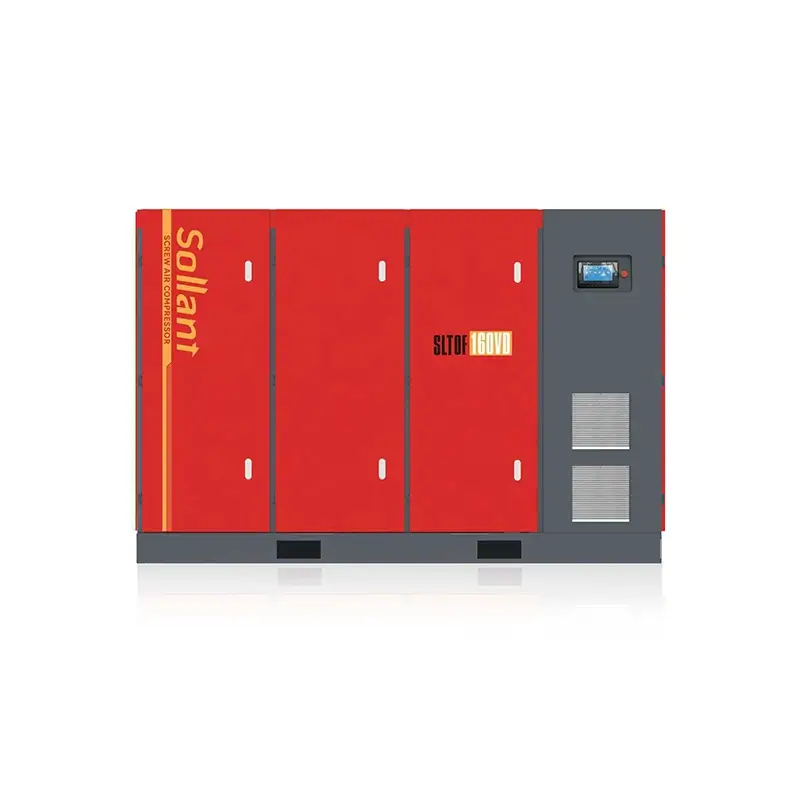
02. SLTOF-55FD Oil-Free Dry Screw Air Compressor
A variable-speed oil-free screw compressor solution for production lines with changing compressed air demand.
- Class 0 oil-free compressed air
- 7 / 8 / 10 bar pressure options
- Variable frequency drive for demand-based operation
- Designed for efficient and stable air supply
- Suitable for packaging and conveying applications
Recommended for: Packaging | Conveying | Pneumatic equipment | Production lines with variable demand

03. SLTOF-7.5S Oil-Free Scroll Air Compressor
A compact oil-free scroll compressor for applications requiring clean and quiet compressed air.
- Oil-free scroll technology
- 0.8 / 1.0 MPa working pressure
- Air delivery up to 1.2 m³/min
- Low-noise operation
- Suitable for filling and bottle blowing applications
Recommended for: Beverage filling | PET bottle blowing | Small production lines | Clean air applications
Compressed Air Treatment for Food & Beverage Production
Clean Air Starts with the Complete System
The compressor is only one part of a reliable compressed air system. Sollant can integrate air dryers and precision filters to help control moisture, oil and particulate contaminants according to your production requirements.
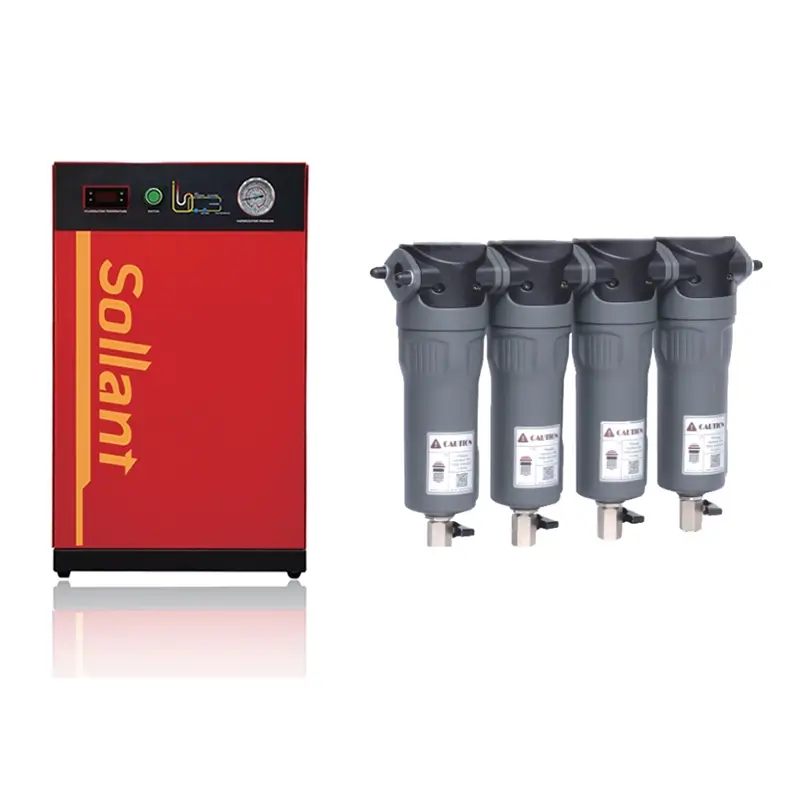
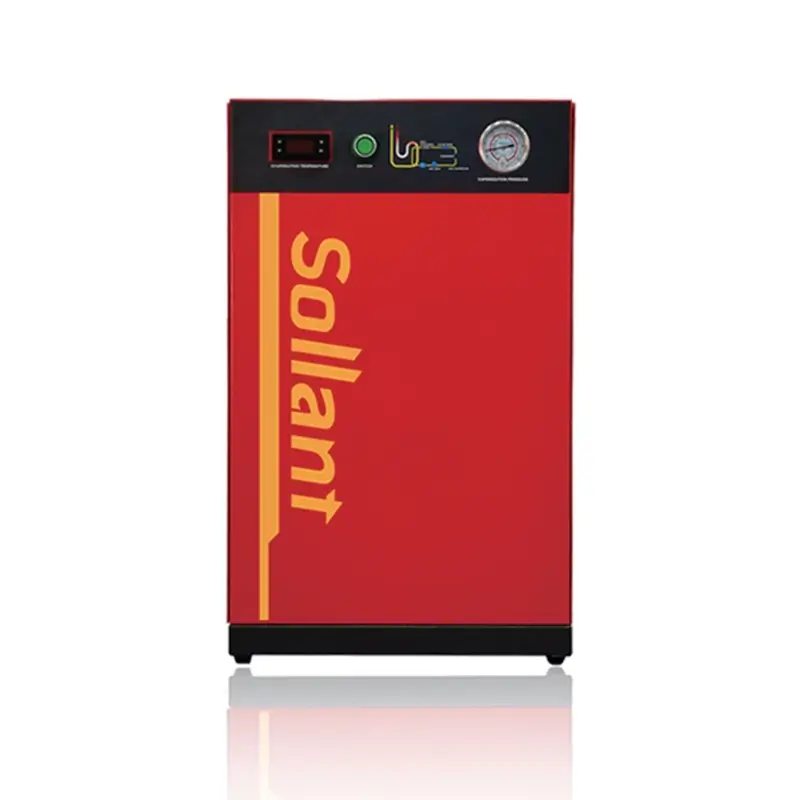
Refrigerated Air Dryer + C/T/A Precision Filters
- Pressure Dew Point: 2–10°C
- Refrigerated drying technology
- C/T/A grade precision filtration
- Oil content ≤ 0.01 ppm*
- Designed for moisture and contaminant control
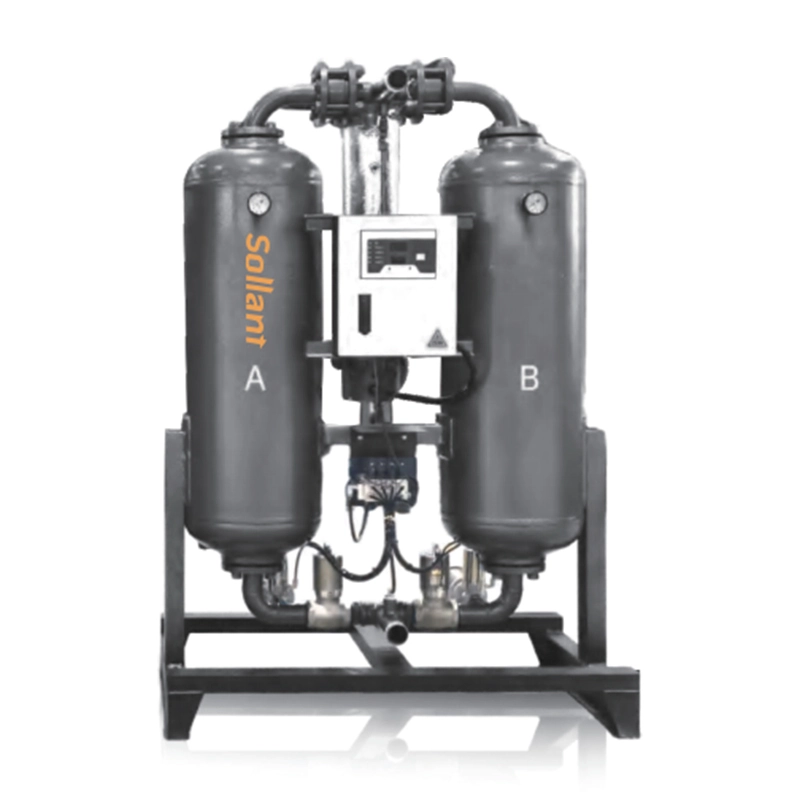
Heated Regenerative Desiccant Air Dryer
- Pressure Dew Point: -20 to -40°C
- Working pressure: 0.6–1.0 MPa
- Inlet oil content: ≤0.1 ppm
- Suitable for applications requiring lower pressure dew points
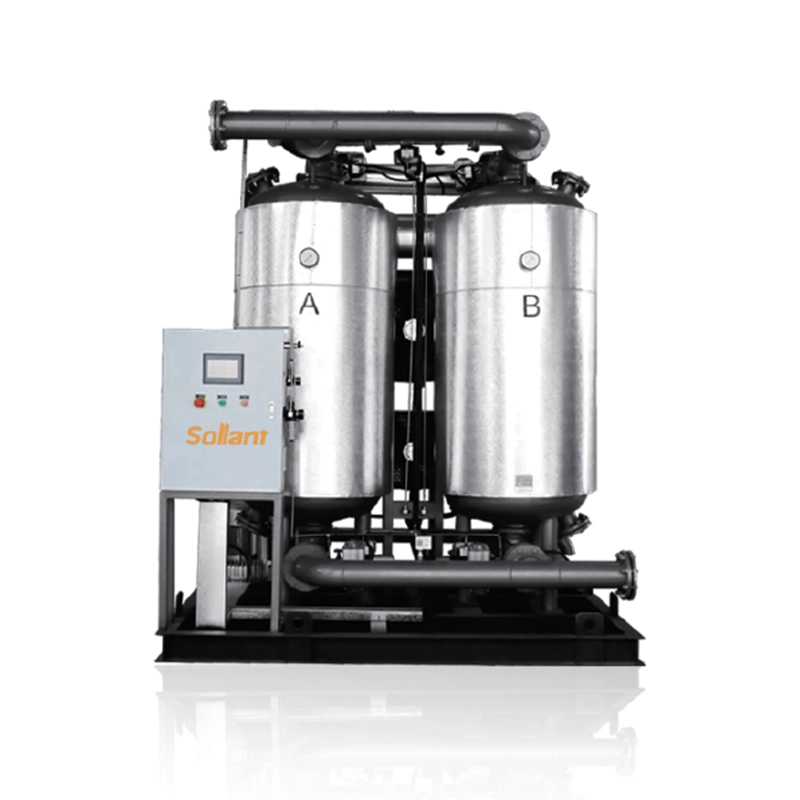
Zero Loss Blower Heta Desiccant Air Dryer
- Pressure Dew Point: ≤-40°C
- Working pressure: 0.6–1.0 MPa
- Inlet oil content: ≤0.1 ppm
- Blower heat regeneration
- Designed for demanding dry-air applications
Find the Right Solution for Your Production Line
Not sure which compressor, dryer or filter configuration you need?
Send us your application, required pressure and air flow. Our engineers will recommend a suitable compressed air system for your production line.
Compressed Air Requirements by Production Stage
Every food and beverage process has different compressed air requirements. Sollant matches the compressor, pressure, air flow, drying and filtration to your production stage.
Food Processing
Clean, Stable & Oil-Free Air
For pneumatic equipment, process control and food processing applications where compressed air cleanliness matters.
Recommended: Class 0 Oil-Free Screw Compressor
Beverage Filling
Clean & Dry Compressed Air
Reliable compressed air for filling machines, pneumatic controls and beverage production lines.
Recommended: Oil-Free Screw / Scroll Compressor + Air Dryer
PET Bottle Blowing
Stable Pressure & High Air Flow
Clean compressed air for PET bottle blowing and preform processing, with pressure and flow matched to your equipment.
Recommended: Oil-Free Scroll / High-Pressure Solution
Food Packaging
Reliable Air for Packaging Lines
Oil-free compressed air for packaging machines, actuators and pneumatic equipment.
Recommended: Oil-Free Screw Compressor + Precision Filtration
Conveying
Stable Air Flow for Continuous Production
Designed for pneumatic conveying and production lines with changing compressed air demand.
Recommended: Variable-Speed Oil-Free Screw Compressor
Brewing & Dairy
Clean Air for Critical Processes
Oil-free compressed air solutions for brewing, dairy processing, filling and packaging applications.
Recommended: Class 0 Oil-Free Compressor + Air Treatment
One Production Line. One Engineered Air Solution.
Not sure which compressor is right for your application?
Send us your application + required pressure + air flow. Our engineers will recommend the right oil-free compressor, air dryer and filtration system for your production line.
Why Food & Beverage Needs Oil-Free Class 0 Air
When compressed air can contact food, beverages or product-contact surfaces, air purity matters.
Oil-free compressed air helps reduce the risk of lubricant contamination in critical production processes such as filling, packaging, conveying and PET bottle blowing.
Why Choose Class 0 Oil-Free Air?
01 | Minimize Oil Contamination
No oil-based lubricant is used in the compression chamber, helping reduce the risk of oil carryover from the compression process.
02 | Support Clean Production
Suitable for critical applications where compressed air purity is an important production requirement.
03 | Protect Your Process
Combine oil-free compression with the right dryer and precision filtration to control oil, moisture and particles.
Class 0 Oil-Free Solutions from Sollant
| Solution | Pressure | Best For |
| SLTOF-55VW Oil-Free Water-Lubricated Screw Air Compressor | 8 / 10 / 12.5 bar | Direct-contact applications |
| SLTOF-55FD Oil-Free Dry Screw Air Compressor | 7 / 8 / 10 bar | Packaging & conveying |
| SLTOF-7.5S Oil-Free Scroll Air Compressor | 0.8 / 1.0 MPa | Filling & bottle blowing |
Compressor + Dryer + Filters = Complete Clean Air Solution
Need Class 0 Oil-Free Air?
Tell us your application, pressure and air flow. Get a customized compressor solution from Sollant.
How to Choose the Right
Compressed Air Purity for Food Production
The right compressed air quality depends on where the air is used, whether it contacts the product, and how much moisture and contamination control your process requires.
Choose Your Air Quality in 3 Steps
01 — Check Air Contact
Does compressed air contact food, beverages or product-contact surfaces?
YES → Consider Class 0 Oil-Free Air
Ideal for critical applications such as filling, packaging, conveying and PET bottle blowing.
02 — Choose Your Pressure Dew Point
Select the right dryer according to your production requirements:
- Refrigerated Air Dryer:2–10a°C – For general production and packaging.
- Desiccant Air Dryer:-20 to -40°C – For applications requiring lower moisture levels.
- Zero Loss Blower Heta Dryer:≤ -40°C – For demanding dry-air applications.
03 — Match Your Filtration
Combine the compressor with the appropriate precision filtration to help control oil, water and particles.
C / T / A Grade Filters
Configured according to your compressed air quality requirements.
Your Production. Your Air Quality. Your Solution.
Oil-Free Compressor + Air Dryer + Precision Filters
Sollant can configure a complete compressed air system based on your application, pressure, air flow, dew point and air quality requirements.
Not Sure What You Need?
Send us your application + pressure + air flow. Our engineers will recommend the right compressor and air treatment system.



.png.jpg)
Food and Beverage Industry
Frequently Asked Questions
Is an oil-free air compressor mandatory for the food industry?
Not necessarily; it depends on whether the air comes into direct contact with the product. For direct-contact applications (such as mixing, fermentation, or raw material conveying), using an ISO Class 0 certified oil-free compressor is strongly recommended. For non-contact applications (such as powering pneumatic cylinders), a high-quality oil-lubricated screw compressor paired with a high-efficiency oil-removal filter can meet food safety standards while offering better cost-effectiveness. Sollant can provide the most suitable solution based on your specific processes.
How can the dryness of the compressed air be ensured?
Compressed air contains significant moisture, which condenses into liquid water upon cooling. It is essential to use a refrigerated air dryer (to lower the pressure dew point to 2–10°C) or an adsorption dryer (capable of lowering the pressure dew point to between -20°C and -70°C). Sollant offers a comprehensive range of dryers to ensure there is no liquid water in your piping system, thereby preventing bacterial growth.
How do air compressors operate stably in harsh environments characterized by high temperatures, high humidity, or prolonged operation?
Handling high temperatures: Utilize large-sized coolers and high-efficiency fans, and use fully synthetic lubricants (for details, please refer to High-Temperature Management for Screw Air Compressors) to ensure the unit does not trip at ambient temperatures of 45°C.
Handling high humidity: High-efficiency intake filtration and air-water separators are installed, combined with refrigerated dryers, to ensure the timely discharge of condensate.
Handling prolonged operation: The airend is designed for heavy-duty, continuous operation; variable frequency drives (VFD) and soft-start technology minimize mechanical stress, while rotational operation among multiple units prevents equipment fatigue.
What are the specific requirements for compressed air across different stages of the process, such as PET bottle blowing, filling, and packaging?
| Work Section | Pressure Requirement | Core Quality Requirement |
| PET bottle blowing | 30–40 bar | Must be oil-free (Class 0) |
| Filling | 5–8 bar | Must be oil-free (Class 0) |
| Packaging | 4–6 bar | No strict oil-free requirement |
| Instrument air | 5–7 bar | Highly dry (-20°C dew point) |
How often does the compressed air system require maintenance?
| Item | Frequency |
| Daily checks (liquid level, alarms, drainage) | Daily |
| Air filter | 500–1,000 hours |
| Oil filter | 1,000–2,000 hours |
| Oil-Air Separator | 2,000–4,000 hours |
| Lubricating Oil (Mineral/Fully Synthetic) | 2,000–4,000 / 8,000 hours |
| Cooler cleaning | 3–6 months |
| Safety Valve Calibration | Once a year |
| Complete machine overhaul | 20,000–24,000 hours |
Maintenance intervals must be shortened for environments characterized by high temperatures, high humidity, or heavy dust.
Request a Quick Quote Now
Order or No Order? We're here for you 24/7

