


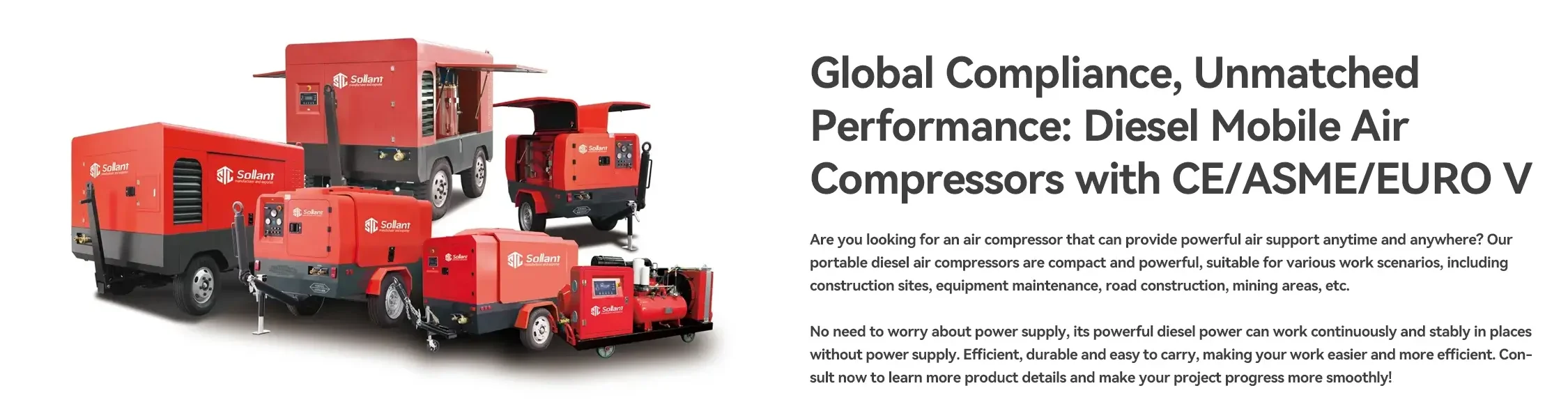
Reliable diesel-powered compressed air for construction, mining, drilling, sandblasting and other demanding field applications.
Sollant diesel portable air compressors are designed for jobsites where reliable compressed air and mobility are essential. With multiple airflow, pressure and engine configurations, we provide portable compressor solutions for different working conditions and application requirements.
More Economical Configuration Options

The original imported Japanese Yanmar engine is more suitable for SOLLANT small mobile air compressors, bringing better fuel economy and lower noise.

Cummins diesel engines are used in SOLLANT medium and large mobile air compressors. The stronger power and more convenient maintenance services make it more convenient for our users to use.
Of course, we will also provide more options based on customer needs, such as domestic diesel engines and other brands. Rich configuration options are one of the customized services we are good at.
Diesel Portable Air Compressor Advantages
Maximum Versatility
The SLTDP is the ideal power choice for equipment such as construction machinery. The refined construction and high-quality components ensure trouble-free operation in ambient temperatures ranging from -20°C to +45°C. Its versatility is further enhanced by the chassis, which can be equipped with a fixed or height-adjustable tow bar and with or without overrunning brake. The fixed version can be mounted on a slide rail or machine stand.
Separate Air Filters for Engine and Compressor
The air filter is specifically tailored to the required air requirements, thus ensuring reliable system operation. Another important design detail is the electric fuel pump, which allows for quick and simple degassing of the diesel lines, eliminating the need for labor-intensive manual pumps.
Lightweight
Powerful doesn’t have to mean heavy: the SLTDP is very easy to maneuver and transport. In addition, its large diesel capacity ensures that the compressor has enough power to last a full work shift.
Optional Diesel Engine
The flexibly configured diesel engines can meet the needs of different operating environments and conditions, and the universal maintenance means that customers can find suitable parts suppliers no matter where the unit is located.
Simple to Operate
User-friendly icons and a single start switch with a preheat function are included. There is also a fully automatic monitoring and shutdown function for faults, while the pressure gauge and air temperature display make all information clear at a glance.
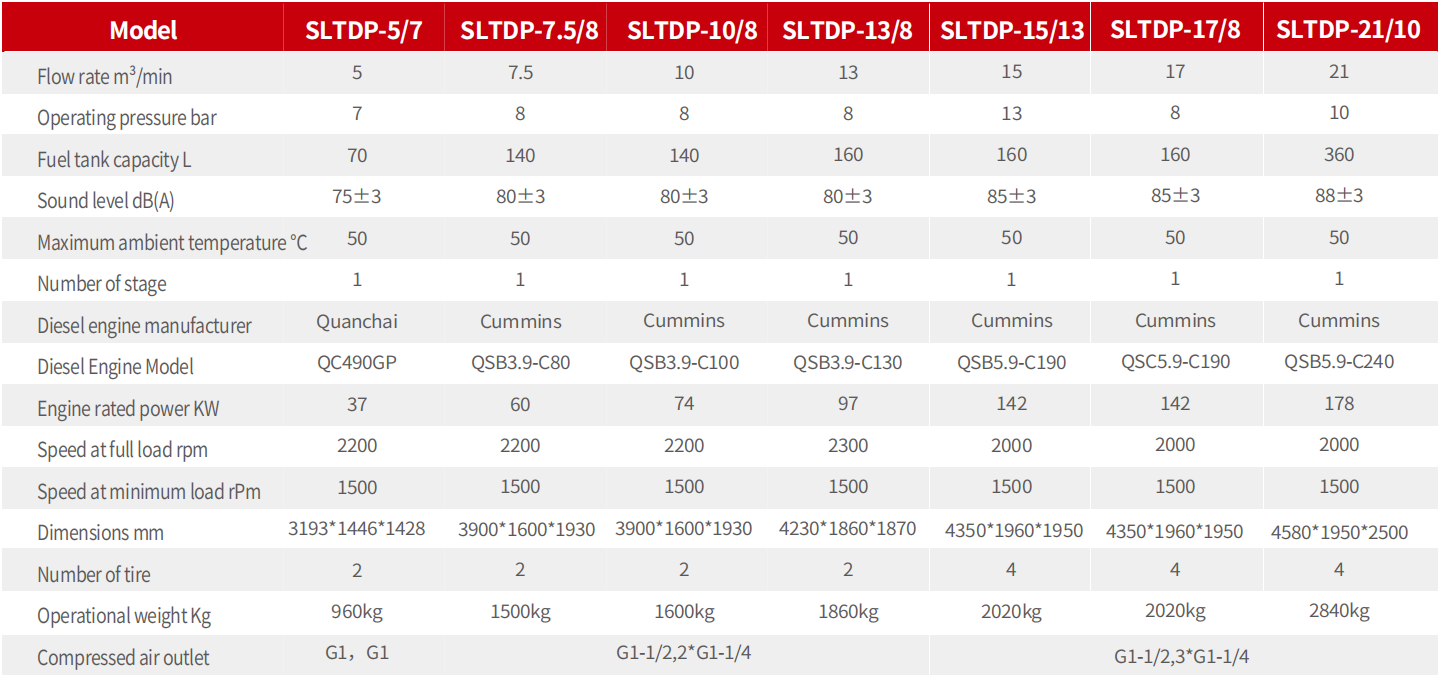
Technical Specifications of Single-Stage Portable Diesel Air Compressors
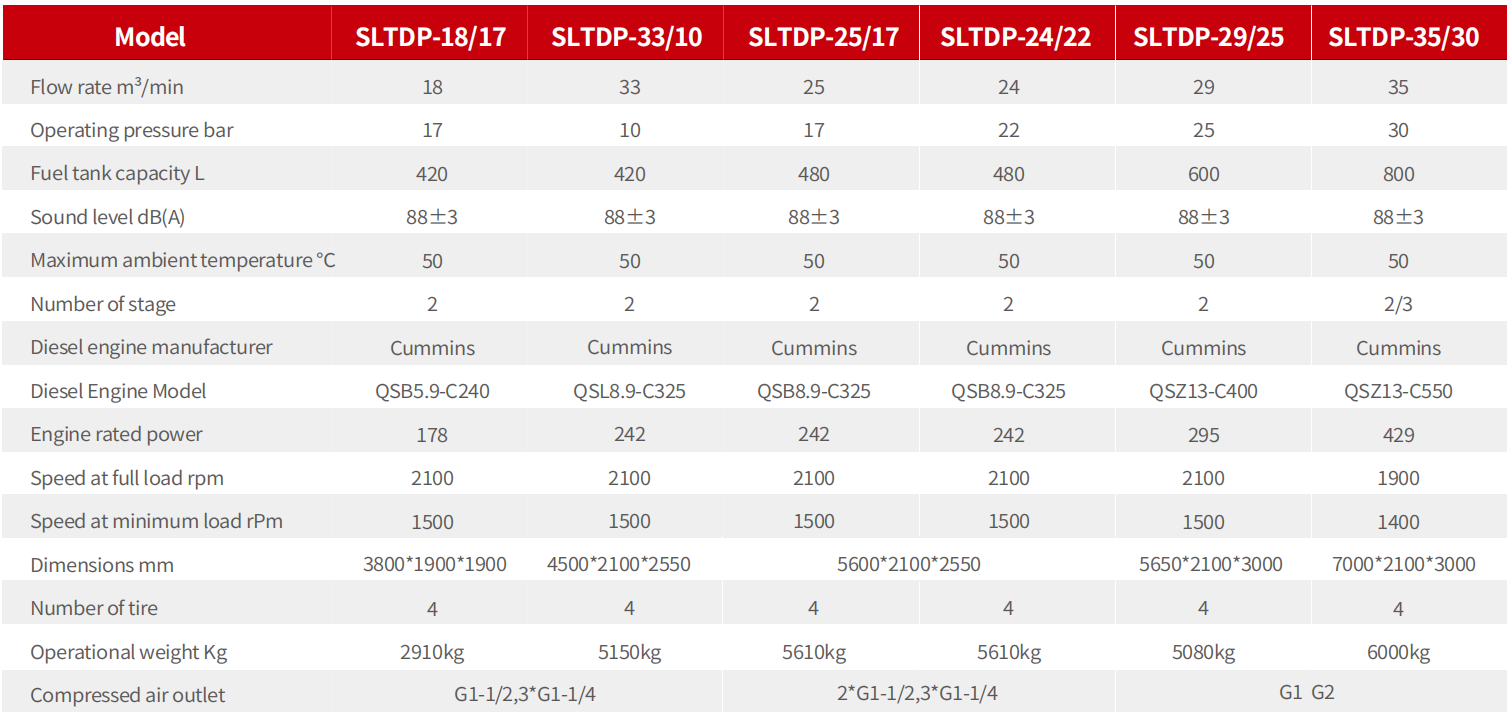
Technical Specifications of Two-Stage Portable Diesel Air Compressors
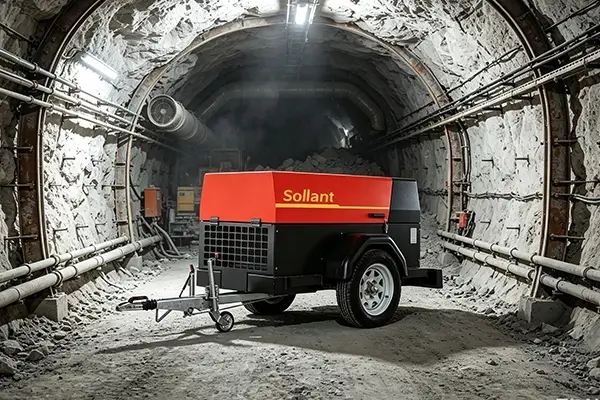
Heavy-Duty Compressed Air for Mining Operations
Mining environments require powerful and reliable equipment. Sollant diesel compressors provide consistent airflow for drilling, excavation and quarry operations.
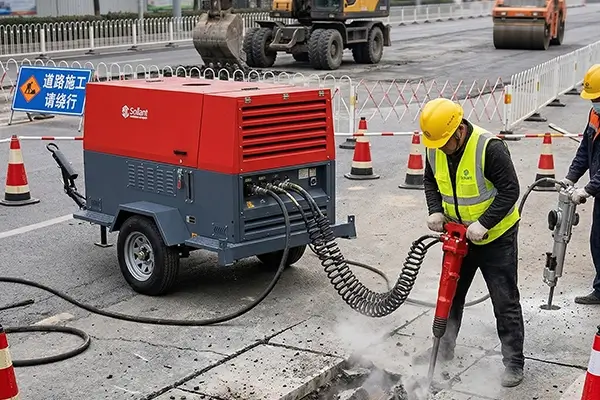
Construction Sites
Reliable Air Supply for On-Site Construction Operations
Portable diesel air compressors provide continuous compressed air for pneumatic tools, demolition equipment and construction machinery.
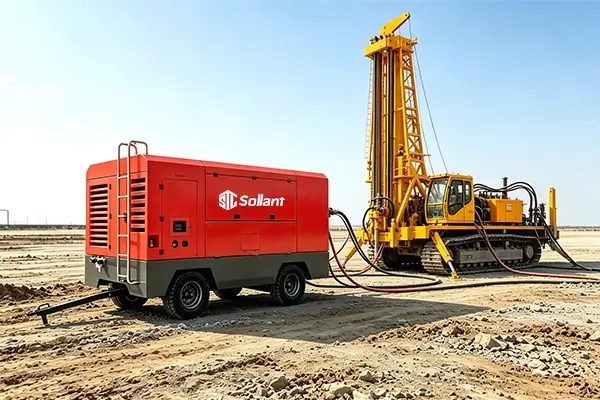
Drilling Fields
High-Pressure Air Solution for Drilling Applications
Sollant portable diesel compressors deliver stable pressure and airflow for drilling projects that demand reliable air power.
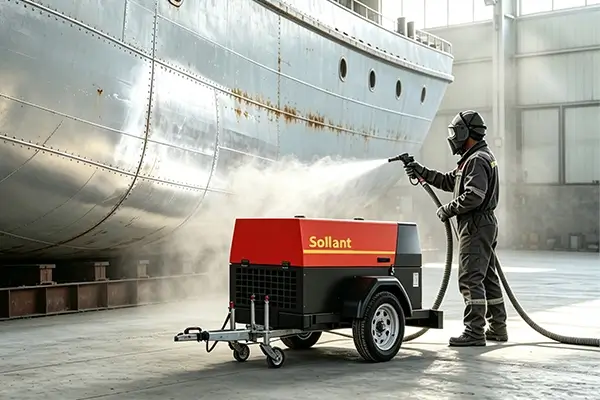
Sandblasting
Stable Compressed Air for Efficient Blasting Operations
Sollant portable diesel air compressors provide continuous and stable compressed air for sandblasting, surface cleaning and industrial preparation projects.
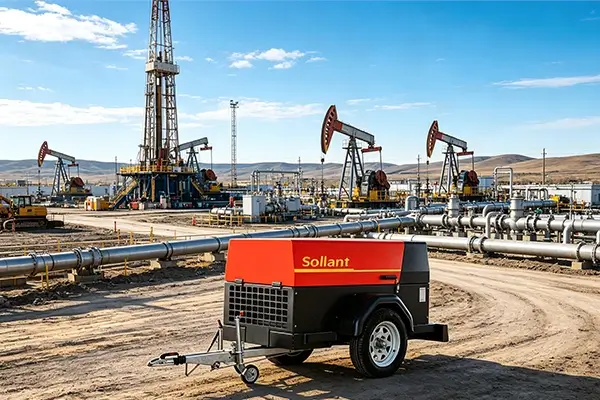
Oil & Gas Field Operations
Reliable Compressed Air for Remote Oil & Gas Projects
Sollant portable diesel air compressors provide a reliable and independent air supply for oil & gas field operations, especially in remote locations where stable electricity is unavailable.
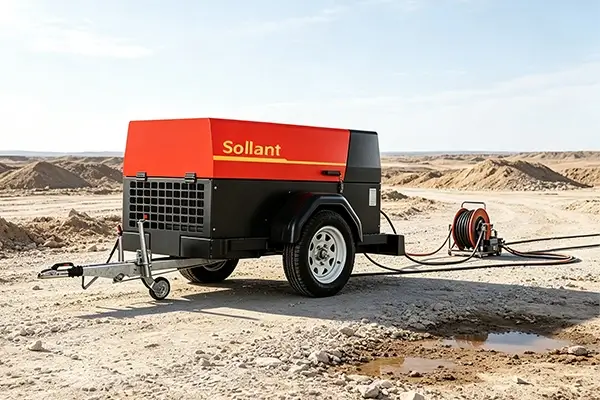
Remote & Off-Grid Locations
Independent Power Solution Anywhere You Work
When electricity is unavailable, diesel-powered portable compressors provide a reliable compressed air source for remote operations.


Transportation Facility Maintenance Project

Agricultural Machinery Maintenance Project

Mine Drilling Air Supply Project

Air Supply Project for Pile Foundation Drilling Rigs at Construction Sites

Construction Debris Crushing and Removal Project

Hull Sandblasting Project
A portable diesel air compressor is a mobile compressed air system powered by a diesel engine. Unlike electric air compressors, it does not require a fixed electrical power supply, making it suitable for remote jobsites and outdoor applications.
Diesel portable air compressors are commonly available in towable, trailer-mounted and skid-mounted configurations. They are designed to provide reliable compressed air for applications such as construction, mining, drilling, sandblasting and other demanding field operations.
Diesel powered air compressors are widely used in industries where reliable compressed air and mobility are important. Common applications include construction, mining, water well drilling, geological exploration, road maintenance, sandblasting, oil and gas, and infrastructure projects.
Typical equipment powered by a towable air compressor includes jackhammers, pneumatic tools, drilling rigs, breakers and abrasive blasting equipment.
The right compressor should be selected according to the required air flow, working pressure, operating environment and application.
The working pressure of a portable diesel air compressor depends on the model and application. Sollant diesel driven portable air compressors are available in different pressure configurations, with current models covering approximately 7–30 bar.
Higher-pressure configurations can be selected for applications such as drilling and other demanding operations. When choosing a compressor, pressure should always be considered together with the required air flow to ensure the compressor can properly support the connected equipment.
For a specific recommendation, provide your required pressure, air flow and application to our engineers.
Yes. Sollant provides OEM and customized portable diesel air compressor solutions to meet different application requirements. We can customize compressor configurations including air delivery capacity, working pressure, diesel engine brand, trailer design, color, control system and other specifications. Our engineering team works with customers to provide the most suitable compressed air solution for construction, mining, drilling, sandblasting and industrial applications.
Engine options depend on the compressor model, required power and project specifications. Sollant offers diesel engine configurations including Yanmar, Cummins and other available engine options.
Engine selection can be based on factors such as required power, fuel efficiency, local service availability, spare parts support and operating conditions.
Please contact our sales team with your required compressor capacity and application to confirm the available engine options for your model.
The main difference is how the compressor is transported and installed.
A towable diesel air compressor is mounted on a trailer or towable chassis and can be transported between jobsites using a suitable vehicle. It is ideal for construction, roadwork, drilling, mining and other applications where the compressor needs to be moved frequently.
A skid-mounted diesel air compressor is installed on a fixed steel skid rather than a towable trailer. It is generally better suited for applications where the compressor remains in one location or is integrated into other equipment or a permanent installation.
Sollant offers both towable and skid-mounted diesel portable air compressor configurations. The right option depends on your application, transportation requirements, installation conditions and required air flow and pressure.
In modern industry, air compression technology has become an indispensable infrastructure for many sectors, particularly for on-site operations requiring efficient and continuous operation. Diesel portable air compressors, as portable and powerful compressed air equipment, are widely used in a variety of fields, including construction, mining, oil drilling, and tunnel construction. These industries often face harsh operating environments, such as high temperatures, low temperatures, high altitudes, and dust, placing high demands on the compressor’s durability, efficiency, and adaptability. Professional diesel air compressor manufacturers continuously optimize product design to enhance the equipment’s stability and service life under complex operating conditions.
This article will help you understand how to choose the appropriate mobile diesel compressor model according to air demand, so as to improve work efficiency, save energy and reduce maintenance costs.
When selecting the right mobile diesel air compressor, it is essential to first understand and assess the actual air demand. Air demand is generally determined by three main factors: flow rate, pressure, and continuous operation time. A proper understanding of these concepts will help in selecting the appropriate compressor model, ensuring efficient operation of the equipment.
Air flow refers to the amount of compressed air the compressor can output per unit of time, typically measured in Cubic Feet per Minute (CFM) or Liters per Minute (L/min). The flow rate directly impacts the compressor’s working capacity; insufficient flow may result in the equipment not meeting operational needs, while excessive flow could lead to wasted energy.
Working pressure refers to the air pressure provided by the compressor, typically measured in pounds per square inch (PSI) or bars (bar). Different tools and equipment require different pressure levels, so selecting the right pressure is crucial.
In addition to flow and pressure, the continuous operation time and starting requirements of the compressor are also important factors in determining the right model.
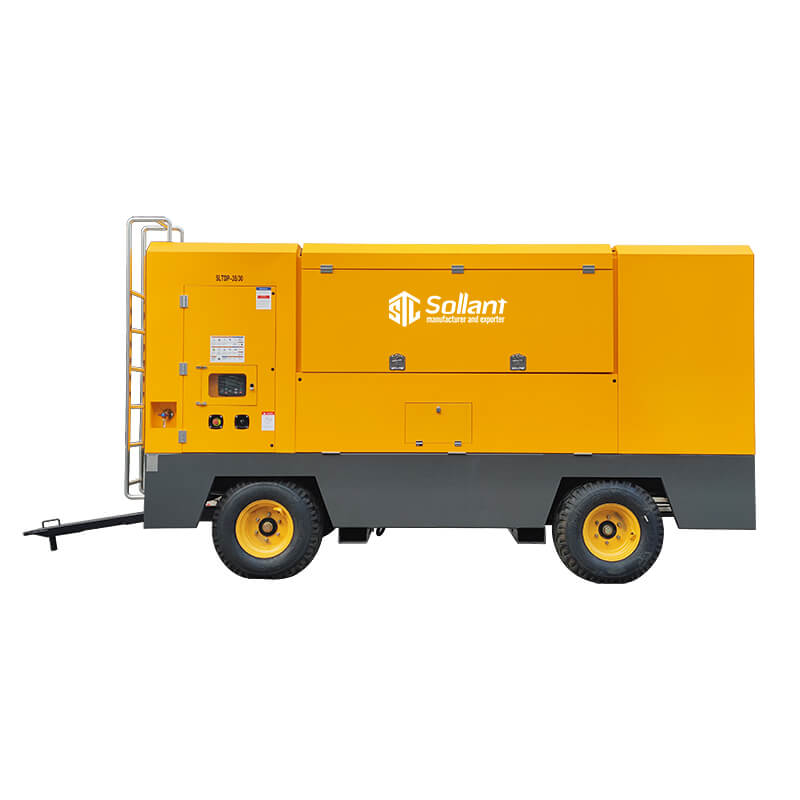
When selecting the appropriate diesel air compressor, evaluating the actual air demand on-site and for the equipment is a crucial step. Air demand not only includes flow and pressure but also factors such as load variation and working environment. Accurately assessing these needs ensures that the chosen air compressor provides adequate air supply during operation, preventing energy waste and potential breakdowns.
Each worksite and piece of equipment has different airflow demands, so calculating the required flow (CFM) is the foundation for selecting the right compressor.
Flow rate is a key performance indicator for air compressors, directly affecting the equipment’s operational capacity. When selecting a compressor, the first step is to clearly understand the airflow requirements of all equipment at the site. Each pneumatic tool or machine typically has a specified airflow requirement (in CFM), which can be obtained by referring to the equipment’s manual or the manufacturer’s technical documentation.
For example:
To calculate the total airflow demand, add up the flow requirements for all tools and equipment. If multiple devices will be used simultaneously at the worksite, consider the peak airflow demand when all equipment is operating concurrently. To avoid overloading the compressor, it’s typically recommended to choose a unit that can provide extra capacity, ensuring stable air supply even during simultaneous operation.
Each pneumatic tool or equipment specification will list its airflow requirement (CFM). For example, common equipment like pneumatic drills, sandblasters, and air compressors will have their rated airflow needs listed. Understanding these airflow requirements is essential to ensure that the selected air compressor can provide sufficient airflow during operation.
Examples:
These specifications will help you accurately calculate the total airflow needed for the work and ensure that the selected compressor meets the requirements of all tools.
In addition to airflow, air pressure requirements are another key factor in compressor selection. Different tools and equipment have varying pressure needs, and understanding and choosing the right pressure range for the compressor will ensure smooth operation.
Each piece of equipment has a specified operating pressure range. Generally, pneumatic tools operate at pressures between 90-150 PSI (6-10 bar), while specialized equipment such as sandblasters or drilling machines may require higher pressures (150 PSI and above). If the compressor’s air pressure cannot meet the equipment’s requirements, the equipment may fail to operate or even sustain damage.
For devices requiring high pressure (e.g., sandblasters, drilling machines) and those requiring lower pressure (e.g., pneumatic wrenches, staplers), you should select different compressor models based on pressure needs. When choosing a compressor, pay special attention to its maximum working pressure to ensure compatibility with all the equipment’s requirements.
For example:
In real-world operations, air demand is not constant, and load variations can influence the choice of compressor. In some work environments, the usage load of equipment fluctuates significantly, requiring a compressor that can handle these variations.
On some construction or industrial sites, tool usage may be intermittent, and the air demand may fluctuate throughout the day. For example, during painting, drilling, or demolition tasks, air demand may suddenly increase, and the compressor must be able to handle these momentary spikes in demand.
Thus, when selecting a compressor, it’s essential not only to account for regular workload requirements but also to allow for an air supply buffer. For instance, if the site’s flow demand is 100 CFM, consider selecting a compressor with a flow rate of 120 CFM or more to ensure stable operation during sudden load increases.
If the worksite experiences significant fluctuations in air demand, or if multiple devices are running simultaneously, it’s advisable to choose a compressor with slightly higher capacity than the actual demand. A compressor that’s too small may cause insufficient pressure or unstable airflow, potentially delaying work.
The environmental conditions also influence the performance and efficiency of the air compressor, so when selecting a model, it is important to consider the following environmental factors.
Extreme temperatures (high or low) can have a significant impact on the performance of diesel air compressors. In hot environments, the compressor will require better heat dissipation, while in cold environments, it may need special design features or cold-start devices to ensure reliable startup and operation.
Additionally, humidity levels can affect the air quality delivered by the compressor, especially in damp environments where excess moisture in the air could affect the airflow quality. In such cases, an air dryer or filtration system might be needed to ensure the compressed air remains of the required quality.
At high altitudes, the air becomes thinner, which can reduce the compressor’s output capability. In such environments, the performance of a standard compressor may degrade, so you will need to choose a model specifically designed for high-altitude operation. These compressors are built with features that account for the reduced air density, ensuring they can still deliver sufficient flow and pressure.
At high altitudes, both flow rate and pressure will decrease due to the thinning air, so it’s necessary to select a compressor with higher capacity (both flow and pressure) to compensate for these environmental factors.
Once actual air volume is determined, the next step is to select the appropriate towed air compressor model based on these requirements. Consulting with a portable air compressor factory for professional advice is crucial. The selection process should not only ensure proper flow and pressure matching, but also consider power, fuel efficiency, and the manufacturer’s objective assessment of equipment reliability and maintenance requirements. Making the right choice not only ensures efficient operation but also significantly reduces equipment failure rates and long-term operating costs.
The flow rate and pressure of the compressor are the core parameters in selecting a model, as they directly determine whether the compressor can meet the needs of the worksite.
When selecting an air compressor, the first priority is to ensure that its flow rate and pressure can meet the maximum requirements of all equipment being used on-site. For example, if multiple devices will be in operation simultaneously, you need to calculate the total airflow required and choose a compressor that can provide the necessary flow and pressure.
While calculating the required flow and pressure is important, it’s advisable to choose a compressor model that provides slightly more than the maximum demand. This ensures stable air supply in cases of load fluctuations and reduces the risk of overloading the compressor, extending its service life.
For example, if the maximum flow rate requirement is calculated at 120 CFM, selecting a compressor with a flow rate of 140-150 CFM ensures that even under extreme operating conditions, the compressor will run smoothly.
The power and fuel efficiency of a diesel portable screw air compressor are critical factors in its selection, as they directly affect the device’s cost-effectiveness and operating expenses.
Diesel air compressors are typically powered by diesel engines, and the engine’s power determines the performance output of the compressor. Choosing the appropriate power rating ensures stable operation and high efficiency.
The fuel efficiency of a diesel air compressor plays a significant role in long-term operating costs. Choosing a low fuel consumption, high-efficiency model can significantly reduce hourly operating costs.
For instance, while high-power compressors generally consume more fuel, if the workload is heavy, selecting a more fuel-efficient model will save fuel in the long term and reduce overall operational costs.
Diesel driven air compressors are often used in environments where frequent relocation is required, so portability and mobility are key considerations during selection.
The size, weight, and design of a diesel air compressor directly affect its portability. For smaller-scale projects or short-term tasks, selecting a more compact and lightweight compressor will make transportation and relocation easier.
Diesel air compressors come in different transport modes, including trailer-mounted, push-style, or directly mounted on equipment. The choice of transport mode should consider the specific conditions at the worksite.
Selecting a reliable diesel air compressor is critical for ensuring smooth operations at the worksite. Equipment durability, ease of maintenance, and after-sales support all influence the compressor’s long-term performance.
Air compressors working in harsh environments (e.g., high temperatures, heavy dust, high humidity) require high durability. Choosing a rugged compressor can help reduce breakdowns and the need for frequent repairs, ensuring efficient operation.
Selecting a compressor that is easy to maintain and service can reduce maintenance costs and enhance user convenience. You should review the compressor’s maintenance cycle, common fault diagnostics, and the ease of replacing parts.
To ensure that you can quickly obtain technical support and repairs when needed, your selection should focus on brands or models that have strong after-sales support from the portable diesel air compressor factory. This means that you need to consider the manufacturer’s service network and local spare parts availability as key decision-making basis.
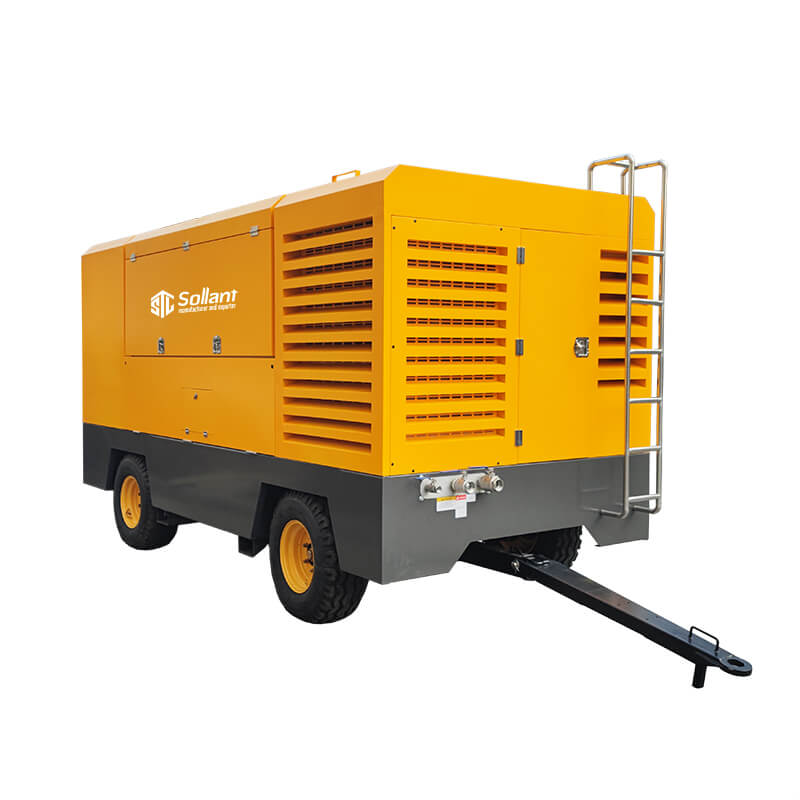
Selecting the right diesel air compressor model and establishing a partnership with professional portable compressor manufacturers are critical to ensuring smooth project execution, improving work efficiency and minimizing long-term operating costs.In addition to the basic considerations of air flow and pressure, several other important factors should be fully considered during the selection process:
Every worksite has unique requirements, and air compressors should be selected based on the specific application. For example, construction sites generally require higher air flow and a certain level of pressure, while mining and drilling operations demand high flow rates, pressure, and durability. Understanding the equipment’s usage and load variations at the site can help choose a compressor with the right capacity and stable performance.
In regions with strict environmental regulations, noise levels and compliance with emission standards are critical considerations. Selecting a low-noise design and an air compressor that meets local environmental regulations not only improves worksite comfort but also ensures legal and compliant operations.
The energy consumption of the air compressor directly impacts long-term operating costs. Energy-efficient models help reduce fuel consumption, thus lowering overall costs. Additionally, equipment that is easy to maintain and service can minimize downtime and related expenses, ensuring projects are completed on time.
Construction sites and mining operations often require frequent movement of equipment. Thus, the portability and ease of transportation of the air compressor are of paramount importance. Selecting the right model for the scale of the operation will increase work efficiency and reduce unnecessary transportation costs.
Choosing the right diesel air compressor model is not only crucial for improving operational efficiency but also crucial for reducing long-term operating costs. This decision not only impacts a company’s operational efficiency but also directly impacts its market competitiveness. Especially when selecting mobile equipment like towed air compressors, partnering with a professional portable air compressor supplier can ensure the equipment’s performance, reliability, and suitability are best suited to actual operating conditions, thereby controlling costs and enhancing the project’s sustainability.
With evolving market demands and technological advancements, air compressor products are increasingly becoming more intelligent, efficient, and environmentally friendly. When selecting the right compressor model, users should closely monitor industry trends, particularly technological advancements in mobile air compressor factories in structural design, power matching, and intelligent control. This not only helps companies select the right equipment today but also ensures smooth integration with future equipment upgrades and system integration solutions offered by towable air compressor manufacturers, maintaining business continuity and competitiveness in an ever-changing market.


