
How do you select the most suitable high-pressure air compressor for your PET bottle blowing production line?
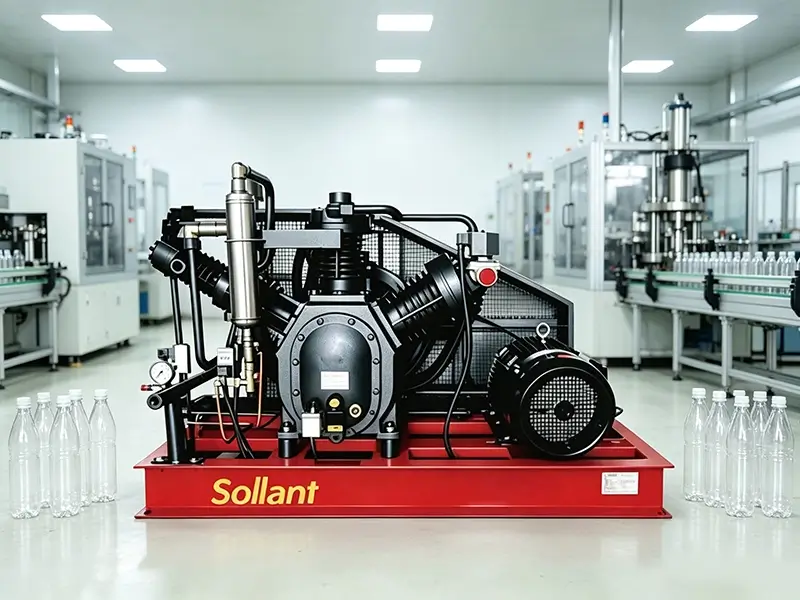
In a PET bottle blowing production line, the air compressor is far more than mere “auxiliary equipment”; it is a core component that determines production capacity, bottle quality, energy consumption, and the risk of downtime. Selecting the right high-pressure air compressor ensures a more stable blowing process, uniform preform stretching, and consistent finished products; conversely, the wrong choice can lead to issues such as pressure fluctuations, oil contamination, excessive energy consumption, and frequent maintenance.
For companies packaging beverages, purified water, edible oils, condiments, and personal care products, the compressed air system for PET bottle blowing must simultaneously meet requirements for high pressure, high flow rates, and high purity. Therefore, equipment selection requires a comprehensive evaluation across four dimensions: the production process, bottle design, equipment cycle time, and system design.
What is PET bottle blowing?
PET bottle blowing is a molding process that uses compressed air to blow-mold heated PET preforms into various plastic containers; it is currently one of the most widely used production technologies in the beverage packaging industry.
Due to their excellent mechanical and barrier properties, PET materials are widely used for:
- Mineral water bottles
- Carbonated beverage bottles
- Fruit juice bottles
- Cooking oil containers
- Milk and dairy packaging
- Personal care and household product packaging
- Pharmaceutical packaging containers
Depending on the production process, PET bottle blowing is primarily categorized into “one-step” and “two-step” methods. The two-step method has become the global standard due to its high production efficiency and suitability for mass manufacturing.
The complete PET bottle production process typically involves the following steps:
- Injection molding of PET resin to produce preforms;
- Heating the preforms via infrared radiation to the optimal blow-molding temperature;
- Axial stretching of the preform using a stretch rod;
- Pre-blowing with medium-pressure air;
- Final blow-molding with high-pressure air;
- Cooling and setting;
- Conveying the finished bottles to the filling line.
Throughout the production process, compressed air is responsible not only for forming the bottle body but also for equipment control, mold cleaning, and auxiliary pneumatic operations; consequently, it is known as the “power core” of the PET bottle blowing production line.
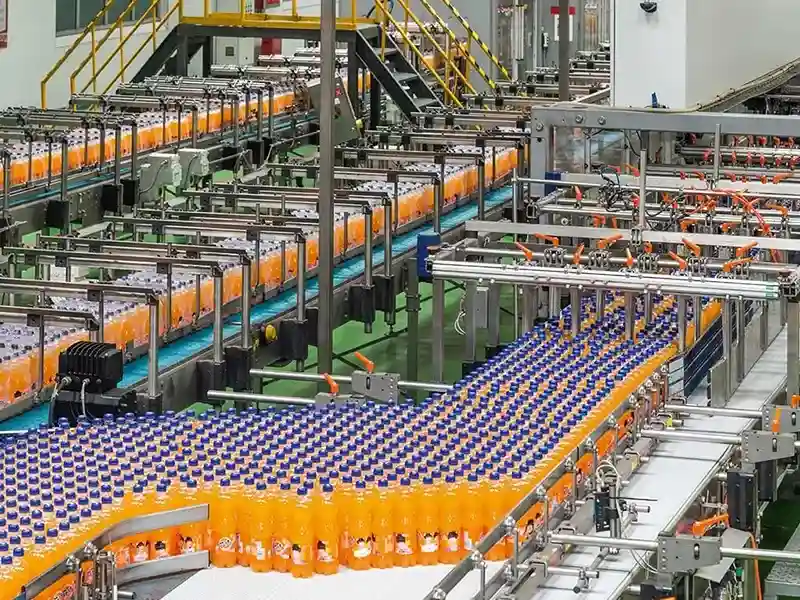
Application of Compressed Air in the PET Bottle-Blowing Process
Many people assume that compressed air is used simply to “blow a preform into a bottle.” In reality, on modern high-speed PET bottle-blowing lines, compressed air is integral to the entire production process, with varying requirements for pressure, flow rate, and air quality at different stages.
1. Pre-Blow
Once the preform has been heated to the appropriate temperature, it enters the pre-blow stage.
At this stage, the system typically utilizes medium-pressure air (8–15 bar) to initiate the expansion of the preform, setting the stage for subsequent stretching and final blow molding.
The primary functions of pre-blowing include:
- Initially expanding the preform;
- Preventing localized material accumulation;
- Improving the uniformity of bottle wall thickness;
- Preparing for the final high-pressure blow molding.
Insufficient pre-blow pressure can lead to issues such as uneven wall thickness, off-center formation, or inadequate stretching.
2. High-Pressure Blow Molding (Final Blow)
High-pressure blow molding is the most critical step in the PET production process.
Within a very short timeframe, high-pressure air rapidly fills the interior of the preform, forcing the PET material to conform perfectly to the mold and achieve its final shape.
This stage typically requires:
- Operating pressure: 25–40 bar;
- Extremely high instantaneous flow rate;
- Stable pressure output;
- Rapid response capability.
High-speed bottle-blowing machines can produce tens of thousands of PET bottles per hour; therefore, high-pressure air compressors must ensure a continuous, stable air supply to prevent pressure fluctuations from compromising product consistency.
3. Pneumatic Control Systems
Beyond the blow molding process itself, many auxiliary devices on the PET production line also rely on compressed air, such as:
- Pneumatic cylinder actuation;
- Solenoid valve control;
- Automatic conveying systems;
- Bottle separation and positioning mechanisms;
- Packaging equipment.
These devices generally operate on low-pressure air (6–8 bar) supplied directly by screw-type air compressors.
4. Mold Cleaning and Cooling
Some bottle-blowing equipment also utilizes clean compressed air for:
- Cleaning mold surfaces;
- Blowing away dust;
- Assisting with cooling;
Controlling exhaust/venting. Although air consumption is relatively low, if the air contains significant amounts of moisture, oil, or particulate matter, it can lead to mold contamination, affecting the product’s appearance or even compromising food safety.
Why is compressed air quality so critical?
PET bottles—especially those serving as food-grade containers—demand exceptionally high standards for compressed air quality. Since the compressed air comes into direct contact with the inner walls of the bottles, it must meet food-grade specifications.
The ISO 8573-1 standard is the internationally recognized classification system for compressed air contaminants, focusing primarily on particulates, moisture, and oil content:
- Particulates: Class 1 or better; particle size and concentration are strictly controlled.
- Moisture: The pressure dew point must be below -40°C (Class 2–4) to prevent condensation inside the bottle, which could compromise quality.
- Oil Content: Class 0 is the highest grade; it requires the total content of oil mist, oil vapor, and liquid oil to be far below Class 1 levels (<0.01 mg/m³), often necessitating even stricter limits.
For PET blow molding, an oil-free compressed air system meeting ISO 8573-1 Class 0 (or near-Class 0) standards is recommended. Even trace amounts of oil contamination can cause unpleasant odors, reduce bottle transparency, or result in non-compliance with food safety regulations.
Pressure Requirements for PET Bottle Blowing Production Lines
Many enterprises believe that purchasing a single 40-bar high-pressure air compressor is sufficient to meet all bottle-blowing needs. In reality, however, pressure requirements vary significantly depending on the product, the specific bottle-blowing equipment, and the production cycle.
Typically, a PET bottle-blowing production line utilizes compressed air at two different pressure levels simultaneously.
| Application Stage | Recommended Pressure |
| Pneumatic control | 6–8 bar |
| Pre-blow | 8–15 bar |
| Final blow molding | 25–40 bar |
| Special thick-walled vessels | Above 40 bar (depending on the process) |
In addition to the pressure level itself, enterprises should focus on the following key indicators:
- Pressure stability: Preventing dimensional deviations in the bottle body caused by pressure fluctuations during the blow molding process.
- Air supply flow rate: Ensuring an adequate air supply during high-speed operation of multi-cavity blow molding machines.
- Pressure recovery speed: The system’s ability to rapidly restore pressure during continuous production to ensure the smooth execution of the next cycle.
- Pressure loss control: Optimizing the design of air reservoirs, piping, and valves to minimize pressure loss between the air compressor and the blow molding machine.
For high-speed automated production lines, stable pressure output is often more critical than a higher rated pressure.
What are the air quality requirements for PET bottle blowing?
In the PET bottle blowing industry, compressed air serves not only as a power source but may also come into direct contact with the interior of the bottle; therefore, air quality directly impacts product quality, food safety, and equipment lifespan.
When purchasing air compressors, many companies focus primarily on pressure and flow rate while overlooking contamination from oil, water, and particulates. In reality, these contaminants can compromise bottle quality, cause equipment malfunctions, increase maintenance costs, and even jeopardize the hygiene and safety of the final product.
ISO 8573-1: The International Standard for Compressed Air Quality
The global compressed air industry generally uses the ISO 8573-1 standard to classify air quality. This standard evaluates compressed air purity based on three main factors:
- Solid particles
- Moisture
- Oil content
Different industries have varying air quality requirements; the food and beverage, pharmaceutical, and cosmetics sectors typically demand higher levels of air purity.
For instance, while general industrial applications might tolerate trace amounts of oil mist, PET food packaging lines generally require minimizing the risk of oil contamination as much as possible.
What is Class 0 Oil-Free Air?
In recent years, an increasing number of food and beverage companies have adopted **Class 0 (oil-free)** compressed air systems.
Class 0 is one of the strictest ratings for oil contamination under the ISO 8573 standard; it signifies extremely low oil content in the compressed air, thereby minimizing the risk of product contamination.
Oil-free compressed air systems are recommended for the following industries:
- Mineral water production
- Beverage filling
- Food packaging
- Pharmaceutical packaging
- Cosmetic packaging
Although the compressed air used in some PET bottle blowing processes does not directly enter the final product, any oil mist present can still adhere to the inner walls of the bottle or the mold surfaces. Consequently, more international brands are requiring compressed air to meet higher purity standards.
Why do PET bottle blowing systems require air dryers?
The moisture content in compressed air is another factor that cannot be ignored.
After air is compressed, its relative humidity rises rapidly; if left untreated, water vapor will condense within the piping to form liquid water. This can lead to:
- Mold corrosion;
- Valve sticking;
- Pipeline rusting;
- Reduced blow-molding quality;
- Pipeline freezing in winter (in cold regions).
Therefore, PET blow-molding systems are typically equipped with:
- Refrigerated dryers (for standard operating conditions);
- Adsorption dryers (for low dew point requirements).
For high-speed PET production lines, it is recommended to maintain a pressure dew point between -20°C and -40°C to ensure consistently dry and stable air.
How does Sollant ensure air quality?
Sollant offers not only high-pressure air compressors but also comprehensive air purification solutions, including:
- High-efficiency refrigerated dryers;
- Adsorption dryers;
- Multi-stage precision filters;
- Activated carbon filters;
- Automatic drainage systems;
- Intelligent air quality monitoring.
Through systematic design, the compressed air is guaranteed to meet the cleanliness, stability, and reliability requirements of PET blow-molding production.
How to Select an Air Compressor
When selecting an air compressor for PET bottle blowing, one should not focus solely on power output; instead, three key factors must be considered: pressure, flow rate, and air quality. Pressure determines whether the bottle can be successfully blown; flow rate determines whether production can remain continuous and stable; and air quality determines whether the bottles meet safety and quality standards.
The first step is to define production objectives. Factors to consider include the type of bottle to be produced, the hourly output, whether the blowing machine is a single-station or multi-station unit, the availability of backup equipment, and plans for future capacity expansion. Different production goals necessitate significantly different air compressor configurations.
The second step is to calculate actual air consumption. Factors such as the number of blowing machines, production cycle times, preform specifications, bottle volume, and bottle design complexity all influence air consumption requirements per unit of time. Generally, larger bottles, more complex shapes, and higher production volumes result in higher air flow requirements.
The third step is to select a system configuration. There are two common approaches: directly installing a high-pressure oil-free air compressor, or using a combination of a low-pressure air compressor and a booster.
Reference Air Consumption by Bottle Type
Generally, the larger the PET bottle capacity, the greater the volume of air required for blow molding; however, actual air consumption is also influenced by factors such as bottle design, wall thickness, and the efficiency of the blow molding machine.
The following data may be used as a reference for engineering design:
| PET bottle capacity | Recommended pressure | Reference air consumption (per bottle) |
| 250 mL | 25–30 bar | 15–20 L |
| 500 mL | 28–30 bar | 20–30 L |
| 1 L | 30–35 bar | 30–40 L |
| 1.5 L | 30–35 bar | 40–50 L |
| 2 L | 35 bar | 45–60 L |
| 5 L | 35–40 bar | 70–90 L |
| 20 L | Over 40 bar | 120–180 L |
Note: The data above are industry reference values; actual air consumption will vary depending on bottle structure, blow molding machine brand, mold design, and process parameters. Please refer to the data provided by the equipment manufacturer.
Reference Air Consumption for Various Blow Molding Machines
In addition to the bottle design, the number of cavities, production speed, and control method of the blow molding machine directly affect compressed air requirements.
Below are reference specifications for common equipment:
| Blow Molding Machine Type | Output (BPH) | Recommended Air Supply Flow Rate |
| 2-cavity | 2,000–3,500 | 2–3 m³/min |
| 4-cavity | 5,000–7,000 | 4–6 m³/min |
| 6-cavity | 8,000–10,000 | 7–9 m³/min |
| 8-cavity | 10,000–14,000 | 10–12 m³/min |
| High-speed equipment with 0+ cavities | 15,000+ | Customized based on equipment specifications |
Due to differences in valve assembly designs, recovery systems, and process control methods among leading international blow molding machine brands, actual air consumption can vary—even when producing PET bottles of the same specifications.
Therefore, when designing a compressed air system, comprehensive calculations should be performed based on the technical specifications provided by the blow molding machine manufacturer, rather than relying solely on estimates based on bottle capacity.
Comparison of PET Blow Molding Air Compressor Technologies: Which Solution Best Suits Your Production Line?
Compressed air systems for PET blow molding currently on the market utilize various technologies, including reciprocating (piston) compressors, screw compressors, high-pressure boosters, and oil-free compressors. Since different solutions cater to varying production scales and industry requirements, enterprises should evaluate options based on a comprehensive assessment—considering initial investment, operating costs, maintenance complexity, and air quality standards—rather than simply comparing equipment prices.
High-Pressure Reciprocating (Piston) Compressors
Reciprocating compressors have long been used in the PET blow molding industry, characterized by their simple design and relatively low initial investment.
Advantages:
- Capable of directly outputting high-pressure air;
- Suitable for small-scale blow molding equipment;
- Lower initial purchase cost.
Disadvantages:
- High noise and vibration levels;
- Limited continuous operation capability;
- Frequent maintenance requirements;
- Relatively low energy efficiency.
While reciprocating compressors remain viable for small factories with low daily output, they typically entail higher overall operating costs for large-scale beverage plants engaged in continuous production.
Screw Air Compressor + High-Pressure Booster
This is currently the most widely used air supply solution for PET bottle blowing worldwide.
In this system, a screw air compressor first supplies stable medium-pressure air (typically 7–13 bar), which is then raised to 25–40 bar by a high-pressure booster for the bottle-blowing process.
Advantages:
- High energy efficiency;
- Stable output pressure;
- Excellent continuous operation performance;
- Lower maintenance costs;
- Better suited for medium-to-large PET bottle blowing production lines.
For the majority of food and beverage companies, this combined solution meets production requirements while delivering significant energy savings, making it the industry-standard configuration.
Oil-free screw air compressors
An increasing number of enterprises in industries such as food, beverage, pharmaceuticals, and cosmetics are adopting oil-free compressed air systems.
Oil-free air compressors prevent lubricating oil from entering the compressed air stream, thereby reducing the risk of product contamination and making it easier to meet stringent air quality standards.
Although the initial investment for oil-free equipment is relatively high, its long-term value is particularly evident in sectors with strict cleanliness requirements, such as food packaging.
Comprehensive PET Compressed Air System Design
Many enterprises believe that purchasing a single high-pressure air compressor is sufficient to meet their bottle-blowing needs. In reality, a high-performance PET bottle-blowing line requires a complete compressed air system, not just a compressor.
A typical PET compressed air system comprises the following components:
Screw Air Compressor
Provides a stable supply of base compressed air and serves as the power source for the entire system.
Air Receiver
Balances system pressure, buffers against instantaneous fluctuations in air demand, and reduces frequent compressor start-stop cycles.
Air Dryer
Removes moisture from the air, lowers the pressure dew point, and prevents condensate from compromising bottle-blowing quality.
Precision Filter
Removes particulates, oil mist, and impurities to ensure the cleanliness of the compressed air.
High-Pressure Booster
Elevates medium-pressure air to the 25–40 bar range required for the bottle-blowing process.
High-Pressure Air Receiver
Stores high-pressure air, improves system response speed, and meets the instantaneous high-flow demands of the bottle-blowing machine.
Intelligent Control System
Monitors pressure, flow, and energy consumption in real-time, enabling automatic adjustment and remote management.
Based on the customer’s production scale and process requirements, Sollant provides a one-stop PET compressed air solution—ranging from equipment selection to system integration—helping customers reduce installation complexity and enhance overall operational efficiency.
Why Choose Sollant PET Compressed Air Solutions?
As a professional manufacturer of compressed air systems, Sollant is dedicated to providing stable, efficient, and energy-saving one-stop solutions for the global PET packaging industry.
Sollant PET blow molding systems offer the following advantages:
- A comprehensive product portfolio including screw air compressors, high-pressure boosters, oil-free air compressors, and air treatment equipment;
- Customized system designs tailored to specific bottle types, production capacities, and blow molding equipment;
- Reduced energy consumption through the use of high-efficiency airends and intelligent control technology;
- Reliable, continuous operation to meet the demands of high-speed blow molding production;
- Lower total lifecycle operating costs and improved return on investment for customers.
Whether for a new PET blow molding plant or the upgrade of an existing production line, Sollant provides professional technical support and complete compressed air system solutions.
- To meet the capacity expansion needs of a PET bottle-blowing plant in Kyrgyzstan, an oil-free reciprocating compressor—featuring a discharge pressure of 40 bar and a capacity of 22 m³/min—was selected as the core high-pressure air supply unit. Utilizing a multi-stage oil-free compression design, the unit ensures the required 40-bar blowing pressure and a stable airflow of 22 m³/min while eliminating the risk of lubricating oil contamination at the source, thereby guaranteeing that the finished products meet food-grade safety standards. The system employs intelligent PLC control and an integrated skid-mounted structure, facilitating rapid installation and stable operation; following commissioning, it effectively resolved previous issues regarding insufficient air supply and substandard quality, ensuring reliable, continuous, and efficient production line performance.
Conclusion
PET bottle blowing operations place high demands on compressed air systems. When selecting high-pressure air compressors, enterprises should look beyond mere pressure ratings or purchase prices; instead, they should comprehensively consider factors such as the specific blowing process, air quality requirements, production capacity, system energy efficiency, and future expansion needs.
A well-designed PET compressed air system not only enhances bottle quality and production efficiency but also lowers energy consumption, reduces maintenance costs, and improves the operational stability of the entire facility.
As a professional provider of compressed air system solutions, Sollant offers tailored, end-to-end solutions—ranging from screw air compressors, high-pressure boosters, and air purification equipment to intelligent control systems—to meet the specific needs of various PET bottle blowing lines. Backed by extensive industry experience and a commitment to continuous technological innovation, Sollant helps global clients build highly efficient, stable, and energy-saving PET bottle blowing systems, paving the way for long-term, sustainable development.
Request a Quick Quote Now

Shandong Sollant Machinery Manufacturing Co., Ltd.
20 years of professional export experience. Our twin-screw air compressor is very popular in the international market.
