
The Complete Guide to Clean Dry Air (CDA): From ISO Standards to System Construction, Operation, and Maintenance
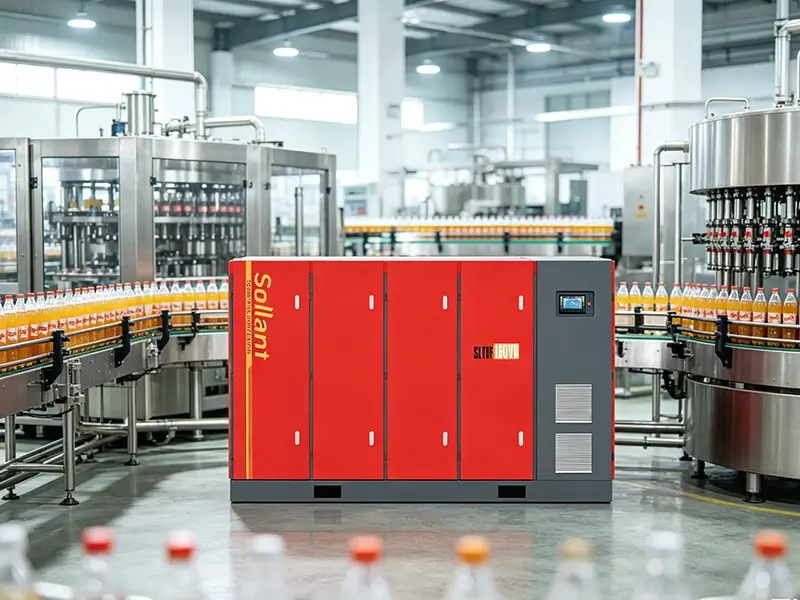
In modern high-tech manufacturing—particularly semiconductors, electronics, pharmaceuticals, and precision instrumentation—compressed air quality directly drives production efficiency, yield rates, and overall competitiveness. Clean Dry Air (CDA), has become a non-negotiable utility in semiconductor fabs. A single chip travels through hundreds of process steps, and moisture, oil, or particles at any point can spell disaster—scrapping months of work and racking up millions, sometimes billions, in losses.
Industry data shows that a compressed air system failure or contamination event in semiconductor manufacturing can idle a fab at a cost of hundreds of thousands of dollars per hour. But CDA isn’t just about “clean” air—it demands extreme dryness to meet cleanroom specifications. This article walks through the full picture: what CDA is, the standards that define it, the contaminants to watch for, system components, design and installation best practices, industry-specific applications, monitoring and maintenance, energy optimization, and a final takeaway.
What exactly is CDA?
CDA stands for Clean Dry Air. In practice, it means compressed air that’s been through drying and filtration to meet a defined purity spec. What sets it apart from ordinary plant air is that it has to tick three boxes at once: oil-free, particle-free, and dry.
In many industrial settings, you might only care about one or two of those. A pneumatic impact wrench needs dry air to keep rust at bay, but it doesn’t really care if there’s a trace of oil mist. The cleanroom is a completely different story. Moisture oxidizes metal traces on wafers. Microscopic oil droplets alter photoresist chemistry. Dust particles cause shorts. So CDA demands that all three contaminant types be driven down to near-zero levels simultaneously.
To give everyone a common language for air quality, the industry leans on ISO 8573-1:2010. It ranks compressed air contaminants—particles, water, and oil—on a scale from Class 0 to Class X, with lower numbers meaning higher purity. Class 0 is the gold standard. It means that at the point of use, all three contaminant categories are held below the detection limits of current measurement methods—essentially, as close to zero as you can get.
Air Quality Standards and Specifications
Understanding and implementing CDA standards is fundamental to system design and operation and maintenance. The most frequently cited specification is ISO 8573-1; this standard not only defines classification levels for three types of contaminants but also specifies testing methods and units of measurement.
| Pollutant Type | Measurement Parameter | Class 0 Requirements (Core Parameters) |
| Particulate matter | Number of particles of a specific size per cubic meter of air | Extremely low or non-detectable (specific levels to be agreed upon between the equipment supplier and the user) |
| Moisture | Pressure Dew Point (PDP) | Typically required to be ≤ -70°C |
| Total oil content | Total amount of liquid oil, aerosols, and oil vapors | Extremely low or undetectable (specific levels to be agreed upon between the equipment supplier and the user) |
When it comes to moisture control, the key metric is pressure dew point—or PDP for short. It’s the temperature at which water vapor in compressed air starts condensing into liquid, given the system’s operating pressure. The lower the dew point, the drier the air. In semiconductor fabs, dryers are typically spec’d to deliver a PDP of -40°C or even -70°C at the outlet, just to eliminate any chance of condensation forming downstream.
Beyond that, CDA specs can get more granular depending on the application. Standards like SEMI F21 come into play, adding tighter controls on airborne acids and bases (both cations and anions), trace metals, and total hydrocarbons. It’s not just about dryness anymore—it’s about chemistry at the parts-per-billion level.
Contaminants in compressed air systems
To produce CDA that actually meets spec, you first need to know what you’re up against. Atmospheric air comes with its own baggage, and the compression process adds more.
- Moisture (water vapor). Ambient air always carries some water vapor. When you compress it, the volume shrinks and the partial pressure of that vapor goes up. Then, as the compressed air cools traveling through the piping, that vapor condenses into liquid water. Liquid water rusts pipes, fouls pneumatic valves, and—in a semiconductor fab—it’s public enemy number one for wafer oxidation and yield loss.
- Oil (liquid, aerosol, and vapor). This is one of the toughest challenges in CDA. Even with oil-free compressors, you can still end up with hydrocarbon contamination if the intake is near oily mist—think shop-floor environments—or if leftover cutting fluid from pipe installation finds its way in. Plenty of systems marketed as “oil-free” fail spot checks at the point of use, and nine times out of ten, it’s because nobody paid attention to the intake air quality or the cleanliness of the piping network.
- Particulates (dust, microbes, wear debris). These come from everywhere—dust in the intake air, metal particles shed by compressor internals, desiccant dust from aging dryers. In chipmaking, a particle just 0.1 microns across is big enough to kill a die. That’s why CDA systems often finish with 0.01-micron rated filters at the end of the line.
CDA system components and architecture
Putting together a robust CDA system isn’t as simple as buying a compressor and calling it a day. It’s a whole system of precision components, and every piece has a job to do.
Air compressor (the heart of the system). Going with an oil-free compressor—whether screw or centrifugal—is pretty much a prerequisite if you’re aiming for Class 0. You can technically clean up the discharge from an oil-lubricated compressor with downstream filtration, but it’s a high-wire act and expensive to pull off reliably. Oil-free machines keep lubricant out of the air stream from the get-go, and that’s the foundation of stable CDA delivery. Most installations run multiple compressors in parallel or have a hot standby, so the fab never loses air—24/7, no exceptions.
Aftercooler and water separator. Compressed air comes out of the compressor hot. Running it through an aftercooler drops the temperature, which forces moisture to condense out, and a separator knocks that liquid water out of the stream. It’s the first line of defense against water, and it takes a huge load off the dryers downstream.
Dryer (the real moisture workhorse). To hit those ultra-low dew points—-40°C down to -70°C—you need a desiccant dryer. These things pack a bed of hygroscopic material, typically activated alumina or molecular sieves, that physically adsorbs water vapor. Heatless regeneration dryers are a common choice; they purge a portion of the dried air—usually 15% to 20%—to strip moisture off the desiccant and get it ready for another cycle. That purge air is lost to the system, but with careful tuning of regeneration timing and pressure, you can keep dew point stable without burning more energy than necessary.
Precision filters (layered purification). Filter placement matters. A typical setup runs three stages:
- A pre-filter goes upstream of the dryer to catch larger particles and protect the desiccant bed from fouling.
- An oil removal filter uses coalescing elements to strip out liquid oil aerosols, hitting efficiencies of 99.9999% or better.
- A dust filter sits after the dryer to trap fine particles shed by the desiccant as it moves and settles, with ratings down to 0.01 microns.
For pharmaceutical work or bio-chip manufacturing, you’ll often see an extra sterilizing filter added at the end of the line.
System sizing, design, and installation
Designing a CDA system takes careful planning—it’s not just a matter of bolting equipment together and hoping for the best.
Sizing for demand and pressure. You need a solid handle on the peak air consumption of every process tool and pneumatic device across the plant, usually expressed in Nm³/min or SCFM. And don’t forget to leave room for future expansion—10% to 20% extra capacity is a common rule of thumb. Compressor selection isn’t just about flow rate, though; discharge pressure matters just as much (130 psig or around 8.6 kg/cm² is typical). Set the pressure too high and you’re burning through energy for no good reason. Set it too low and your end tools won’t have the muscle they need.
Redundancy. For critical semiconductor fabs, CDA is usually configured N+1—that’s the number of running units plus one spare—or even 2N for full redundancy. The University of Waterloo’s nano-lab, for instance, spells it out clearly: dual skid arrangement, one online and one standing by, so there’s never a single point of failure.
Installation details
- Air intake. Locate it away from cooling towers, exhaust stacks, and other contamination sources. A pre-filter at the intake is a smart move.
- Piping material. Downstream lines should be stainless steel or aluminum, with passivation or special cleaning to prevent rust or loose debris from shedding into the air stream.
- Automatic drains. Every low point—aftercoolers, filters, receiver tanks—needs an automatic condensate drain. Skip the manual valves left cracked open; they just bleed compressed air constantly. Auto drains get the water out without wasting your expensive dry air.
Industry applications at a glance
Semiconductors. CDA shows up everywhere in a fab—lithography, etching, cleaning, packaging, and test. This is the most demanding use case by far. Think Class 0 purity paired with a pressure dew point of -70°C.
Electronics manufacturing. SMT lines, PCB assembly, and flat-panel display production all rely on CDA to keep static discharge and oxidation in check.
Pharmaceuticals and medical devices. Sterile filling, blow-fill-seal operations, and packaging all need air that meets GMP requirements, with a strong emphasis on microbiological control.
Food and beverage. Any compressed air that comes into contact with product has to be oil-free and odor-free—contamination here is a food safety issue, plain and simple.
And beyond. Automotive paint shops, textiles, analytical labs, precision instruments—the list goes on.
Different industries prioritize different things. Semiconductors are all about dryness and cleanliness. Food processing cares most about oil and sterility. There’s no one-size-fits-all spec; you build the system around what the application actually demands.
Monitoring, testing, and verification
Getting the system installed is only half the battle. Ongoing monitoring and verification are what keep CDA quality consistent over the long haul.
Online monitoring. Critical points in the network need real-time instruments—dew point sensors to track moisture continuously, and particle counters to watch for spikes in particulates. If the dew point suddenly creeps up, it’s a red flag: maybe the dryer is underperforming or the regeneration purge flow has drifted off. A jump in particle counts? That usually points to a failed or seated filter element. Pressure drop across filters is another metric worth keeping an eye on—it tells you when elements are loading up and need changing before they starve downstream equipment.
Periodic lab testing. ISO 8573-1 doesn’t just define purity classes; it also spells out how to test for them. Regular comprehensive assessments—think heavy metals, total hydrocarbons (oil), anions and cations (acidic and basic gases), plus CO, CO₂, NOx, and SOx—should be handled by an accredited third-party lab like SGS. This isn’t something you wing with in-house gear.
Performance qualification. For new installations or after major component swaps, you need to run a full performance verification per ISO 8573 and produce a formal compliance report. It’s the only way to prove—to yourself, to auditors, and to customers—that the system actually delivers what it’s supposed to.
Operation, maintenance, and reliability
A CDA system doesn’t stay reliable on its own—it takes a disciplined maintenance program to keep it that way.
Dryer maintenance. The desiccant bed—whether molecular sieve or activated alumina—gradually degrades and generates fines over time. Follow the manufacturer’s recommended replacement schedule, typically every three to five years. If you notice the dew point creeping upward, it could be a sign of desiccant poisoning from oil contamination. That calls for an immediate change-out and a thorough investigation upstream to figure out where the oil is sneaking in.
Filter maintenance. Filter elements are consumables—don’t wait for the pressure-drop alarm to go off before you act. Coalescing oil-removal filters lose efficiency as the media loads up with captured aerosol, even if the pressure drop hasn’t hit the warning threshold yet. Regular, proactive change-outs are the name of the game here.
Automatic drain checks. Make it a habit to verify that auto-drains are cycling properly. A drain stuck open wastes a shocking amount of compressed air. One stuck closed lets condensate carry right through into the downstream piping. Either way, you’ve got a problem—so check them regularly and fix them fast.
Energy optimization and cost control
Once you’ve got the quality side locked down, energy consumption becomes the biggest operating cost for a CDA system—typically 15% to 30% of a plant’s total electricity bill. The good news is there’s plenty of room to cut without compromising performance.
Dialing in pressure and dew point. If the process can tolerate it, lowering the system pressure—say, from 8.5 kg/cm² down to 7.8 kg/cm²—and easing the dew point setpoint (from 1°C to 4°C, for instance) directly reduces compressor work and dryer loading. TSMC and other major fabs have pulled off annual savings of over 800,000 kWh per compressor just through fine-tuning these parameters.
Dryer regeneration efficiency. Desiccant dryers are energy hogs. By running controlled trials, you can often stretch the regeneration cycle—bumping it from 2 minutes to 5 minutes, for example—or trim the purge pressure from 15 PSIG to 10 PSIG. Done right, you slash purge air waste without seeing any drift in outlet dew point.
Chasing leaks and waste. Walk the plant floor and fix leaks—it’s basic, but it pays. And swapping out manual valves left cracked open on dryer drains for automatic drains stops compressed air from bleeding out 24/7. That’s a small fix that adds up to real money over a year.
Intelligent load management. Use a data analytics platform—like a plant-wide SCADA with energy modeling—to coordinate compressor sequencing intelligently. During low-demand shifts, let the system shut compressors down completely instead of keeping them idling. Idling still pulls about 50% of full-load power; a hard stop pulls zero. The savings hit the bottom line immediately.
Conclusion
CDA—Clean Dry Air—is a lot more than just “slightly cleaner air.” It’s the lifeblood of modern high-tech manufacturing. From a single semiconductor die to a high-res display panel, none of it happens without this intricate utility system quietly doing its job in the background.
A well-built CDA installation comes down to getting the fundamentals right: oil-free compression at the source, adsorption drying with multistage filtration, and a system architecture built on redundancy and real-time monitoring. And the benchmark to aim for? ISO 8573-1 Class 0—the industry’s gold standard. But once you’ve nailed the quality, the real payoff comes from disciplined energy management: fine-tuning pressure setpoints, optimizing dryer regeneration, and letting intelligent controls shut compressors down when demand drops. Over a system’s typical 20- to 30-year lifespan, those savings run into serious money.
In today’s hyper-competitive advanced manufacturing landscape, the CDA system isn’t just an engineering choice—it’s a bet on reliability, operational cost discipline, and the relentless pursuit of higher yields.
Request a Quick Quote Now

Shandong Sollant Machinery Manufacturing Co., Ltd.
20 years of professional export experience. Our twin-screw air compressor is very popular in the international market.
