
How to Choose the Right Air Compressor for Your Sandblasting
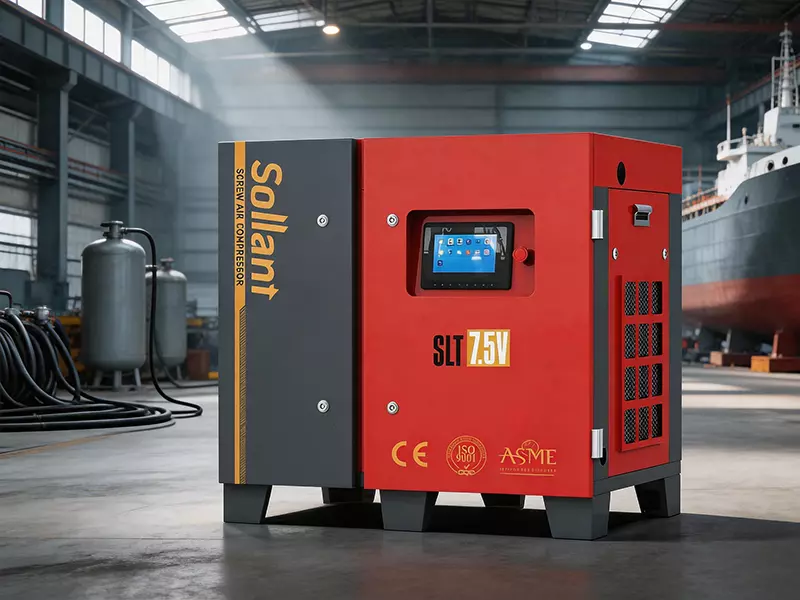
Sandblasting — also known as abrasive blasting or media blasting — is one of the most effective methods for removing rust, old paint, mill scale, and surface contaminants from metal, concrete, and other hard materials. It’s widely used in shipyards, auto restoration shops, steel fabrication plants, construction sites, and pipeline maintenance operations.
But here’s what most buyers get wrong: they focus on the sandblaster itself and treat the air compressor as an afterthought. In reality, the compressor is the beating heart of any sandblasting setup. Choose the wrong one, and you’ll deal with weak blasting performance, pressure drops mid-job, constant downtime, and wasted abrasive. Choose the right one, and everything runs smoother, faster, and more cost-efficiently.
This guide walks you through every factor that matters — from CFM and PSI requirements to nozzle size matching, compressor types, air quality, mobility, and safety — so you can make a confident, informed decision.
What Is Sandblasting — and Why Does the Compressor Matter So Much?
Sandblasting (also called abrasive blasting or media blasting) is the process of propelling abrasive particles at high velocity against a surface to clean it, remove coatings, smooth rough areas, or prepare it for painting or other finishing. The applications are enormous: shipyards, steel fabrication, automotive restoration, bridge maintenance, pipeline prep, and more.
At the center of every sandblasting setup is the air compressor. It is the engine that drives the entire operation. Without a sufficient and steady supply of compressed air, the abrasive loses velocity, the nozzle pressure drops, and blasting becomes uneven or grinds to a halt. This is why choosing the right compressor isn’t just a technical detail — it’s the single most important decision in your sandblasting setup.
A common and costly mistake is treating a sandblasting compressor like any other pneumatic tool compressor. Sandblasting doesn’t just need high pressure; it needs high-volume, continuous airflow. These are two very different things, and confusing them leads to undersized equipment, poor results, and frustration on the job site.
How a Sandblaster Works: Three Configurations
Before sizing your compressor, it helps to understand how the sandblasting equipment itself uses air. There are three main configurations, each with slightly different air delivery dynamics.
- Pressure Blasters connect the sandblasting gun directly to a pressurized canister holding the abrasive. When you pull the trigger, both air and abrasive exit the nozzle together under pressure. This is the most powerful and efficient configuration, and the one most commonly used in industrial settings. It demands high, consistent airflow.
- Gravity-Fed Sandblasters feature a hopper mounted on top of the gun. As compressed air flows through the gun barrel, it draws abrasive down from the hopper by gravity and expels it through the nozzle. These systems work well for smaller, more controlled jobs. Air demand is moderate compared to pressure blasters.
- Siphon Sandblasters use two hoses: one for air, one connecting to a sand reservoir. As air flows through the first hose, it creates suction that pulls abrasive up from the tank and out through the nozzle. Siphon systems are economical and common for hobbyist use, though they are less efficient than pressure blasters and require a steady minimum airflow to maintain suction.
Understanding which configuration you’re running helps set a baseline for your compressor sizing — but the nozzle size will ultimately define the actual air demand.
Airflow (CFM) Matters More Than Pressure
Here’s the most important thing most buyers get wrong: sandblasting is primarily a CFM-driven application, not a PSI-driven one.
PSI (pounds per square inch) measures air pressure. CFM (cubic feet per minute) measures the volume of air the compressor can deliver continuously. In sandblasting, you need the compressor to sustain high-volume airflow without dropping pressure mid-blast. If the compressor can generate 125 PSI but can only deliver 10 CFM, it will quickly drain the tank and force you to wait while it catches up — killing productivity.
For light hobbyist or spot-blasting work, you generally need at least 10 to 20 CFM. For professional sandblasting operations, the range is typically 25 to 50 CFM. Full-scale industrial sandblasting — shipyards, large steel structures, heavy equipment — routinely demands 50 to 100 CFM or more.
The recommended operating pressure for most sandblasting setups is 90 to 100 PSI at the nozzle. If tank pressure drops below 50 PSI during operation, blasting power will be insufficient to remove material effectively and you’ll be forced to stop and wait for the compressor to recover.
The bottom line: always prioritize CFM capacity first when sizing a compressor for sandblasting. Pressure comes second.
Matching CFM Requirements to Nozzle Size
The most reliable way to size your compressor is to start with your nozzle. Nozzle size directly determines how much air is consumed during blasting — the larger the nozzle orifice, the higher the airflow demand.
Here’s a practical reference guide:
| Nozzle Size | Minimum Airflow (CFM) | Typical Pressure (PSI) | Common Application |
| 3 mm (1/8″) | 10–28 CFM | 80–100 PSI | Spot cleaning, small parts |
| 5 mm (3/16″) | 25–65 CFM | 87–100 PSI | Small-to-medium surfaces |
| 6 mm (1/4″) | 47–110 CFM | 87–115 PSI | Structural steel prep |
| 8 mm (5/16″) | 78–187 CFM | 100–125 PSI | Heavy-duty, shipyards |
| 10 mm (3/8″) | 106–265 CFM | 100–130 PSI | Industrial pipelines |
| 13 mm (1/2″) | 194–460 CFM | 100–145 PSI | Large tanks, ship hulls |
There are two additional factors that push real-world CFM demand higher than these baseline numbers.
- Nozzle Wear: As a nozzle is used, its orifice gradually erodes and enlarges. A nozzle that started at 6 mm may effectively behave like a 7 or 8 mm nozzle after significant use, increasing air consumption. Always size your compressor to handle the nozzle at its worn state, not just its new diameter.
- System Losses: In a real sandblasting setup, air is consumed by more than just the blast nozzle. Leaks in hoses and fittings, air dryers consuming flow during regeneration, dust collection systems using air for backflushing, and multiple guns running simultaneously all eat into your available CFM. As a practical rule, add a 10–15% margin on top of your theoretical nozzle requirement to ensure consistent performance under real operating conditions.
Matching the Compressor to Your Abrasive Media
Not all blasting media is created equal, and the type of abrasive you use affects how much air your compressor must deliver. Denser or coarser materials require more energy to propel effectively.
- Steel Grit and Aluminum Oxide are among the heaviest common abrasives. They demand high CFM ratings — typically 50 CFM or more for medium-to-large nozzles — to maintain adequate velocity. These are the workhorses of industrial surface prep and require serious compressor capacity.
- Glass Beads and Crushed Glass are medium-weight abrasives frequently used for surface finishing, cleaning, and light coating removal. They require moderate CFM — typically 20 to 35 CFM for standard nozzle sizes — but still need consistent PSI to deliver even coverage.
- Plastic Media and Walnut Shell are lightweight abrasives used in delicate applications like stripping paint from fiberglass or aluminum without damaging the substrate. Air requirements are lower, but pressure control is important to avoid surface damage.
- Soda Blasting Media (sodium bicarbonate) uses very fine particles and requires steady, lower-volume airflow with controlled pressure. Smaller units in the 10 to 20 CFM range are often sufficient, making soda blasting more accessible for smaller compressors.
When switching abrasive types, always re-evaluate your compressor’s output against the new media’s demands. What worked for glass beads may be insufficient for aluminum oxide.
Types of Air Compressors: Which One Is Right for Sandblasting?
Not all compressors are built for the demands of sandblasting. Understanding the differences between compressor types helps you match the machine to the job.
Piston (Reciprocating) Compressors
Piston compressors use one or more pistons moving up and down in a cylinder to compress air into a storage tank. They are the most affordable and widely available type. For light, intermittent sandblasting — hobbyist projects, spot cleaning, occasional use — a piston compressor can be sufficient, provided it delivers adequate CFM at 90–100 PSI.
However, piston compressors are not designed for continuous duty. They generate significant heat during sustained operation and typically have a duty cycle of 50–75%, meaning they need rest time between blasting intervals. For professional or industrial use, piston compressors are a poor long-term choice.
Single-stage piston compressors compress air directly into the tank in one stroke. They are best suited for lower-demand applications. If using one for sandblasting, look for a unit that cuts off at around 150 PSI and back on at 120 PSI, giving you adequate buffer above the 90 PSI minimum blasting pressure.
Two-stage piston compressors compress air in two stages, sending it through a second cylinder for additional compression. They are more efficient and capable of higher output than single-stage units, making them a better choice for more demanding blasting work.
Rotary Screw Compressors
Rotary screw compressors use two interlocking helical screws to compress air continuously. They are the preferred choice for professional and industrial sandblasting for several important reasons:
- 100% duty cycle: They can run continuously without needing to cool down between uses.
- Higher CFM output: Screw compressors deliver significantly more air volume than piston units of similar physical size.
- Lower noise and vibration: They run smoothly and more quietly than reciprocating compressors.
- Longer service life: Well-maintained rotary screw compressors can last 10 years or more under industrial use. Piston compressors typically last 3 to 5 years under heavy loads.
- Lower long-term maintenance costs: Fewer moving parts and less heat-related wear reduce servicing needs.
For any sandblasting operation involving larger nozzles (8 mm and above), continuous blasting schedules, or multiple operators, a rotary screw compressor is the clear choice.
Diesel Portable Compressors
For outdoor jobsites, remote locations, bridge work, pipeline maintenance, or any application where electrical power is unavailable or impractical, diesel-driven portable compressors are the standard solution. They combine rotary screw technology with a diesel engine in a towable or skid-mounted package.
Large-displacement diesel portables are also capable of powering multiple blast guns simultaneously — something smaller electric compressors cannot do. Instead of staging three or four small compressors on a tight worksite, one large diesel unit can feed two or three guns at once, reducing equipment footprint, fuel costs, and maintenance complexity.
Piston vs. Rotary Screw: At a Glance
| Feature | Piston Compressor | Rotary Screw Compressor |
| Duty Cycle | 50–75% | 100% continuous |
| Noise & Vibration | High | Low |
| Lifespan | 3–5 years (heavy use) | 10+ years |
| Maintenance | Frequent | Low |
| CFM per unit size | Lower | Higher |
| Cost | Lower upfront | Higher upfront, lower TCO |
| Best for | Light/intermittent use | Professional/industrial use |
For any job beyond occasional hobbyist use, a rotary screw compressor will deliver better performance, lower operating costs, and significantly greater reliability over time.
Portable vs. Stationary: Choosing the Right Setup
Beyond compressor type, consider whether your operation calls for a portable or stationary installation.
- Stationary compressors are installed in fixed shop or industrial environments. They offer higher sustained output, better cooling systems for extended use, and often include integrated air treatment systems (dryers, filters, receivers). They are ideal for auto shops, fabrication facilities, and industrial plants where blasting happens in a fixed location.
- Portable compressors — whether electric-powered on wheels or diesel towables — offer mobility that is essential for construction sites, marine facilities, pipeline work, graffiti removal, and any application where the compressor needs to travel to the work. Portable units generally have smaller tanks, which means more attention to maintaining steady tank pressure during blasting.
For operations using multiple blast guns simultaneously, a large-displacement portable diesel compressor is often the most practical solution. Running one high-capacity unit eliminates the complexity of synchronizing multiple smaller machines and reduces the total equipment footprint — a significant advantage on tight or remote jobsites.
Air Quality: Why Clean, Dry Air Is Non-Negotiable
Compressed air leaving a compressor is not clean air. It carries moisture, oil vapor (in oil-lubricated compressors), and particulate contaminants. In sandblasting, these contaminants cause serious problems:
Moisture causes abrasive media to clump and agglomerate inside the pot, blocking the nozzle and interrupting flow. It also deposits water on freshly blasted surfaces, causing flash rust and undermining surface preparation before paint or coating is applied.
Oil contamination is equally damaging. Even trace oil mist can contaminate a blasted surface, preventing proper adhesion of coatings. In coating-critical applications (such as marine or structural coatings), oil in the air supply is simply unacceptable.
Dust and particulate from the environment can enter the compressor intake and degrade both the compressor’s internal components and the air quality reaching the blasting nozzle.
Essential Air Treatment for Sandblasting
A complete air treatment system for sandblasting typically includes:
Aftercooler: Installed at the compressor outlet, the aftercooler reduces compressed air temperature significantly. Cooling the air causes moisture to condense, where it can be separated and drained before reaching downstream equipment.
Moisture Separator / Water Trap: Removes condensed water droplets from the air stream. Essential as a minimum for any sandblasting setup.
Inline Filters (Three-Stage):
- Coarse particulate filter to remove large debris
- Main coalescing filter to capture fine oil and aerosols
- Fine or activated carbon filter for final oil vapor removal
Refrigerated or Desiccant Air Dryer: For applications requiring consistently dry air — especially continuous-duty industrial blasting or work in humid environments — a dryer is standard equipment. Refrigerated dryers reduce moisture to a reliable dew point, while desiccant dryers achieve even lower dew points for highly sensitive applications.
Positioning the compressor away from the active blasting zone also reduces intake of abrasive dust, extending compressor life and reducing filter maintenance frequency.
Power Source Considerations
The power source for your compressor needs to match your working environment and project requirements.
- Electric (Single-Phase, 120V): Suitable for small, light-duty sandblasting — hobbyist compressors used for spot cleaning or craft applications. Limited CFM output makes these unsuitable for serious blasting work.
- Electric (Three-Phase, 208–480V): The standard for stationary industrial compressors. Higher voltage enables larger motors and significantly higher CFM output. Requires proper electrical infrastructure.
- Diesel Engine: The choice for portable and field applications. No electrical connection required. Diesel portables are self-contained and well-suited for remote or outdoor work. Modern diesel compressors must comply with EPA Tier 4 Final or EU Stage V emissions standards depending on the region.
- Gasoline Engine: Available in some smaller portable units. Suitable for occasional-use jobs where diesel is unavailable, but generally less fuel-efficient and not recommended for continuous industrial use.
Always verify your facility’s power capacity before purchasing a large electric compressor. Insufficient electrical service is a common and expensive oversight.
A Step-by-Step Compressor Selection Checklist
Use this decision process to narrow down your compressor choice:
Step 1: Identify your nozzle size.
What nozzle size does your sandblasting equipment use — or what size do you plan to use based on your project surface area?
Step 2: Calculate your CFM requirement.
Use the nozzle-to-CFM reference table above. Add 10–15% for system losses. If running multiple guns, add the CFM demand of each gun together.
Step 3: Confirm your minimum PSI.
You need at least 90 PSI at the nozzle during continuous operation. Size your compressor to maintain this without constant recovery cycles.
Step 4: Determine duty cycle needs.
Is blasting continuous (industrial/professional) or intermittent (hobbyist/occasional)? Continuous use requires a rotary screw compressor with 100% duty cycle. Intermittent use may permit a piston compressor with adequate tank size.
Step 5: Assess portability requirements.
Fixed workshop or facility? Choose a stationary electric compressor. Outdoor, remote, or mobile? Choose a diesel-powered portable. Multi-gun operation in the field? Choose a large-displacement diesel unit.
Step 6: Plan your air treatment system.
At minimum, include a moisture separator. For professional or industrial work, add an inline filter set and an air dryer. For coating-critical or confined-space work, add breathing air certification to your system.
Step 7: Verify your power supply.
Confirm available voltage, amperage, and phase. Ensure your facility can support the compressor’s electrical demand before purchase.
Frequently Asked Questions
Q1.Do I absolutely need a moisture separator or dryer for sandblasting?
Yes, without exception. Every air compressor used for sandblasting produces moisture in the compressed air stream. Without a moisture separator at minimum — and an air dryer for continuous or professional use — abrasive media will clump, nozzles will clog, and freshly blasted surfaces will develop flash rust before coatings can be applied. Moisture control is not an optional upgrade; it is a functional requirement.
Q2.What is the minimum CFM I need for sandblasting?
For hobby-level spot cleaning with a small (3 mm) nozzle, 10 to 15 CFM is a workable minimum. For professional surface prep with a 6 mm nozzle, you should target at least 50 to 80 CFM. Industrial-scale work with nozzles 8 mm and larger requires 100 CFM and above. Always add a 10–15% buffer to your calculated requirement.
Q3.Can I use a standard shop compressor for sandblasting?
For very light, occasional work with a small siphon sandblaster, a robust shop compressor may be marginally functional. However, standard shop compressors (typically 5–10 CFM) cannot sustain the airflow needed for serious blasting. Pressure will drop rapidly, forcing frequent stops, and the compressor will be running at or beyond its duty cycle limits, shortening its life considerably.
Q4.What’s the difference between dustless blasting and conventional sandblasting?
Dustless blasting mixes water with the abrasive media to suppress airborne dust. This significantly reduces particulate hazard and cleanup requirements. However, the addition of water increases resistance and media density, requiring higher CFM output from the compressor to maintain performance. A dustless blasting setup generally needs a larger compressor than an equivalent conventional setup using the same nozzle size.
Conclusion
Choosing the right air compressor for sandblasting comes down to a clear set of priorities: start with your nozzle size to establish the CFM baseline, add a real-world buffer for system losses, match the compressor type to your duty cycle and mobility needs, and never overlook air quality treatment.
For light and occasional work, a capable piston compressor with proper moisture control will serve you. For any professional, continuous, or industrial-scale operation, a rotary screw compressor — stationary electric for fixed locations, diesel portable for the field — is the only sensible choice. Pair it with a full air treatment system and you’ll have clean, dry, high-volume air that keeps your blasting operation running at peak efficiency, shift after shift.
The right compressor isn’t just a purchase — it’s the foundation of productive, safe, and cost-effective sandblasting. Get that decision right, and everything downstream runs better.
Request a Quick Quote Now

Shandong Sollant Machinery Manufacturing Co., Ltd.
20 years of professional export experience. Our twin-screw air compressor is very popular in the international market.
