
The Importance of Air Compressors in Water Well Drilling
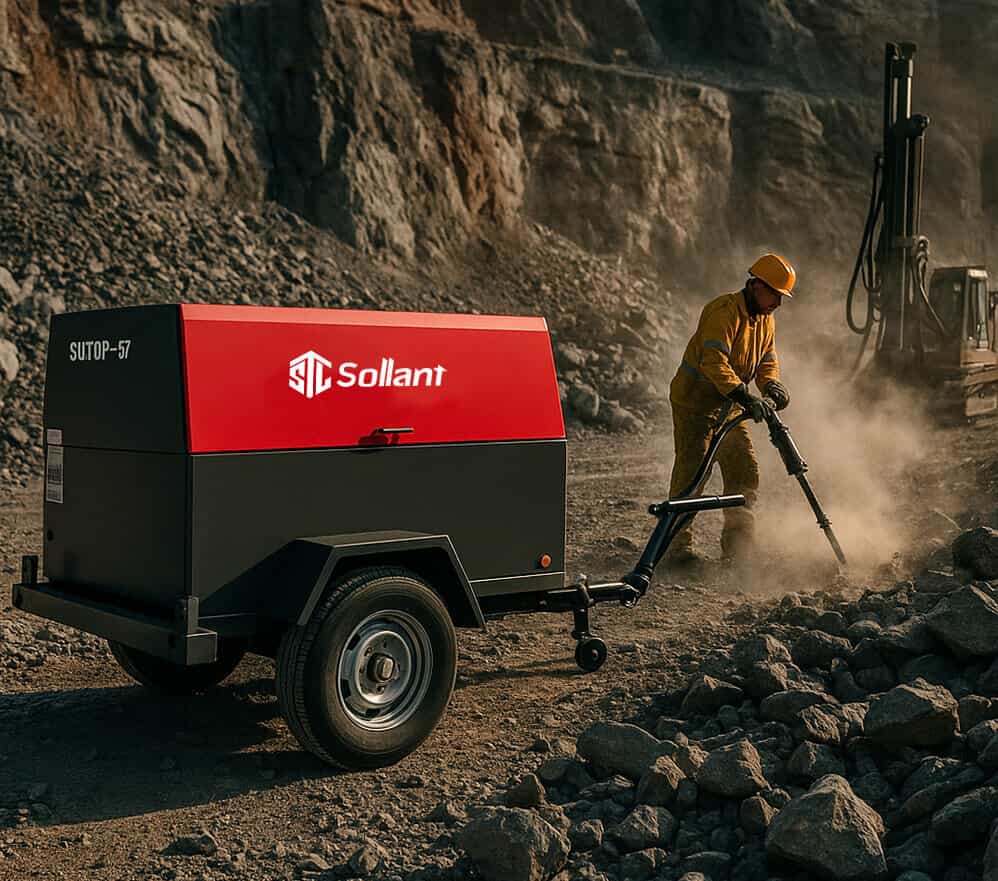
The objective of water well drilling is to efficiently and safely secure a stable water source from complex geological formations, and the air compressor is a core piece of equipment indispensable to this process. Whether dealing with loose sand, gravel layers, or deeper bedrock, air compressors supply a steady, high-pressure airflow that provides the continuous power needed for drilling, cuttings removal, cooling, and borehole formation. For projects requiring rapid well completion and high standards of quality, the importance of the air compressor lies not merely in the ability to drill, but in the speed and stability of the operation and the ultimate quality of the well. This article analyzes the working principles, core value, application scenarios, selection criteria, and maintenance considerations of air compressors in water well drilling.If you are involved in water well drilling, consider the information in this article and learn more about the application of air compressors in the drilling industry to optimize your equipment configuration and operational workflows.
Working Principle of Air Compressors in Water Well Drilling
The working principle of an air compressor is based on fundamental physical laws regarding gas compression: increasing gas pressure and energy density by reducing its volume. In water well drilling, this principle translates into practical power output and auxiliary functions.
The typical process is as follows:
- Intake Stage: The compressor draws in ambient air through an intake filter, removing dust, impurities, and moisture to ensure the air entering the compression chamber is clean.
- Compression Stage: The compression mechanism varies by type. Screw-type compressors (Sollant’s mainstream products) compress air continuously through the rotation of a pair of meshing male and female screw rotors, ensuring a smooth, pulsation-free output. Piston-type compressors, conversely, achieve intermittent compression through the reciprocating motion of a piston. During compression, air temperature rises; cooling systems (such as air or water cooling) are typically required to lower the temperature and prevent equipment overheating.
- Air Storage and Output: The high-pressure compressed air enters an air receiver tank for pressure stabilization before being piped to the drilling rig. During drilling, the high-pressure air serves two purposes: driving the Down-The-Hole (DTH) hammer or pneumatic drilling tools for percussive/rotary drilling, and creating an upward airflow to carry rock cuttings out of the wellbore.
In specific water well drilling applications, compressed air also facilitates “air lifting”: high-pressure airflow travels down the drill pipe, reverses direction upon reaching the drill bit, and flows upward, creating an annular return system. This effectively cools the drill bit, lubricates components, and clears debris, thereby preventing borehole collapse or blockage.
The reliability of the working principle directly determines drilling safety. Substandard compressors may experience pressure fluctuations, leading to drill bit jamming or borehole wall instability; in contrast, Sollant compressors utilize intelligent control systems to monitor temperature, pressure, and oil levels in real-time, enabling automatic adjustments that significantly reduce operational risks.
Furthermore, modern air compressors integrate post-treatment equipment—such as dryers and filters—to further purify the air and minimize moisture-induced corrosion of drilling tools. This is particularly crucial in humid or saline geological environments.
The Critical Role of Air Compressors in Water Well Drilling
Air compressors serve as the “power core” and “safety guarantee” in water well drilling, with their importance evident across several dimensions:
Power Supply: High-pressure air drives the down-the-hole (DTH) hammer to shatter rock through high-frequency impacts (up to thousands of blows per minute), far exceeding the efficiency of traditional mechanical drilling. Efficient drilling in hard formations—such as granite or basalt—is virtually impossible without an air compressor.
Cuttings Removal: Drilling generates significant amounts of rock cuttings; if allowed to accumulate, they can cause the drill string to jam and accelerate wear. The powerful airflow generated by the compressor efficiently evacuates these cuttings, keeping the borehole bottom clean, increasing drilling speed, and protecting the drilling tools.
Borehole Stability: Maintaining appropriate air pressure helps support the borehole walls, reducing the risk of collapse—a benefit particularly significant in loose sand layers or fractured rock zones.
Environmental and Cost Advantages: Compared to mud drilling, air drilling minimizes mud usage, thereby reducing environmental pollution and waste disposal costs. Furthermore, energy-efficient air compressors—such as those from Sollant—significantly lower fuel consumption, resulting in substantial operational savings over long-term projects.
In practical applications, their critical importance is also reflected in their versatility. Air compressors can be flexibly matched to the requirements of both shallow wells (tens of meters deep) and deep wells (hundreds of meters deep). Sollant’s product range covers a wide spectrum of power and pressure specifications—from small portable units to large mobile systems—providing a one-stop solution for diverse operational scenarios.
How Air Compressors Boost Drilling Efficiency
Time is money; in commercial water well projects, drilling efficiency directly impacts the return on investment. Air compressors significantly enhance overall drilling efficiency through a range of technical advantages.
1. Breakthrough Rock-Breaking Efficiency
High-pressure air drives Down-the-Hole (DTH) hammers to deliver impact frequencies of over a thousand blows per minute, concentrating energy to generate immense instantaneous impact force. Compared to traditional roller-cone bits or conventional rotary bits, pneumatic DTH hammers increase drilling speeds by two to four times in hard and medium-hard rock formations. Sollant air compressors precisely match the DTH hammer’s optimal operating pressure, preventing weak impacts caused by insufficient pressure or unnecessary equipment wear resulting from excessive pressure.
2. Efficient Cuttings Removal and Hole-Bottom Cleaning
The bottleneck in drilling efficiency often lies not in breaking the rock, but in the timely removal of cuttings. If “secondary crushing” occurs at the bottom of the hole—where cuttings are repeatedly struck by the bit because they were not cleared away—it wastes significant energy and accelerates bit wear. The high-volume airflow provided by the compressor ensures that the upward velocity in the annulus exceeds the critical threshold; this allows even large cuttings to be cleared instantly, ensuring the bit always acts directly upon fresh rock surfaces.
3. Reduced Auxiliary Downtime
Efficient cooling is another key factor in how air compressors boost overall efficiency. The continuous flow of high-speed air dissipates the heat generated during the operation of the DTH hammer and bit, extending the service life of the carbide inserts. This reduces the time spent frequently tripping the drill string to replace bits or repair tools, thereby ensuring the continuity of single-shift operations.
Application Scenarios Under Various Drilling Conditions
Air drilling is not a single, uniform method; rather, it encompasses various techniques adapted to specific formation conditions, requiring corresponding adjustments in air compressor selection and configuration.
1. Dry Air Drilling (Straight Air Drilling)
Applicable Conditions: Formations with little to no water content, or hard rock formations with extensive fracturing.
Application Characteristics: This is the most basic form. It requires the air compressor to deliver a high volume of air to ensure sufficient annular velocity for carrying cuttings to the surface. Insufficient airflow can cause wet cuttings to accumulate at drill pipe joints, forming “mud rings” that lead to stuck pipe incidents.
2. Mist Drilling (Water Mist/Mud Mist)
Applicable Conditions: Soft formations or clay layers with minor water inflow that are prone to bit balling (clogging).
Application Characteristics: Small amounts of fresh water (gas-to-liquid ratio of approx. 2000:1) or dilute mud are injected into the airflow to create a mist. The atomized liquid helps wet the borehole wall, suppress dust, assist in cuttings removal, and prevent borehole wall sloughing. This process places higher demands on the air compressor’s discharge capacity (high-energy system).
3. Foam Drilling (Viscous Foam)
Applicable Conditions: Unconsolidated loose formations, permeable layers, or formations with significant water inflow.
Application Characteristics: A foaming agent is injected into the compressed air to generate stable foam. The foam possesses surface tension and adhesiveness, allowing it to capture fine rock particles and generate a “gas-lift” effect, resulting in exceptional cuttings removal capability. This process requires relatively low airflow (low-energy system) but demands high stability from the air compressor.
4. Aerated Mud Drilling
Applicable Conditions: Formations with severe circulation loss or scenarios requiring the balancing of abnormal formation pressures.
Application Characteristics: Air is injected into the drilling mud (gas-to-liquid ratio of 10:1 to 30:1) to reduce the hydrostatic pressure exerted by the mud column on the formation, thereby preventing circulation loss while partially retaining the mud’s ability to stabilize the borehole wall. This process requires a “very high-energy system” capable of delivering both high airflow and high mud pump rates.
The Impact of Air Compressors on Well Construction Quality
Well construction quality encompasses not only whether the well meets depth specifications but also its water yield, service life, and safety. Air compressors play a direct role in these aspects.
1. Maximizing Aquifer Protection and Ensuring Water Yield
As previously mentioned, air drilling prevents the intrusion of solid particles from drilling mud into the aquifer. This is the most significant contribution of air drilling to well quality. By using air or foam as the circulating medium, the fractures in the aquifer surrounding the borehole remain open, and well cleaning is more thorough, thereby enabling the well to achieve its expected water yield.
2. Minimizing Borehole Wall Damage and Enhancing Wellbore Stability
The hydrostatic pressure of drilling mud can fracture or compact geological formations, particularly in loose strata. Air drilling exerts minimal pressure on the borehole wall—a method known as “underbalanced drilling”—which effectively preserves the formation’s original stress state and reduces the risk of wall collapse. Although air lacks the “wall-supporting” function of mud, in practice, controlling airflow velocity and utilizing foam drilling can actually yield more stable borehole walls than mud in many complex formations.
3. Ensuring Downhole Cleanliness and Preventing Complex Downhole Incidents
If the air compressor’s displacement and pressure are insufficient, cuttings cannot be effectively removed; this leads to the accumulation of rock debris at the bottom of the hole, forming a “cuttings bed.” Such conditions can trigger major incidents—such as stuck pipe or buried drill strings—that may directly result in the loss of the well. A stable and adequate supply of compressed air is a prerequisite for ensuring downhole safety and the smooth completion of the well. For instance, in a water well project within the hard rock formations of Shilin County, Yunnan, the use of compressed air at pressures up to 35 kg ensured effective drilling and cuttings removal in complex strata, thereby guaranteeing the successful construction of the well.
Selecting Air Compressors for Water Well Drilling
Choosing the right air compressor for water well drilling requires a comprehensive evaluation of factors such as working pressure, air delivery (flow rate), drive method, and mobility.
1. Working Pressure (Air Pressure)
- Low Pressure (7–15 bar): Primarily used for cuttings removal and well cleaning in large-diameter, shallow wells, or for powering low-pressure down-the-hole (DTH) hammers.
- Medium-to-High Pressure (15–25 bar): Currently the mainstream choice for water well drilling. These compressors effectively power most medium-to-high-pressure DTH hammers, balancing cuttings removal with rock-breaking efficiency. For example, the X-AIR 1100-25 performs well in projects involving 190mm diameter holes and depths of 200 meters.
- High Pressure (25–40 bar): Used for deep wells, hard rock formations, and large-diameter drilling. High air pressure significantly boosts the impact power of DTH hammers and enhances cuttings removal capabilities—essential conditions for rapid drilling in hard rock. For instance, Sollant offers high-pressure rotary screw compressors with working pressures of 35–40 bar, specifically designed for such demanding operating conditions.
2. Air Delivery (Airflow Rate)
Air delivery must meet the requirements for annular return velocity. Larger hole diameters and greater depths necessitate higher airflow rates. Generally, provided the pressure requirement is met, higher air delivery translates to superior rock-carrying capacity and increased drilling efficiency. In many large-scale water well projects, clients prefer equipment with an air delivery exceeding 25 m³/min to meet the demands of large-diameter drilling operations.
3. Mobility
Mobile Air Compressors: Since water well drilling sites are often widely dispersed, mobile air compressors (such as trailer-mounted, truck-mounted, or crawler-mounted units) are the primary choice. Equipped with integrated diesel engines, they offer high mobility and can operate independently in the field.
Stationary Air Compressors: In large-scale centralized well fields or mining areas, electrically driven stationary air compressors may be used. While they offer lower operating costs and easier maintenance, they lack the flexibility of mobile units.
4. Technological Trends: Moving Towards High Efficiency, Energy Conservation, and Environmental Friendliness
With the global focus on carbon emissions, emission standards for air compressors are becoming increasingly stringent. In China, the “National IV” emission standard is now mandatory, requiring newly purchased diesel-powered air compressors to meet these compliance criteria. Meanwhile, energy-saving technology has become a key benchmark for evaluating equipment quality.
Examples include:
- Intelligent control systems (such as drilling expert systems): These optimize air output—providing an additional 10% air volume or automatically adjusting operating status—to prevent energy waste.
- Electronic thermostatic valves: These precisely control oil temperature and reduce condensate formation, thereby extending the service life of the airend and lubricant while enhancing operational efficiency.
- Two-stage compression technology: This offers a higher energy efficiency ratio, producing more compressed air for the same power input and reducing fuel consumption.
Precautions and Maintenance for Air Compressors Used in Water Well Drilling
To ensure the long-term, stable operation of air compressors in demanding drilling environments, the following points require special attention:
1. Altitude-Based Adjustments
At high altitudes, the air is thinner; this reduces the compressor’s air intake and actual discharge capacity while also impairing heat dissipation. When selecting an air compressor, the discharge capacity must be adjusted based on the altitude; otherwise, the unit may fail to meet drilling requirements.
2. Rigorous Air Purification
Field environments are often dusty. If the air intake filtration is inadequate, dust entering the main unit can cause wear on the screw rotors, reduce efficiency, or even lead to total equipment failure. Air filters must be inspected and replaced regularly. Additionally, in cold regions, moisture in the compressed air can cause pipeline freezing, necessitating the use of drying equipment or anti-freezing measures.
3. Lubrication and Temperature Control
The lubricating oil in screw air compressors serves not only to lubricate but also to seal and cool the system. High-quality oil specified by the manufacturer must be used, and both oil temperature and pressure should be monitored. Advanced air compressors (such as those equipped with the OilXpert system) feature intelligent temperature control, effectively extending the service life of both the oil and the compressor air end.
4. Operational Matching and Safety Protection
Operating the air compressor beyond its design pressure or temperature limits for extended periods is strictly prohibited. Intelligent controllers should be used to configure appropriate safety parameters. For processes requiring chemical injection into the pipeline—such as foam drilling—it is crucial to ensure safe coordination between the injection equipment and the air compressor to prevent liquid backflow into the main unit.
5. Regular Maintenance
Consumables such as oil filters, air filters, and oil separation elements must be replaced in strict accordance with the maintenance schedule. Many modern air compressors meeting “China IV” emission standards feature extended maintenance intervals (up to 500 hours), reducing the frequency of downtime for servicing; however, this does not diminish the importance of routine equipment inspections.
Conclusion
In summary, the air compressor has evolved from a mere auxiliary tool in water well drilling into a core piece of technical equipment that determines a project’s efficiency, cost-effectiveness, and ultimate success. Its importance is evident across every stage of the process—from hard rock fragmentation and efficient cuttings removal to aquifer protection and the assurance of high-quality well construction. As advanced techniques like air drilling and foam drilling become more widespread, and as industry demands for environmental sustainability and operational efficiency continue to rise, the role of the air compressor will become increasingly pivotal.
Selecting the right air compressor requires a comprehensive evaluation of factors such as pressure, air delivery rate, mobility, energy efficiency, and reliability. Whether operating on vast plains or in high-altitude mountainous regions, and whether drilling shallow domestic wells or deep-water wells extending hundreds of meters, a high-performance air compressor serves as your most trusted partner. For professionals in the water well drilling industry, fully appreciating the value of air compressors—and choosing market-proven, specialized brands like Sollant—is a crucial step toward reducing costs, boosting efficiency, and expanding business horizons.
Request a Quick Quote Now

Shandong Sollant Machinery Manufacturing Co., Ltd.
20 years of professional export experience. Our twin-screw air compressor is very popular in the international market.
