
Why Air Compressors Are Crucial in the Chemical and Petrochemical Industry
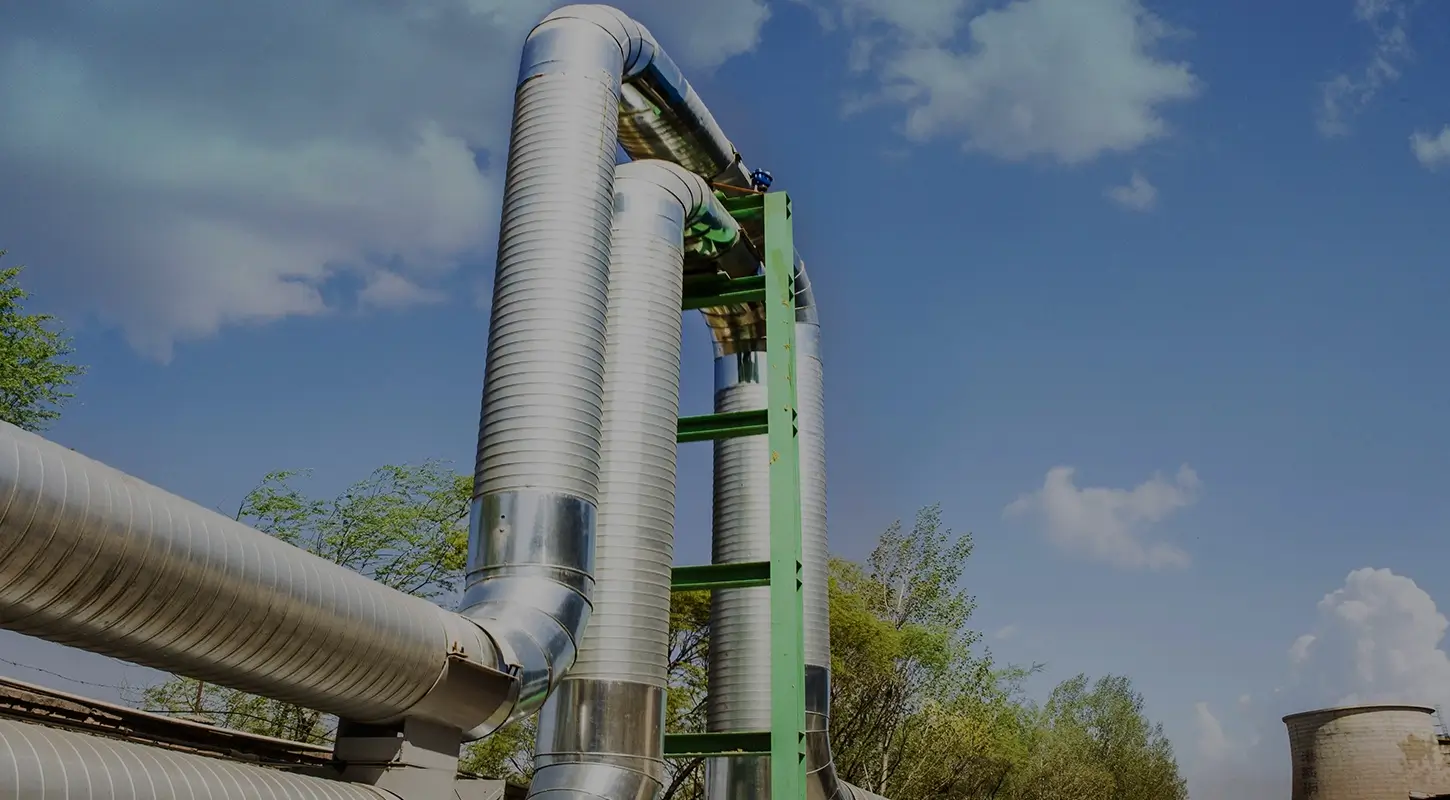
Within the grand operational landscape of a modern industrial plant, reactors, distillation columns, and heat exchangers often take center stage as the most conspicuous protagonists. Yet, operating quietly behind them lies a critical—and indispensable—piece of equipment: the air compressor.
In the chemical industry, the air compressor has long since evolved beyond the simple function of merely “supplying compressed air.” It shoulders a multitude of core responsibilities—including instrumentation control, process reactions, material transport, purging and displacement, and nitrogen generation—earning it the reputation of being both the “power heart” and the “safety barrier” of chemical facilities.
The unique nature of the chemical production environment—characterized by high temperatures, high pressures, flammability, explosiveness, and extreme corrosiveness—dictates that the requirements for compressed air equipment in this sector far exceed those of general industrial fields. Should the air supply system experience fluctuations or contamination, the consequences can range from minor deviations in process parameters to severe outcomes such as uncontrolled valve operation, abnormal reactions, or even major safety incidents.
Consequently, understanding the pivotal role of air compressors within the chemical industry—and selecting a compressor system that precisely aligns with specific process characteristics and environmental demands—remains an unavoidable and critical imperative for every decision-maker involved in chemical engineering projects.
Applications of Compressed Air in Chemical and Petrochemical Processes
The application of compressed air within the chemical industry is extremely extensive, permeating virtually every stage of the production process. Outlined below are several of the most representative application scenarios—those that also impose the most stringent requirements on equipment.
1. Instrument and Control Air Supply
Modern, large-scale chemical plants universally employ Distributed Control Systems (DCS). The vast majority of the terminal actuators within these systems—such as control valves, shut-off valves, pneumatic cylinders, and positioners—are pneumatically driven. Consequently, compressed air serves as the “final execution link” of the control system.
The requirements for instrument air are exceptionally rigorous:
- Pressure Stability: Fluctuations are typically required to be maintained within ±0.02 MPa.
- Absolute Purity: It must be oil-free, dust-free, and dry.
- Continuous Reliability: Any interruption could result in a plant-wide shutdown or even lead to safety-related incidents.
In process units involving high-hazard operations—such as hydrogenation, chlorination, and oxidation—the quality of the instrument air directly impacts the intrinsic safety of the entire facility.
2. Process Air Applications
In certain chemical manufacturing processes, compressed air serves not merely as a power source but also as a raw material that directly participates in the chemical reaction.
Typical examples include:
- PTA (Purified Terephthalic Acid) Production: The oxidation of paraxylene requires large volumes of compressed air to serve as the oxygen source.
- Ammonia Synthesis: Utilization of tail gas following the air separation process for nitrogen and hydrogen production.
- Catalytic Cracking: Supplying fluidizing air and combustion air to the regenerator.
- Bio-fermentation: Providing sterile air to fermentation tanks.
This category of applications imposes extremely stringent requirements on the flow rate, pressure stability, and oil-free purity of the air compressors used; specifically, air that comes into direct contact with process materials or catalysts must be absolutely free of oil contamination.
3. Pneumatic Conveying
Chemical manufacturing processes frequently involve the handling of large quantities of powdery or granular materials—such as polyethylene, polypropylene, PTA powder, catalysts, and carbon black. The use of compressed air for pneumatic conveying offers distinct advantages, including a closed and dust-free system, the capability for long-distance transport, and ease of automation.
Pneumatic conveying systems are typically categorized into two types:
- Dilute-phase conveying: Characterized by high velocity and low pressure; suitable for lightweight materials.
- Dense-phase conveying: Characterized by low velocity and high pressure; suitable for fragile or abrasive materials.
The compressed air utilized for conveying is subject to strict controls regarding oil content; failure to adhere to these standards would result in product contamination, potentially leading to the downgrading or complete scrapping of entire batches of material.
4. Purging and Displacement
During the maintenance, shutdown, and equipment switching processes of chemical plants, purging and displacement are indispensable safety procedures. Compressed air is utilized for the following purposes:
- Purging residual materials from pipelines
- Displacing flammable or toxic gases from reactors
- Drying the internal surfaces of equipment
- Cleaning filters and heat exchangers
This application places high demands on the airflow capacity and continuous operational capability of air compressors; furthermore, in specific scenarios, nitrogen is used instead of air for displacement purposes.
5. Nitrogen Generation
Many chemical processes require nitrogen with a purity exceeding 99.5% for applications such as inerting, sealing, and purging. Typically, this nitrogen is generated using Pressure Swing Adsorption (PSA) nitrogen generators or membrane separation systems, utilizing compressed air as the feedstock.
In this context, the oil content in the air compressor’s discharge directly determines both the purity of the nitrogen produced and the service life of the downstream adsorbent. Consequently, a high-quality oil-free or low-oil air compressor is a prerequisite for achieving low-cost, high-purity nitrogen generation.
Types of Air Compressors Used in the Chemical Industry
Given the vast differences in scale, process types, and air requirements across chemical facilities, the variety of air compressors actually deployed within the chemical industry is exceptionally diverse. The following six categories represent the most common and representative compressor types currently in use.
1. Rotary Screw Compressors
Rotary screw compressors (also known as screw air compressors) are currently the most widely utilized compressor type in the industrial sector, offering exceptional cost-effectiveness—particularly within the medium-to-low pressure range.
Key Characteristics in Chemical Industry Applications:
- Discharge pressure typically ranges between 0.7 and 1.3 MPa.
- Wide range of air delivery capacities (ranging from a few m³/min to hundreds of m³/min).
- Compact structure and ease of maintenance.
- Available in both oil-free and oil-injected (micro-oil) configurations.
Screw compressors are widely employed in small-to-medium-scale chemical facilities for applications such as instrument air, purging, and pneumatic conveying. For process air applications requiring high purity, dry oil-free screw compressors deliver superior performance; conversely, for general utility air requirements, oil-injected screw compressors—when paired with high-efficiency filtration systems—present an economical and reliable solution.
Sollant Product Coverage in This Field:
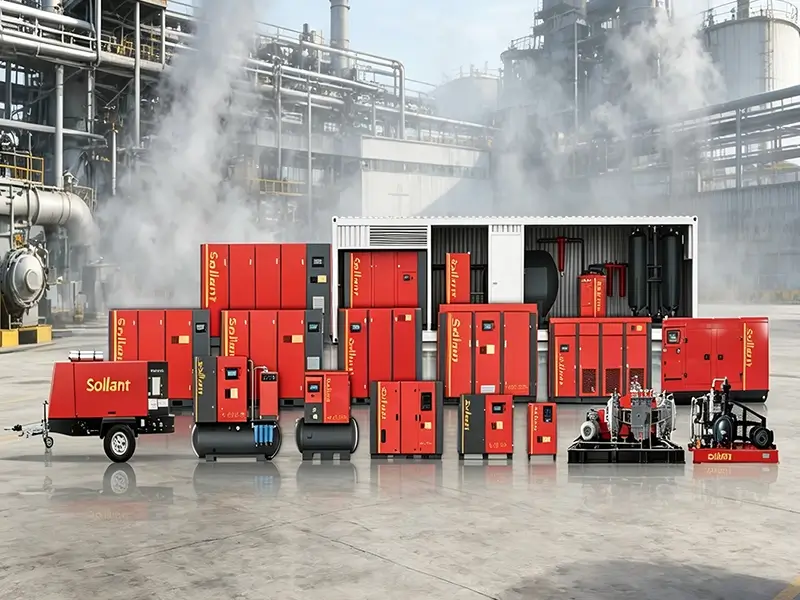
Sollant offers a comprehensive product line of screw air compressors, including fixed-speed and variable-speed models, oil-injected screw compressors, and dry oil-free screw compressors. This extensive range is designed to meet the diverse requirements of the chemical industry—from general utility air needs to the demand for high-purity process air.
2. Reciprocating Air Compressors
The reciprocating compressor is one of the oldest compressor types in existence; however, for applications involving high pressure and low flow rates, it remains irreplaceable to this day.
Applications in the Chemical Industry:
- High-pressure purging (>4.0 MPa)
- Gas boosting
- Laboratory or small-scale process units
- Specialty gas compression
Its advantages include high pressure output and superior efficiency under specific operating conditions. Its disadvantages, however, include significant vibration, pronounced airflow pulsation, and a high frequency of maintenance requirements. In continuous, large-scale production environments, reciprocating compressors are gradually being supplanted by screw or centrifugal compressors; nevertheless, they remain a reliable choice for intermittent operations and high-pressure applications.
Corresponding Sollant Products:
Sollant Industrial Reciprocating Piston Air Compressors—covering medium-to-high pressure series—feature a robust structure and exceptional durability. They are ideally suited for specific applications within the chemical industry, such as auxiliary processes, high-pressure purging, and gas boosting.
3. Mobile Air Compressors
While mobile air compressors are not typically considered primary equipment within chemical plants, they play a significant role during construction, maintenance, and emergency situations.
Typical applications include:
- Pipeline purging during the installation of new facilities
- Serving as a substitute for the main air supply system during maintenance periods
- Providing a temporary air source
- Supplying air for emergency response scenarios
Mobile air compressors require rapid startup capabilities and strong adaptability to varying environmental conditions; furthermore, depending on the specific application scenario, it is essential to select either an oil-free or low-oil (micro-oil) model.
Features of Sollant Mobile Air Compressors:
Sollant mobile screw air compressors feature a compact design and rapid startup capabilities, making them well-suited for outdoor use and operation in complex site conditions. They represent a reliable choice for construction, maintenance, and emergency air supply requirements in chemical industry projects.
4. Oil-Free Air Compressors
In the chemical industry, oil-free air compressors are not merely a “premium option,” but rather a mandatory requirement for many critical processes.
Why does the chemical industry place such a high priority on oil-free operation?
- Oil can react with various chemical media.
- Oil contamination can lead to catalyst poisoning.
- The ingress of oil into final products can result in severe quality defects.
- Oil deposits accumulating in valves and instrumentation can cause sticking and operational failure.
Common oil-free technologies include:
- Dry Oil-Free Screw Compressors
- Oil-Free Scroll Compressors
- Oil-Free Piston Compressors
- Water-Lubricated Single-Screw Compressors
In actual chemical engineering projects—spanning applications such as instrument air, process air, pneumatic conveying, and nitrogen generation feedstock—the vast majority of design specifications explicitly mandate extremely low residual oil content. Truly oil-free compressors offer a fundamental solution for eliminating these risks.
Sollant Oil-Free Compressor Capabilities:
Sollant offers a diverse range of oil-free compression solutions, including dry oil-free screw, oil-free piston, and water-lubricated single-screw air compressors. The discharge air purity meets the ISO 8573-1 Class 0 standard, making these systems ideally suited for applications with stringent air purity requirements—such as fine chemicals, pharmaceuticals, and petrochemical support operations.
5. Nitrogen Generators
Strictly speaking, a nitrogen generator is not an “air compressor,” yet it constitutes a vital component of a compressed air system. A nitrogen generation system typically comprises the following elements:
- Air Compressor
- Refrigerated Air Dryer
- Precision Filtration
- Nitrogen Generation Unit (PSA or Membrane)
Together, these components form a complete system. By installing their own on-site nitrogen generation systems to replace liquid nitrogen or cylinder-supplied nitrogen, chemical enterprises can significantly reduce their gas supply costs.
The efficiency and quality of nitrogen generation depend directly on the quality of the upstream compressed air—specifically its pressure, dew point, oil content, and particulate levels—all of which are critical factors.
Sollant Nitrogen System Solutions:
Sollant offers an integrated solution encompassing air compression, purification, and nitrogen generation. We can flexibly configure PSA nitrogen generation systems tailored to the specific nitrogen consumption volumes and purity requirements of chemical industry clients, thereby enabling cost-effective and highly efficient on-site nitrogen production.
6. Centrifugal Compressors
Centrifugal compressors are the “premier choice” for large-scale chemical plants.
Typical Application Scenarios:
- Process air for large-scale fertilizer plants
- Feed air for air separation units (ASUs)
- Oxidation air for large-scale PTA plants
Core Advantages:
- High discharge capacity (ranging from hundreds to thousands of m³/min)
- 100% oil-free operation
- Smooth running and high efficiency
- Extended continuous operating cycles
Their drawbacks include high initial investment costs, a relatively slow response to load fluctuations, and unsuitability for low-flow operating conditions. However, in large-scale, continuous chemical manufacturing processes, centrifugal compressors hold an irreplaceable position.
Sollant’s Strategic Focus on Centrifugal Compressors:
Tailoring its offerings to the requirements of major projects within the chemical industry, Sollant provides high-efficiency centrifugal compressor packages and system integration services to meet the demands for large-scale process air supply.
Key Features to Consider for Air Compressors in the Chemical Industry
For chemical projects, the selection of an air compressor is not merely a matter of choosing a unit that is “just adequate”; rather, it is a systematic decision based on risk assessment, safety requirements, service life, and total cost of ownership. The following are six key features that chemical enterprises should prioritize when selecting equipment.
1. Oil-Free Operation and Air Purity
In critical processes, an oil-free air supply is the absolute baseline requirement. For applications such as instrument air, process air, product conveying, and nitrogen generation feedstock, oil-free solutions should always be given top priority.
During the selection process, it is essential to explicitly specify compliance with relevant ISO 8573-1 purity classes and to evaluate the equipment’s long-term stability under actual operating conditions.
2. Pressure and Flow Stability
Chemical processes impose extremely rigorous demands on the dynamic response capabilities of the air supply source. A superior air compressor should possess the following attributes:
- A wide and stable modulation range
- Low pressure pulsation
- Rapid load/unload capabilities
Variable Frequency Drive (VFD) technology is gaining increasing acceptance within the chemical industry, as it significantly enhances air supply stability while simultaneously reducing energy consumption.
3. Reliability
Chemical plants typically operate continuously for cycles spanning 2 to 4 years—or even longer. Should an air compressor experience an unplanned shutdown, the consequences could include:
- A complete plant-wide shutdown
- Damage to catalysts
- Elevated safety risks
- Substantial financial losses
Consequently, chemical enterprises should prioritize brands and specific models that feature ample design margins, core components with extended service lives, and a proven track record of reliable performance in industrial operating environments.
4. Corrosion Resistance and Explosion Protection
The air in chemical environments often contains corrosive gases, solvent vapors, or dust. Air compressors and downstream treatment equipment must feature:
- Intake filtration systems
- Corrosion-resistant coatings or materials
- Explosion-proof motors and electrical control systems (applicable to hazardous areas)
Air compressors installed within Zone 1 and Zone 2 hazardous areas must possess the corresponding explosion-proof certifications.
5. Energy Efficiency and Total Lifecycle Cost
Compressed air systems can account for 10% to 30% of the total energy consumption in chemical plants. For an inefficient air compressor, the additional electricity costs incurred over just a few years may well exceed the initial equipment purchase price.
Key factors to consider during equipment selection include:
- Specific power (kW/m³/min)
- Part-load efficiency
- Variable Frequency Drive (VFD) capability
- Feasibility of waste heat recovery
6. Downstream Treatment and System Integration Capabilities
A compressed air system constitutes a comprehensive engineering assembly comprising compressors, air receivers, dryers, filters, piping, and control systems. Chemical enterprises should prioritize suppliers capable of providing holistic, end-to-end solutions.
Frequently Asked Questions
Q1: Does the chemical industry truly require 100% oil-free air compressors?
A: It depends on the specific application scenario. For applications involving instrument air, direct product contact, use as process gas, or as feed gas for nitrogen generation, the use of oil-free air compressors is strongly recommended. For general purging, non-contact pneumatic tools, and similar applications, a micro-oil compressor paired with high-efficiency filtration is also acceptable.
Q2: How do I choose between a screw compressor and a centrifugal compressor?
A: The key factors are air volume and pressure. For discharge volumes under 80 m³/min, screw compressors are generally the preferred choice; for volumes exceeding 100 m³/min—provided the pressure requirements are moderate—centrifugal compressors offer distinct advantages. For the intermediate range, a comparative evaluation based on specific operating conditions is necessary.
Q3: How can the supply of compressed air be guaranteed during maintenance periods for chemical plants?
A: It is recommended to strategically position backup units within the main pipeline network, deploy mobile emergency air compressors for large-scale facilities, and install buffer air receivers at critical process units. Sollant mobile air compressors feature rapid startup capabilities, making them ideally suited for maintenance backup and emergency air supply applications.
Q4: What is the maintenance interval for air compressors?
A: This varies depending on the specific compressor model and operating conditions. Typically, routine maintenance intervals range from 2,000 to 4,000 operating hours, while major overhaul intervals extend to tens of thousands of hours. In the context of continuous chemical production operations, it is strongly recommended to strictly adhere to the manufacturer’s prescribed maintenance protocols to prevent unplanned downtime.
Conclusion
The importance of air compressors in the chemical industry extends far beyond the simple function of “providing power.” They permeate every facet of operations—from instrumentation safety and process execution to material handling, product integrity, and the long-term stable operation of the entire facility.
From rotary screw compressors to large-scale centrifuges, and from oil-free technologies to nitrogen generation systems, the chemical industry’s requirements for air compressors consistently revolve around four key principles: Safety, Cleanliness, Stability, and Efficiency.
Selecting a qualified—or even exceptional—air compressor is not merely a routine equipment procurement task; rather, it is a comprehensive systems engineering undertaking that bears directly upon the safety and economic viability of a chemical facility throughout its entire lifecycle.
For chemical enterprises currently planning or upgrading their compressed air systems, Sollant offers far more than just a range of air compressor products proven under rigorous operating conditions. We provide holistic solutions meticulously tailored to the chemical industry—spanning everything from screw, piston, and portable compressors to oil-free units, nitrogen generation systems, and large-scale centrifugal assemblies; and encompassing everything from explosion-proof configurations to energy-efficient system designs and long-term operational maintenance support.
In the chemical sector, a truly trustworthy air compressor is never just a piece of equipment. It represents a certainty—a steadfast commitment to both safety and productivity.
If you are seeking a truly reliable compressed air solution for your chemical project, Sollant deserves a place on your shortlist.
Request a Quick Quote Now

Shandong Sollant Machinery Manufacturing Co., Ltd.
20 years of professional export experience. Our twin-screw air compressor is very popular in the international market.
