
Rubber and Plastics Industry
Sollant air compressors for the rubber industry provide stable, oil-free air supply, preventing oil contamination of rubber materials and enhancing the quality of vulcanization and molding processes.
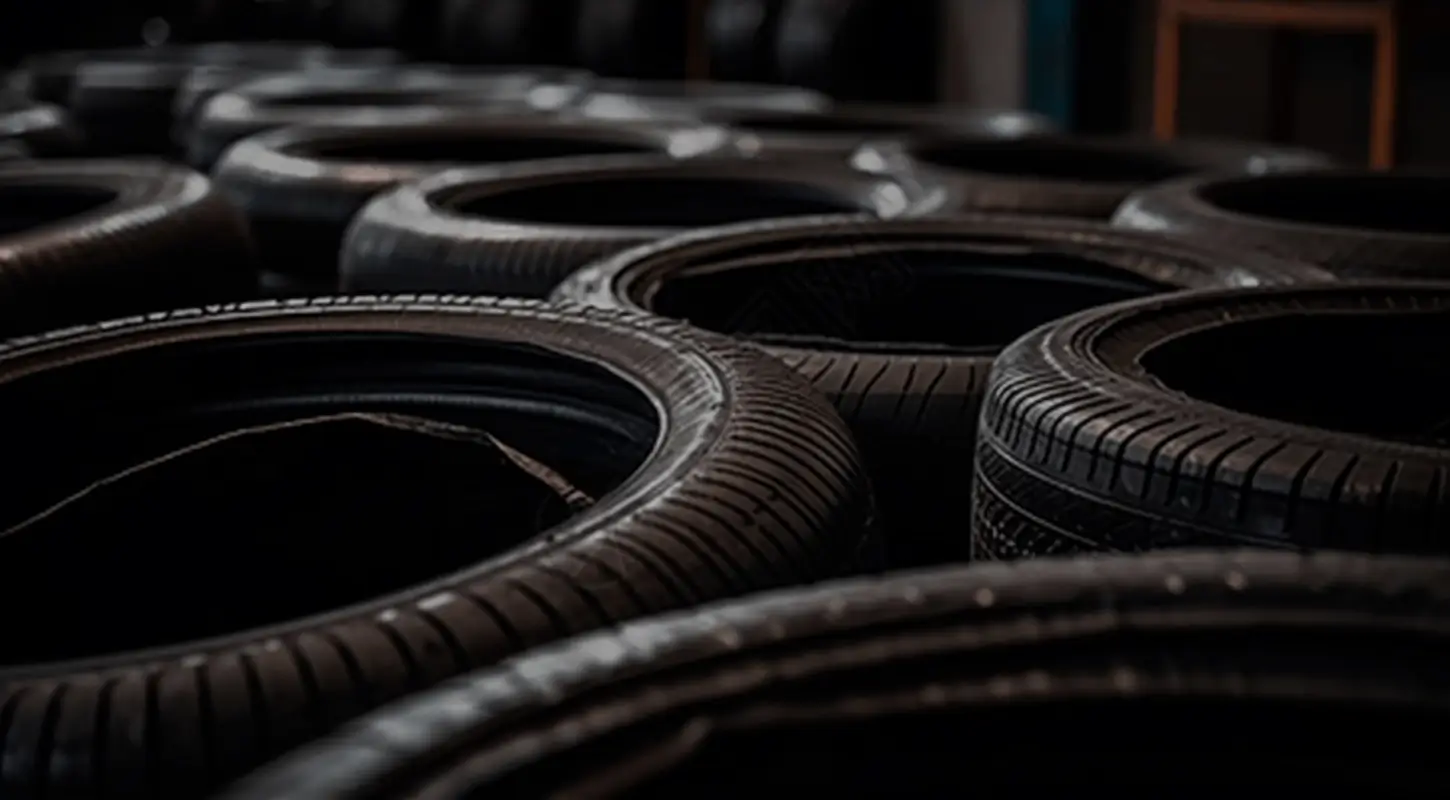
Typical Applications
Applications of Air Compressors in the Rubber and Plastics Industry
Rubber Compounding and Heat Curing
In the compounding process of rubber production, air compressors provide the necessary air supply for mixing various rubber raw materials.
During the curing process, compressed air is used to control the air pressure within the mold, ensuring that the rubber forms uniformly during heating and achieves the desired physical properties.
Plastic Injection Molding
In the injection molding process of plastic production, air compressors are used to provide pneumatic pressure to drive injection molding machines and related pneumatic devices.
Compressed air is also used for cooling and cleaning plastic molds, helping to rapidly cool molded plastic products and improve production efficiency.
Pneumatic Conveying and Material Handling
In plastic and rubber production, compressed air serves as the power source for pneumatic conveying systems, helping to transport raw materials such as granules, powders, and liquids to different sections of the production line.
The stable airflow provided by air compressors effectively moves materials, ensuring an uninterrupted supply of raw materials throughout the production process.
Mold Cleaning and Cooling
Air compressors can be used for air-blowing cleaning of molds, helping to remove residues and ensuring product surface quality.
In rubber and plastic molding processes, compressed air is used to rapidly cool molds, shortening production cycles and improving production efficiency.
Pneumatic Control and Automation Equipment
In automated control systems, compressed air is commonly used to drive pneumatic valves, cylinders, and other equipment, ensuring the automated operation of production lines.
Pneumatic control systems can precisely regulate air pressure and flow, enhancing the accuracy and stability of production lines.
Pressure Testing and Quality Control
Air compressors are used to perform pressure testing on rubber and plastic products to verify their compressive strength, sealing performance, and other properties.
Compressed air powers testing equipment, ensuring the accuracy and reliability of all tests and safeguarding product quality.
Exhaust Gas Treatment and Ventilation Systems
During rubber and plastic production, exhaust gases and harmful fumes must be promptly vented. Air compressors support the operation of ventilation systems, ensuring proper air circulation in the workshop and reducing the accumulation of harmful substances.
With the aid of airflow, air compressors ensure that the production environment complies with environmental and safety standards.
Product Packaging and Filling
During the packaging of plastic and rubber products, compressed air is used to drive automatic packaging machinery to complete processes such as product packaging, sealing, and filling.
Compressed air powers packaging equipment, making the packaging process more efficient and stable.
Rubber and Plastics Industry
Advantages of Air Compressor Applications
High Stability
Meets the demands of high-pressure, round-the-clock continuous production, ensuring long-term stable operation of equipment.
Energy Efficiency
Utilizes advanced energy-saving technology to reduce energy consumption and lower operating costs.
High Adaptability
Withstands complex operating conditions such as high temperatures and high humidity, ensuring uninterrupted production.
Environmentally Friendly
These high-efficiency air compressors also reduce carbon dioxide emissions, meeting current environmental standards.
Analysis of Air Usage Conditions & Pain Points
Operating Conditions
| Features | Description |
| Intermittent high-flow surges | During the clamping phase of an injection molding machine or the pre-blow stage of a blow molding machine, instantaneous flow requirements may reach 3 to 5 times the average air consumption. |
| Extreme Variations in Gas Quality Requirements | Instrument air and cylinder actuators require stable pressure (fluctuations <0.1 MPa); bottle blowing and raw material conveyance, on the other hand, require extremely dry and clean gas. |
| Dusty and Oily Environments | The raw material crushing and mixing processes generate large amounts of dust; the vulcanization workshop contains oil mist, which can easily clog air filters and oil-air separators. |
| Significant seasonal fluctuations in humidity | During the hot and humid summer months, when the dehumidifier cannot keep up, water will condense heavily in the pipes |
Common Challenges
❌ Excessive oil content leading to scrap: Oil leaks from oil-lubricated air compressors, and trace amounts of lubricating oil come into contact with the high-temperature melt via the compressed air, causing “silver streaks” or “black spots” on the surface of plastic parts, resulting in the entire batch being scrapped.
❌ Pressure fluctuations affecting dimensional accuracy: When supply pressure falls below 0.6 MPa, the clamping force of the injection-molded part is insufficient, resulting in flash; when it exceeds 0.8 MPa, it wastes electrical energy and shortens valve lifespan.
❌ Pipeline freezing causes shutdowns: Improper dew point control in winter causes saturated moisture in compressed air to condense into ice crystals at low temperatures, blocking precision pneumatic components (such as proportional valves and fine-orifice nozzles).
❌ High summer temperatures reduce air output: For every 5°C increase in ambient temperature, the actual air discharge volume of screw compressors decreases by approximately 4–6%, failing to meet full-load production line demands and forcing production cuts.
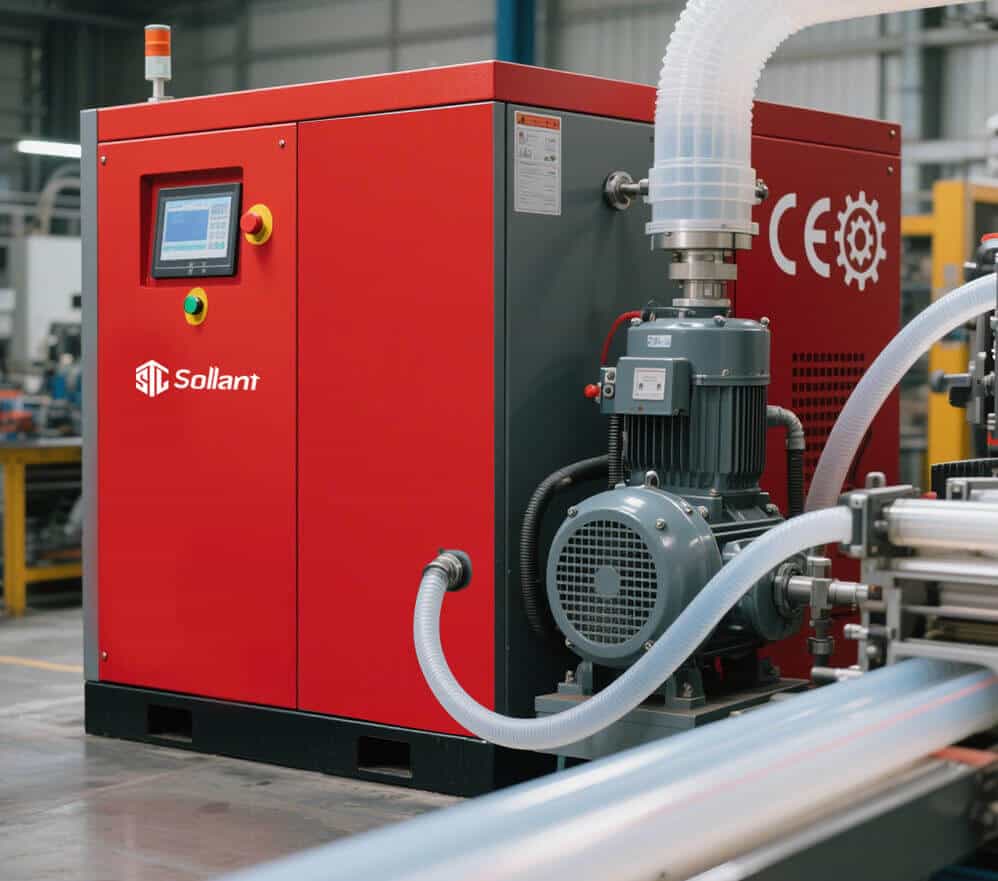
Rubber vs. Plastics
A Comparison of Air Demand Differences
Rubber Industry:
- High Air Pressure Requirements: In rubber production, processes such as injection molding and extrusion require high air pressure, particularly during the mixing and compression molding stages, where precise and stable air pressure is essential.
- High-Temperature Operations: The vulcanization process for rubber often takes place in high-temperature environments, posing a challenge to the heat resistance of air compressors.
Plastics Industry:
- High Air Flow Rates: Injection molding of plastics requires large volumes of compressed air for mold cooling and pneumatic conveyance, resulting in significant air flow demands.
- High Tolerance for Pressure Fluctuations: Compared to the rubber industry, the plastics industry has a higher tolerance for pressure fluctuations; however, compressors are still required to maintain a stable air supply within these fluctuation ranges.

-800x800.jpg "Oil Injected Screw AirCompressor11kw(2)")


.png.jpg)
Customer Reviews
What Clients Are Saying
Steven Carter, Director of Production
“Energy savings are significant, machine failure rates are low, maintenance costs are reduced, and production runs more smoothly.”
Jonathan Reed, Manager
“It performs exceptionally well under heavy loads, with stability exceeding expectations, and has delivered significant operational benefits.”
Brian Mitchell,Supervisor
“The high-pressure gas supply provided was extremely stable, which helped us successfully complete our high-volume production tasks.”
Request a Quick Quote Now
Order or No Order? We're here for you 24/7

